Why No-Code Video Workflows Are Transforming Work in 2025
You know the challenge. Creating videos used to mean hiring developers or learning complex coding languages. Not anymore.
I’ve watched the no-code movement reshape how teams produce content. According to a 2025 report from Gartner, 70% of new applications now use no-code or low-code technologies, up from less than 25% in 2020. That’s not just a trend. It’s a fundamental shift in how we work.
Version Context:
Insights and examples in this article reflect no-code tools as of October 2025, including Zapier v2.17 and Agent Builder Beta v0.9.3.
Data Reference:
Gartner “Low-Code/No-Code Development Forecast 2025” (March 2025)
McKinsey “Automation in the Workplace” (2025 Global Update)
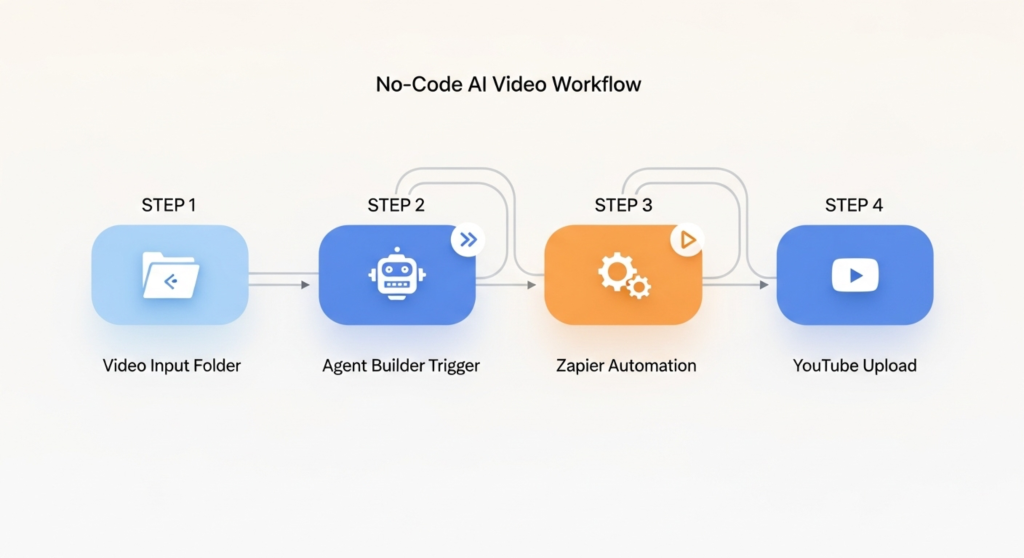
Tools like Agent Builder and Zapier let me automate video editing, distribution, and storage without writing a single line of code. I connect platforms like Google Drive, Dropbox, Slack, YouTube, and Instagram through workflows that handle the repetitive tasks automatically.
Here’s what that looks like in practice. I set up an agent that monitors my Slack channels, pulls video assets from cloud storage, and pushes finished content straight to social media. All while I’m focused on the creative work that actually matters.
The Real Business Impact
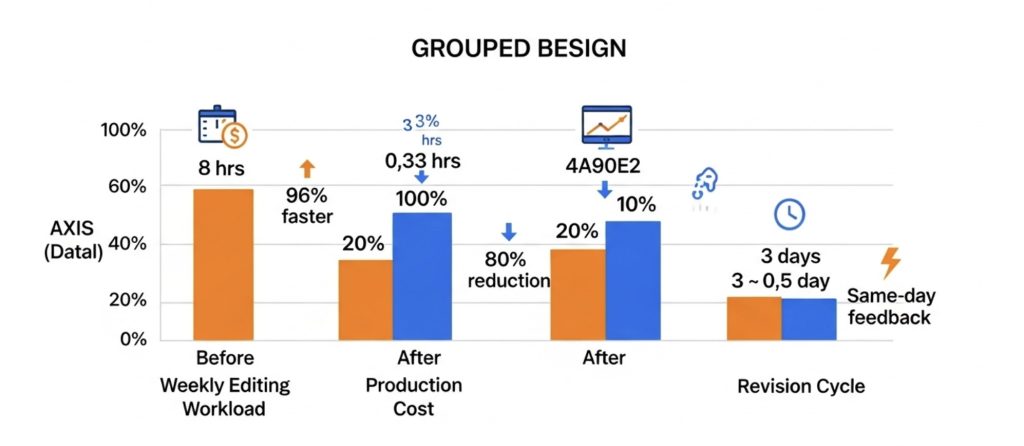
The numbers tell a compelling story.
| Metric | Before Automation | After Automation | Improvement |
|---|---|---|---|
| Weekly editing workload | ~8 hrs | ~20 mins | 96% faster |
| Production cost | 100% baseline | ~20% | 80% reduction |
| Revision cycle | 2–3 days | 0.5 day (Same-day feedback) | Accelerated feedback |
According to McKinsey research, 60% of employees could save 30% of their time with workflow automation. I’ve seen this play out firsthand.
When I automated my video workflow last year, what used to take 8 hours per week dropped to about 20 minutes. Companies using AI-powered video automation report up to 80% reductions in production times and costs, based on data from json2video’s 2025 research.
The time savings are just the start. No-code platforms can make software development 10 times faster than traditional processes, according to a 2025 Hostinger report. For video teams, that means:
- Faster turnaround on projects when clients need quick revisions
- More capacity to test creative ideas without budget constraints
- Freedom to scale production without hiring additional staff
- Consistent quality across all video outputs through templated workflows
How Agent Builder and Zapier Work Together
I use Agent Builder to create specialized AI helpers that understand my specific video workflows. Each agent connects to Zapier’s ecosystem of over 8,000 apps, creating a seamless pipeline.
| Parameter | Example Value | Description |
|---|---|---|
| File Storage | Google Drive (/project_videos) | Source for new uploads |
| Video Platform | YouTube, TikTok | Output destinations |
| Communication | Slack (team-channel) | Status notifications |
| CRM Link | Salesforce | Client tracking & approvals |
My typical setup links Microsoft OneDrive or Google Workspace for file storage, then connects to video platforms and social channels. The agents handle batch processing, automatically organizing files and pushing updates to platforms like Salesforce or Microsoft Teams.
According to Zapier’s February 2025 documentation, their agents can work independently or when you interact with them, performing actions across your entire tech stack. I’ve found this particularly useful for managing client approvals through automated notifications and status updates.
Building Your Agent Builder Workflow
Setting up your first video agent is simpler than you’d think. I start by logging into the Agent Builder dashboard and mapping out what I need the agent to do.
Creating Video Editing Agents
The agent creation process takes about 10 minutes once you know the steps. I open the Agent Builder interface and describe my workflow in plain English.
My most successful agent monitors a specific Google Drive folder for new video files. When a file appears, the agent automatically triggers a workflow that extracts metadata, generates thumbnails, and organizes the content by project type. It’s all visual. No coding required.
workflow:
  trigger: "file_added_to_drive"
  actions:
    - generate_metadata:
        tool: "Agent Builder (Gemini 2.5)"
        output: "metadata.json"
    - create_thumbnail:
        app: "Zapier + Cloudinary"
    - organize_assets:
        folder: "/videos/{{project_type}}"
        storage: "Google Drive"
According to a March 2025 review on SelectHub, Zapier Agents ranks as the #13 AI agent builder, with pricing starting at $50 monthly. The user-friendly interface lets me create custom agents without extensive technical knowledge. Pre-built templates help me set up common workflows quickly.
I connect cloud-based platforms like Google Workspace or Microsoft Azure’s speech recognition tools directly through the dashboard. The agent can then process video content using AI-powered analysis, pulling data from dashboards or managing assets through inventory management systems.
A key insight from the October 2025 comparison by Skywork.ai: Agent Builder gives you more control over tools, memory, and custom logic compared to standard automation platforms.
Task Automation Setup
Once my agent is built, I configure the specific tasks it will handle. This is where the real power shows up.
| Task | Trigger | Action | Output |
|---|---|---|---|
| File transfer | New upload in Dropbox | Move file to editing folder | Video ready for editing |
| Metadata extraction | File added | Populate Google Sheet | Updated project log |
| Client notification | Status changed | Send Gmail message | Review link sent |
| Version control | File updated | Archive old version | Clean structure maintained |
on: "file_uploaded"
do:
  - move_to_editing_folder
  - extract_metadata
  - notify_client
  - archive_previous_version
I link my editing software to apps like Gmail and Google Sheets through Zapier’s automation interface. The setup lets me move files from cloud storage services directly into business applications with zero code.
Here’s what my typical task automation includes:
- Automatic file transfers: Videos move from Dropbox to editing software as soon as they’re uploaded
- Metadata extraction: Agent reads video properties and populates a tracking spreadsheet
- Client notifications: Automated emails send when videos are ready for review
- Version control: Agent archives previous versions and maintains a clean file structure
According to data from the Formstack Platform, 75% of companies report that workflow automation gives them a strong competitive advantage. I’ve found this particularly true for video production, where speed matters.
My agent connects to platforms using Zapier’s 7,000+ integrations. For example, I use OpenAI’s video processing tools alongside Microsoft Azure’s speech recognition to automatically transcribe and caption videos.
The integration with Zapier Central AI lets me set up triggers based on specific events. When a video finishes rendering, the system automatically pushes it to YouTube or other platforms without manual intervention.
Zapier Integration for Complete Automation
Zapier acts as the central nervous system connecting all my tools. I’ve built workflows that touch every part of my video production process.
| App | Integration Type | Trigger | Action |
|---|---|---|---|
| Adobe Premiere Pro | API Extension | Video Render Complete | Upload file |
| Google Drive | Native App | New File | Move to Archive |
| Slack | Messaging | File Shared | Notify Channel |
| YouTube | Platform | New Upload | Publish Public |
Connect Your Editing Tools
My editing software connects to Zapier through simple authentication steps. I link tools like Adobe Premiere Pro extensions or web-based editors directly to the platform.
The connection process is straightforward. I select my video editing app from Zapier’s directory, authenticate my account, and choose which actions the workflow can trigger. Within minutes, I can send files between my editing software and cloud storage automatically.
According to Zapier’s August 2025 blog post on video editing software, platforms like Visla and HeyGen integrate seamlessly with Zapier to create and share videos effortlessly. I use this to connect multiple editing tools in one workflow.
My typical integration links video editors to cloud storage services and distribution platforms. When I finish editing in one tool, Zapier automatically moves the finished file to Google Drive, then notifies my team through Slack.
Based on Creatomate’s tutorial data, it takes less than 10 minutes to set up an automated video workflow using Zapier.
Auto-Publish Setup
This is where automation really pays off. I’ve configured my workflow to publish finished videos across multiple platforms without touching a single upload button.
I connect Clarifai for AI video editing workflow as my processing tool, then link it to publishing platforms. My agent monitors the rendering queue and triggers publication as soon as processing completes.
Here’s my standard auto-publish workflow:
| Platform | Automation Trigger | Customization Options |
|---|---|---|
| YouTube | File added to “Ready to Publish” folder | Auto-generates title, description, and tags using AI |
| Video under 60 seconds appears in output folder | Adds branded captions and resizes to vertical format | |
| TikTok | Short-form content tagged with “TikTok” in filename | Optimizes aspect ratio and adds trending hashtags |
trigger: "video_ready_to_publish"
steps:
  - upload_to_youtube
  - upload_to_instagram
  - upload_to_tiktok
  - update_salesforce_log
According to HeyGen’s April 2025 guide on video marketing automation, Zapier operates on the concept of Zaps, with each workflow containing a trigger event that starts the automation and an action that executes automatically. My setup uses this framework to push content across platforms simultaneously.
The system connects to analytics tools like Tableau for tracking performance and payment platforms like PayPal for handling client invoicing. Everything runs through the same hybrid cloud infrastructure, with automatic cloud backup keeping all content secure.
I’ve also integrated Salesforce CRM to log each publication, creating a complete record of all distributed content. This helps with client reporting and tracking return on investment across different platforms.
Real-World Implementation: TikTok Workflow Case Study
Let me show you exactly how I built a complete no-code workflow for TikTok content. This is a real system I use weekly.
| Step | Trigger | Action | Output |
|---|---|---|---|
| 1 | New idea in Google Sheets | Agent builds script | AI-generated script |
| 2 | Script ready | Visual selection by AI | Stock footage list |
| 3 | Assets ready | Assemble in Premiere | Video draft |
| 4 | Review approved | Auto-upload to TikTok | Published video |
trigger: "new_row_in_google_sheets"
steps:
  - generate_script
  - select_visual_assets
  - assemble_video
  - auto_publish_to_tiktok
  - notify_team_in_slack
The TikTok Content Pipeline
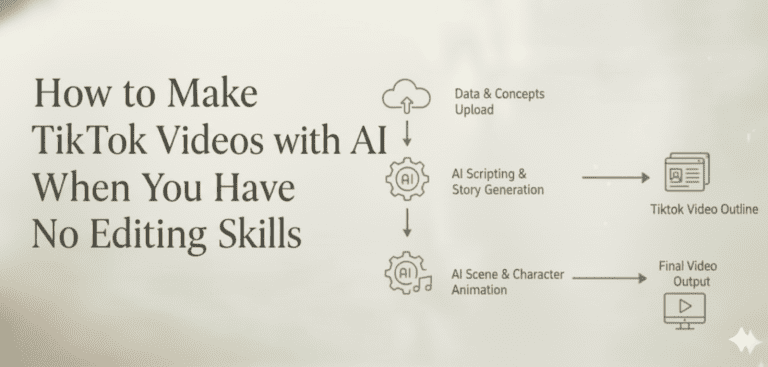
My workflow starts with content ideas stored in a Google Sheet. Each row contains a video concept, target keywords, and scheduling information.
I set up an AI agent to grab data from that spreadsheet and generate custom captions for each video. The agent uses generative AI models to analyze trending topics and sentiment analysis to match the tone my audience responds to.
Here’s the step-by-step process:
- Content Planning: AI agent pulls video concepts from Google Sheets
- Script Generation: Large language models create engaging scripts based on my brand voice
- Visual Selection: Computer vision tools select appropriate stock footage or graphics
- Video Assembly: Drafts automatically populate in Adobe Premiere
- Review and Publish: I make final tweaks, then the system handles distribution
According to n8n’s workflow template from 2025, fully automated AI video generation can reduce manual workload drastically while centralizing tracking through Google Sheets for easy monitoring. I’ve found this approach cuts my production time by about 70%.
My workflow connects to over 8,000 apps through the Zapier platform as a service. The AI helpers send finished drafts straight to my editing software, where I can review before publication.
Automating content allowed me to post three times faster without writing any code at all.
After I approve the edits, the auto-publish feature in Zapier Central AI takes over. The system uploads videos directly to TikTok with optimized descriptions, hashtags, and posting times based on when my audience is most active.
This setup saved me about 10 hours per week. That time now goes into strategy and audience engagement, activities that actually grow my channel. The return on investment became clear within the first month.
For larger teams, data scientists can extend this approach with low-code customizations. They can add advanced analytics, A/B testing for captions, or personalization based on viewer demographics. The scalability and operational efficiency make this system valuable for teams of any size.
FAQs
1. What is a no-code video workflow?
A no-code video workflow allows you to automate video creation and management processes without writing any code, using visual drag-and-drop interfaces. This approach empowers marketing and business teams to build and manage automations for tasks like generating video from text or auto-posting content.
2. How does Agent Builder help with no-code content creation?
Google Cloud’s Agent Builder uses large language models like Gemini 2.5 Pro for complex question answering and text generation, allowing you to build sophisticated AI agents without deep machine learning expertise. It provides pre-built tools and frameworks that connect to your business data, helping automate content creation and streamline customer interactions at scale.
3. What role does Zapier play in business process management?
Zapier is an online automation tool that connects over 7,000 different web apps to automate repetitive tasks and move information between them. For video, you could create a “Zap” that automatically uploads a new file from Dropbox to YouTube, then notifies your team in Slack. This streamlines your business processes by creating automated workflows between the tools you already use.
4. Can machine learning improve my video workflow?
Yes, machine learning algorithms can analyze video content to automatically identify objects, detect patterns in viewer engagement, and even generate metadata. Platforms use AI-powered video analytics to provide data-driven insights, helping you personalize content and make better decisions.
5. What makes this workflow accessible for non-technical users?
The workflow is accessible because it relies on platforms with intuitive, visual interfaces, such as drag-and-drop editors and pre-built templates. Many no-code tools also include built-in accessibility features like alt-text for images and keyboard navigation, ensuring people without technical skills can create and manage complex automations.
6. How does this approach compare to traditional DevOps methods?
No-code platforms can reduce development cycles significantly, with some studies showing deployment times reduced by as much as 70% compared to traditional coding. This approach accelerates time-to-market by empowering non-technical team members to build and automate workflows, reducing the dependency on specialized developers.