Hey, I’m Dora. The AI image generation landscape evolved dramatically in 2025, with both Midjourney and OpenAI releasing their latest iterations. As someone who has extensively tested both platforms, I’ve broken down the real differences between Midjourney v7 and DALL·E 4 to help you choose the right tool for your creative projects.
1. Midjourney v7 Features vs DALL·E 4: What’s New in 2025
Key Midjourney v7 Features and Upgrades
Midjourney v7 marks a major leap from its predecessor. The most notable upgrade is the enhanced coherence engine, which preserves consistent character traits and object details across multiple generations. According to Midjourney’s official documentation, v7 also introduces reliable text rendering, turning readable typography from a lucky outcome into a dependable feature.
The platform now supports granular style control via parameter weights, enabling users to blend multiple artistic influences within a single prompt. Aspect ratio flexibility has also expanded—v7 supports everything from ultra-wide cinematic formats to vertical, mobile-optimized outputs without noticeable quality loss.
DALL·E 4 Feature Improvements Compared
DALL·E 4 takes a distinct path, emphasizing safety, accuracy, and instruction adherence. OpenAI’s release notes highlight substantial gains in spatial reasoning, improving understanding of positional relationships like “behind,” “between,” and “surrounding.” The native ChatGPT integration lets users refine images conversationally—an iterative workflow advantage Midjourney currently lacks.
Its inpainting and outpainting tools are now more advanced, enabling seamless image extension and localized edits. However, unlike Midjourney’s parameter-driven approach, DALL·E 4 relies primarily on natural language instructions for stylistic control.
Technology Advances Powering Midjourney v7
While neither company discloses model architecture details, Midjourney v7 clearly benefits from improved diffusion model training techniques. The model demonstrates stronger understanding of lighting physics, material behavior, and atmospheric perspective. It also appears to have been trained on a more diverse dataset of professional photography and digital art than v6.
2. Image Quality: Photorealism and Artistic Range
Photorealism Comparison
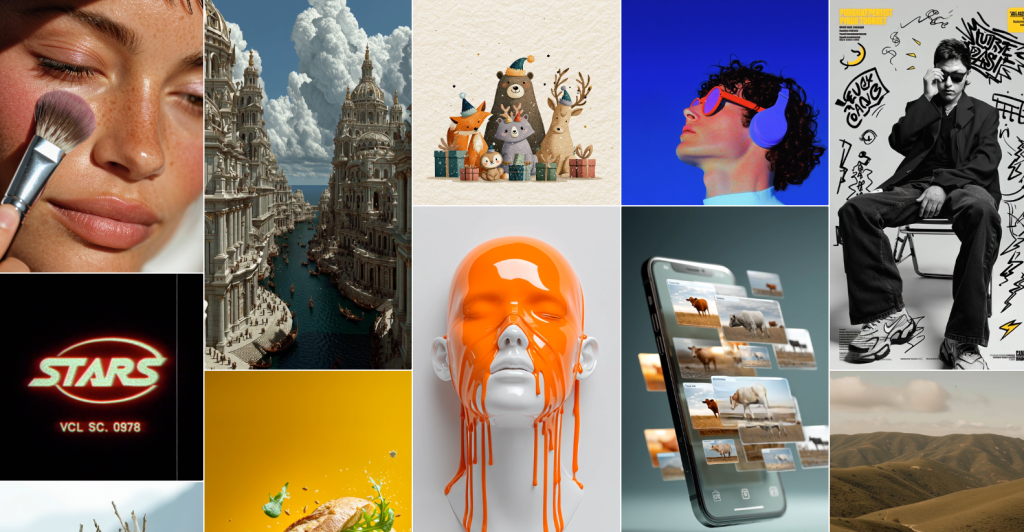
In controlled photorealism tests, Midjourney v7 consistently produces images with more lifelike skin textures, realistic fabrics, and convincing environmental detail. Portraits show fine-grained accuracy in reflections, hair strands, and subsurface scattering.
DALL·E 4 delivers compositionally sound results but sometimes introduces a subtle digital smoothness, giving images a slightly less organic look. Nevertheless, it excels at diverse human generation and anatomical accuracy, reflecting OpenAI’s focus on responsible and inclusive AI development.
Artistic Style Versatility
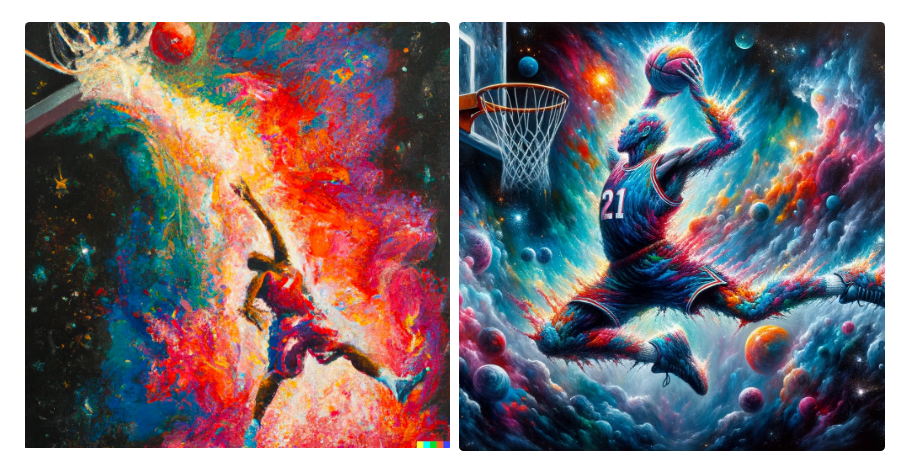
Midjourney v7 shines in stylistic emulation. Whether you prompt for watercolor, oil painting, or anime aesthetics, the system reproduces authentic artistic conventions with high fidelity. Its style reference feature allows users to upload example images, which v7 analyzes and applies with impressive precision.
DALL·E 4 is versatile but tends to interpret styles more literally. It combines unexpected elements coherently, though it may lack the nuanced brushwork or medium-specific textures that Midjourney achieves.
Detail and Texture Quality
At higher resolutions, Midjourney v7’s texture synthesis is notably more organic. Surface details—wood grain, fabric weave, metal oxidation—retain realism across the entire frame. DALL·E 4 remains sharp and detailed but occasionally introduces repetitive patterns, especially in backgrounds, a known trade-off in certain diffusion architectures.
3. Prompt Understanding: How Smart Is It?
Natural Language Comprehension in Midjourney v7
Midjourney v7 demonstrates stronger linguistic understanding, correctly mapping adjectives to their intended nouns and interpreting temporal cues such as “autumn forest transitioning to winter.” However, it still relies on parameter syntax for advanced control (e.g., --ar for aspect ratio, --stylize for creativity level).
Complex Prompt Handling vs DALL·E 4
DALL·E 4 shows superior performance with multi-clause prompts and spatial arrangements, maintaining stronger adherence when multiple objects or relationships are described. Thanks to GPT-4 integration, it better interprets context and implied logic that might confuse pure vision models.
Midjourney v7 sometimes prioritizes aesthetic composition over prompt precision—producing visually stunning images but occasionally omitting or re-interpreting elements.
Real Prompt Examples
For example, using the prompt “a ceramic coffee mug on a wooden table with morning sunlight casting long shadows, shallow depth of field,” Midjourney v7 outputs a photorealistic scene with cinematic lighting and bokeh, though mug designs may vary slightly. DALL·E 4 stays closer to the described objects but produces less atmospheric lighting.
When prompted with “an impressionist painting of a bustling Parisian café in the style of Renoir,” Midjourney v7 delivers authentic impressionist brushwork and color harmony, while DALL·E 4 generates recognizable impressionism with less stylistic depth.
4. Speed and Batch Performance
Single Image Generation Speed
Midjourney v7 typically generates single images in 30–50 seconds, depending on complexity and server load. DALL·E 4, through ChatGPT Plus, completes most requests within 15–30 seconds, giving it an edge for rapid iteration.
Batch Processing and Workflow
For creators producing multiple variations, Midjourney’s variation and remix system is more efficient. Four variations can be generated with minimal delay, and the grid layout allows quick visual comparison. DALL·E 4 requires separate requests, though conversational refinement through ChatGPT provides a smoother user experience.
Queue Efficiency and Consistency
Queue times differ sharply by subscription tier. Midjourney’s Basic, Standard, and Pro plans determine processing priority, while DALL·E 4 maintains relatively stable performance regardless of load. For professionals who value predictable turnaround times, DALL·E 4 offers consistency; for those prioritizing creative flexibility, Midjourney’s Fast Mode provides comparable speed at higher GPU cost.
Final Verdict
Both platforms excel—but in distinct ways.
- Midjourney v7 delivers unmatched visual fidelity, texture realism, and artistic depth, ideal for concept art, design mockups, and creative exploration.
- DALL·E 4 offers superior prompt precision, workflow efficiency, and conversational iteration, making it better suited for structured design tasks and commercial illustration.
Ultimately, your choice depends on creative intent:
Choose Midjourney v7 for breathtaking artistry and stylistic freedom, or DALL·E 4 for reliability, speed, and guided precision.
Previous posts: