I was packing for a late shoot on November 18, 2025, and realized my main light was still charging across the room. I grabbed the tiny Nano Banana 2 instead, mostly out of laziness, and thought, okay, let’s see if this pocket-sized thing can actually carry a scene. Just me, a cramped living room, and a camera that never forgives bad light.
Why Nano Banana 2 Lighting Matters
Lighting decides the mood before words or music do. If you create on the go, YouTube intros, TikTok explainers, product shots, quick interviews, lugging a big softbox isn’t always realistic. The Nano Banana 2 lighting sits in that sweet spot: portable, fast to set up, and flexible enough to solve 80% of small lighting problems.
I tried it because I wanted a light that could live in my backpack and still look good on skin. The promise here is simple: a single, handheld tube that can do soft fill, punchy highlights, and rim separation without frying your eyes or your battery. If you’ve ever shot at a cluttered desk or a dark Airbnb, you know how valuable that is.
For creators and small teams, the difference is time saved. Less fiddling, more filming. When lighting is this quick, you’re more likely to actually use it, every day, not just on “proper” shoots.
Lighting Capabilities
I spent two evenings with the Nano Banana 2 lighting (Nov 18–19, 2025) recording notes and quick frames. Here’s what stood out:
- Output and spread: At arm’s length, it gave me a clean key for talking-head shots at ISO 400, f/2.8, 1/50. A meter away, it still works as a soft fill. The beam feels wide and even, no hot center.
- Controls: CCT and brightness adjustments are fast. The dial steps are small enough to fine-tune, which matters when you’re matching practicals.
- Effects: The preset effects are there (fire, TV, pulse). Fun for b‑roll, but I used them once and moved on. Nice to have: not a must.
- Mounting: The small form factor + magnet option made it weirdly useful. I slapped it on a metal shelf for a top-down recipe shot, zero stands.
- Battery: I got a bit over an hour at high output before it dipped. At medium, closer to two. You can run it while charging, which saved me during a long Zoom recording.
Minor gripe: The on-device UI is fine but not delightful. I wish the brightness could jump in bigger steps when I hold the button. It’s a tiny thing, but you feel it in fast setups.
Test Scenarios for Nano Banana 2 Lighting
I tested three quick setups in my living room and small studio corner. Camera: Sony a7 IV, 24–70mm, 1/50, S-Cinetone. I also spot-checked color with a borrowed Sekonic C‑800. Not lab science, just field notes that reflect real use.
Soft Light Performance
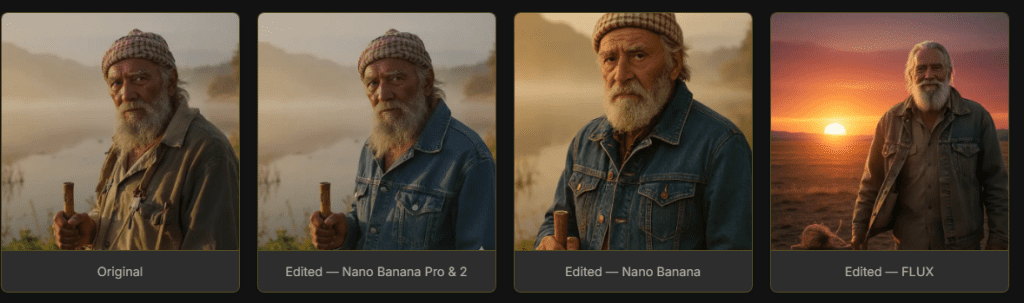
I wrapped the Nano Banana 2 in a small diffusion sock and bounced it off a white foam board. At 20–30 inches from my face, it gave a gentle, flattering falloff. The diffusion smoothed out any micro‑specular highlights on my forehead and cheeks without killing contrast. If you don’t have diffusion, pointing it into a white wall works almost as well.
Notes:
- Skin looked natural at 4300–4600K in a tungsten-heavy room.
- Shadows stayed soft enough for desk tutorials, no raccoon eyes.
- At 50% output, I kept ISO at 400 without noise creeping in.
Hard Light Performance
Pointed directly, no diffusion, it has more bite than I expected from a small tube. For product shots, hard light added crisp edges and micro‑texture on matte packaging. It also made a nice key for a moody talking head when I pushed it off-axis.
Notes:
- Best at 5600K for crispness: tungsten felt a touch muddy in my space.
- Watch for small specular hotspots on glossy surfaces, angle is everything.
- For drama, I set it at eye level and 45° to subject: instant “podcast noir.”
Rim Light Performance
This is where it shined. I magnet‑mounted it to a steel shelf behind me, slightly above head height, 30% brightness. The edge separation on dark hair and a black hoodie was clean, no spill on the background.
Notes:
- A narrow flag (even a book) stops spill if your background is close.
- 5000–5600K rim over a warmer key looks modern and crisp.
- For product top-downs, a low-intensity rim added that “premium” edge without overpowering the key.
Nano Banana 2 Color Temperature Handling
Color-wise, the Nano Banana 2 lighting behaved predictably, which is what you want. I worked mostly between 3200K and 5600K. Compared to a daylight window, 5600K on the unit matched closely, no obvious green shift on camera. Against warm Edison bulbs, 3000–3200K played nice with only a tiny magenta tweak in post.
Quick checks with the C‑800 showed the tint hovering near neutral at 5600K and a hair green at 3200K (I nudged −3 to −5 magenta in-camera to taste). That’s normal for small LEDs. If you shoot log or skin-critical content, dial in white balance manually, not auto.
Practical tip:
- If you’re mixing with office fluorescents (gross, I know), set the Nano Banana 2 around 4300–4500K and add a bit of magenta to counter the green spike. Your editor will thank you.
If you’re color‑matching multiple lights, lock white balance and exposure first, then trim tint per light in-camera. Saves time later.
Skin Tone Rendering
This was my main test because bad skin tones ruin trust. Under soft setup at 4500K, skin looked clean with solid separation between warm midtones and neutral shadows. Reds didn’t clip. Lips looked natural instead of Barbie pink, which happens with cheaper LEDs.
On the meter, high CRI/TLCI isn’t the full story, but it’s a sanity check. My spot tests suggested strong R9 (deep red) performance around daylight and slightly weaker in tungsten, common for compact bi-color fixtures. In plain English: faces looked good at 4300–5600K, and still okay at 3200K with a small magenta correction.
For darker skin, I bumped brightness a touch and kept the key closer to avoid flattening. A subtle negative fill (black T‑shirt off camera) added shape. If you do a lot of human subjects, this light doesn’t fight you, which is honestly rare at this size.
Verdict
Did the Nano Banana 2 lighting replace my big lights? No. Did it earn a permanent spot in my bag? Absolutely.
What I loved:
- It’s fast. I can go from idea to decent light in under a minute.
- Skin tones hold up in the common ranges (4300–5600K) without weird tints.
- Rim light magic. It makes backgrounds and subjects pop with minimal fuss.
What could be better:
- On-device controls could move faster for big brightness jumps.
- Effects are fun but not essential.
Who it’s for: solo creators, remote teams, trainers, makers, anyone who needs reliable, portable light for faces and small products. If your workflow is content first, gear second, this checks the boxes.
If you want me to test it against other small tubes (Aputure MC‑style panels, Nanlite mini tubes, etc.), tell me what shots you care about. I’ll run the same scene and share frames. For now, I’m keeping the Nano Banana 2 within reach. It’s the kind of light you actually use on a Tuesday night when the idea hits.
Previous posts: