I was halfway through a Wan 2.2 pipeline test when someone dropped a link in a Discord channel I follow: “Dora, have you seen this one?” I clicked through expecting another forgettable model card. Instead I found something sitting at #1 on the Artificial Analysis Video Arena — above Seedance 2.0, above Kling 3.0, above everything I’d been benchmarking for months — with no company name attached.
My first thought wasn’t “wow.” It was: where’s the repo?
So I spent the next few hours chasing download buttons and cross-referencing claims. The situation turned out to be genuinely messier than I expected — not because the model is bad, but because the gap between what’s claimed and what’s verifiable kept shifting. Here’s what I can actually confirm.
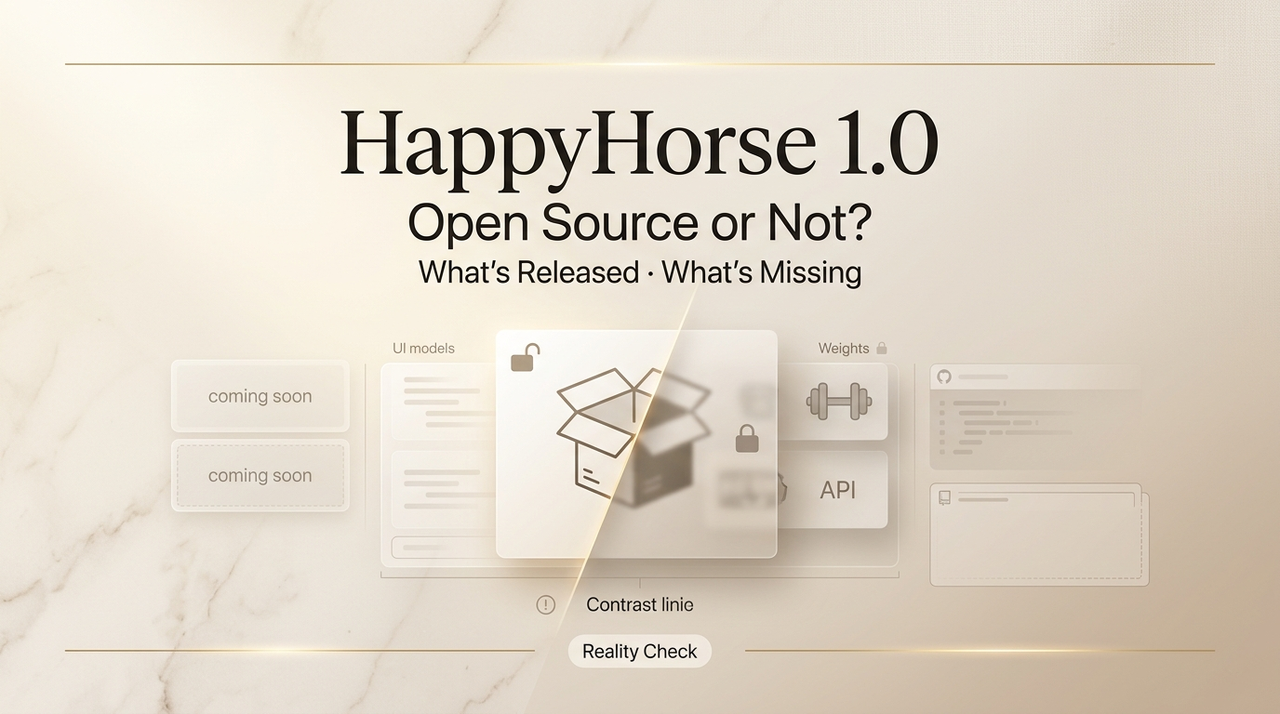
The Short Answer — It’s Complicated
HappyHorse 1.0 is real, Alibaba built it, and as of April 27, 2026, you can access it via API through fal.ai’s official launch. That part is settled.
The open-source question is not. Multiple promotional sites confidently declared full weights and commercial licensing on GitHub. fal.ai — one of the most credible sources in this story — was saying the opposite as recently as mid-April. And as of this writing, no independently verified, downloadable model weights exist under the HappyHorse name.
Quality signal: real. API access: now live. Self-hostable open-source release: still undelivered.
What the Official Sites Claim
Claims of full open-source release
Multiple sites — happyhorse-ai.com, happy-horse.art, happyhorses.io — describe the model as fully open source with commercial licensing. Claims are specific: base model weights, a distilled 8-step variant, a super-resolution module, and full inference code. One press release stated that “all model weights, distilled models, super-resolution modules, and inference code are publicly available on GitHub.”
Base model + distilled + super-res + inference code allegedly available
The HuggingFace profile at happyhorse-ai/happyhorse-1.0 lists the model as released under Apache 2.0. It describes a 15-billion parameter unified single-stream Transformer, joint audio-video generation, 7-language lip-sync, and 1080p output in roughly 38 seconds on a single H100.
On paper: fully open, commercially usable. But the Open Source Initiative’s definition of open-source AI requires downloadable weights, inference code, a license file, and a documented model card. Claims on a landing page don’t fulfill that checklist. Artifacts do.
What fal.ai Has Said — And How That Changed
This is the part of the story with the most movement.
The closed-source statement
For several weeks in April, the fal.ai HappyHorse page carried a direct statement: “While other industry players say HappyHorse-1.0 will be open source, we can confirm that HappyHorse-1.0 will be closed source. It will not be licensable or open source.” That language is no longer on the page as of April 27.
fal’s blog also noted that “HappyHorse-1.0’s team has announced open-source availability with commercial licensing, but no weights or licenses have been published” — a factually accurate summary of the gap between promotional claims and actual releases.
The official API launch
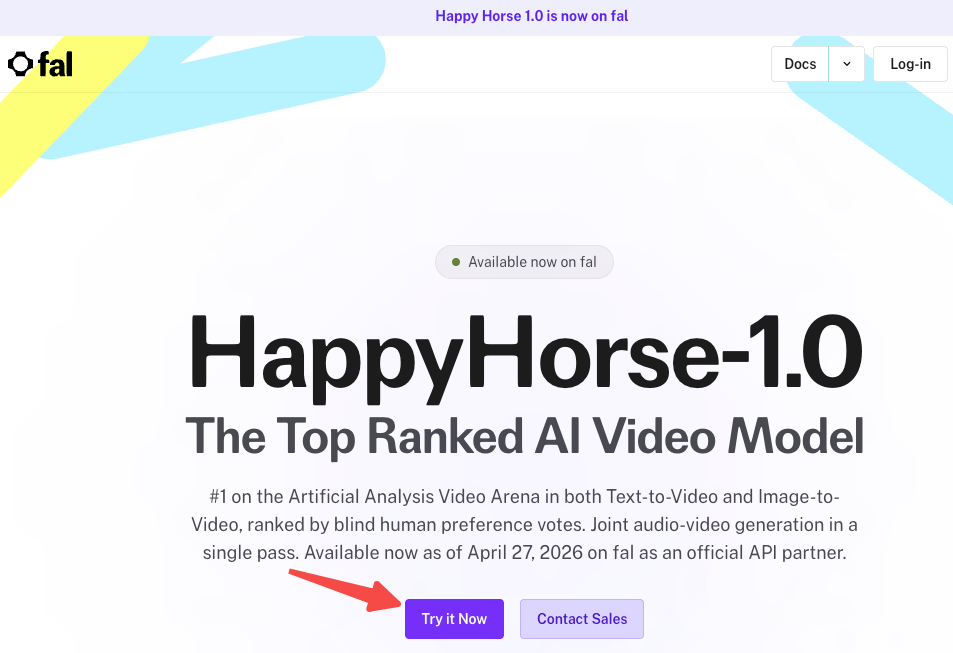
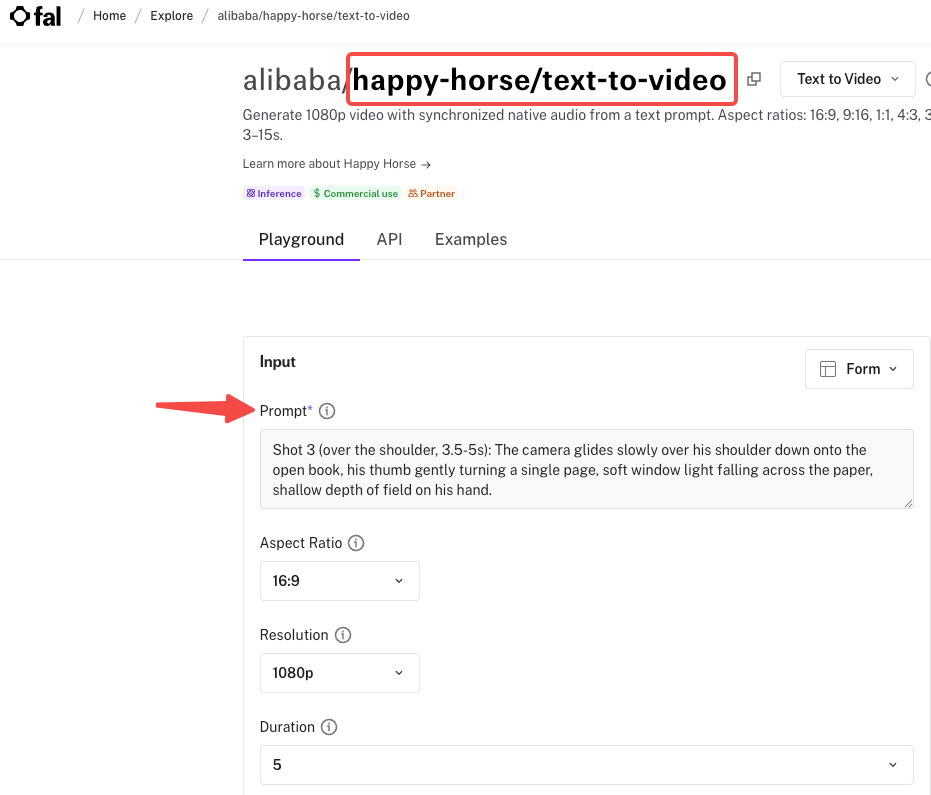
On April 27, fal announced it is now among the first official API partners for HappyHorse-1.0, offering four endpoints: image-to-video, reference-to-video, text-to-video, and video-edit. Commercial rights are included on all generated outputs. So the model launched as an API product — not as downloadable weights. The promotional ecosystem claiming “full open source already on GitHub” was not describing reality.
What’s Actually Downloadable Right Now
GitHub status
GitHub repos under the HappyHorse name exist, but at least one is explicitly labeled a “personal information collection repository, not an official Happy Horse repository.” The official @HappyHorseATH account posted on April 10 that “any third-party websites or platforms claiming to offer HappyHorse services are not affiliated with the official team.” No repo with confirmed, independently reproduced weights exists under a verified Alibaba organizational account.
HuggingFace status
The HuggingFace model card exists with architecture details and claims Apache 2.0 licensing. Independent verification found that as of April 10, the weights returned a 401 error. A model card without downloadable weights doesn’t let you run anything.
Why the Confusion Exists
Third-party landing pages vs. Alibaba’s actual positioning
Alibaba’s ATH division described HappyHorse as “still under development” and in private beta when CNBC confirmed them as the creator on April 10. The official team simultaneously warned that most circulating “official websites” are fake. That vacuum was filled by third-party sites making claims the actual team hadn’t authorized — some selling credit-based access to demos, others distributing press releases announcing weights that weren’t available.
No verified official team site yet
There is no single, clearly identified official Alibaba product page for HappyHorse with documentation and a verifiable GitHub organization. That’s the structural problem, and it’s what made the open-source question so hard to answer cleanly.
What This Means for You
If you want to self-host
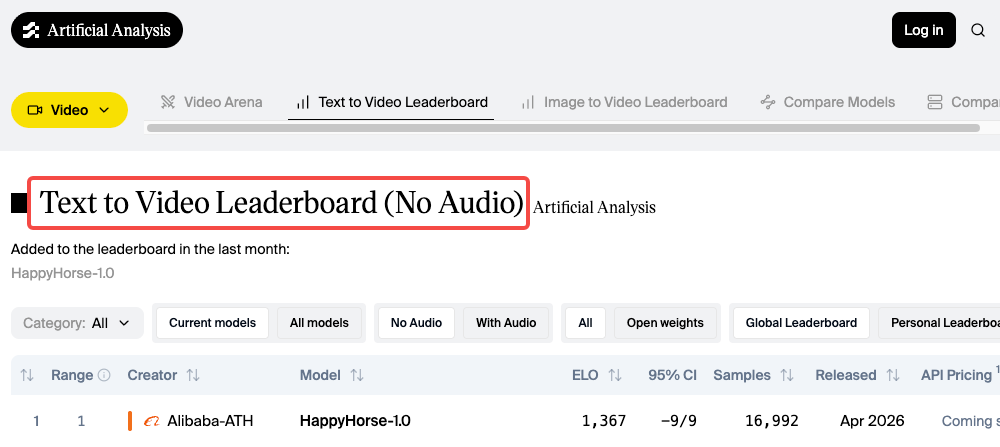
Don’t build anything around HappyHorse today on the assumption that weights are available. The leaderboard numbers are real — T2V Elo 1,357, I2V Elo 1,403, with a 74-point lead over Seedance 2.0 that’s the largest margin in Artificial Analysis history. But no independently confirmed, downloadable weight file exists for local deployment.
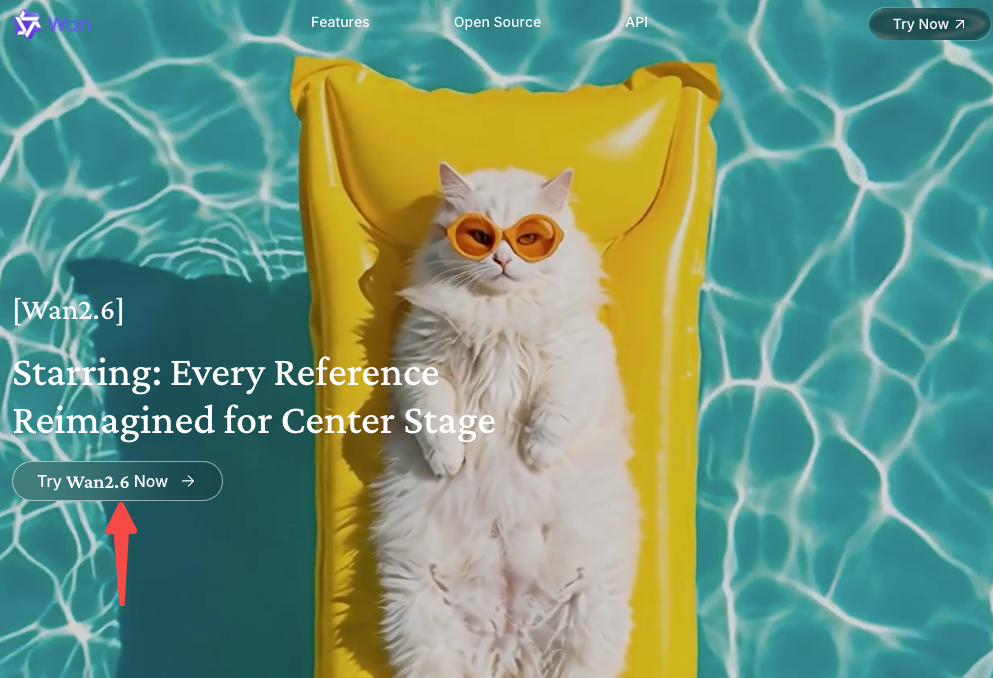
For a model you can actually run today, Alibaba’s own Wan 2.6 release is the honest comparison. Published in December 2025 under Apache 2.0, with real weights on HuggingFace, functional inference code, active community deployment, ComfyUI wrappers, and quantized variants. Its T2V Elo sits around 1,189 — lower than HappyHorse — but you can download it, fine-tune it, and build production pipelines today. That gap between a model you can evaluate and one you can only read about doesn’t close until weights actually ship.
If you just want to generate videos
The API is live on fal.ai as of April 27 — four endpoints, 720p and 1080p output, commercial rights included. Verify current pricing before committing to a production workflow, since early-launch terms shift.
How This Compares to Other Chinese Open-Source Video Models
Wan 2.6 — what a real open-source release looks like
Wan 2.6 is the reference point for what “open source” actually means in practice. Downloadable weights under Apache 2.0, third-party integrations, ComfyUI nodes, community forks, quantized versions — the full stack exists and works. It’s a 14-billion parameter Mixture-of-Experts model with multi-shot generation, native audio sync, and up to 15-second clips.
HappyHorse has a stronger arena score. Wan 2.6 has an actual release. If the question is “which can I build on today,” the answer is still Wan 2.6 — by a wide margin.
Longcat Video — the architecture question
Some community analysis has linked HappyHorse’s underlying architecture to the daVinci-MagiHuman project from Sand.ai and GAIR Lab, which is genuinely open source with Apache 2.0 weights on HuggingFace. A 36Kr investigation found near-identical benchmark performance and similar site structures between the two. That connection remains unconfirmed by either team — but it’s the most credible theory about HappyHorse’s technical lineage, and worth knowing if you’re evaluating what “open source” might eventually look like if weights do ship.
What to Watch For Next
Three signals matter:
Weights published to a verified Alibaba GitHub organization. Not a third-party repo with unconfirmed provenance. A real, signed release from the team — that’s the trigger for self-hosting to become possible.
Independent reproduction. Someone outside the creators downloads weights, runs inference, publishes results. Until that happens, architecture specs remain self-reported, not verified.
API stability and pricing transparency. The fal.ai API is live as of April 27. For most creators, that’s the practical access path right now. Verify current pricing and rate limits directly — early-launch terms frequently shift.
Conclusion
HappyHorse 1.0 is real. The leaderboard performance is real — blind human votes don’t lie about which video looks better. Alibaba built it, fal.ai launched API access on April 27, and the arena lead over Seedance 2.0 is historically large.
But “open source” has a specific meaning, and HappyHorse hasn’t met it yet. The API is open. The weights are not. Promotional sites calling it “fully open source with weights on GitHub” were describing an intention, not a verified release.
I’m watching for an official Alibaba GitHub release with a real license file. That’s when the story actually changes. Until then — great model, messy release, use the API if you need it now.
Previous Posts: