Hi everyone, I’m Dora, and I’ve spent the last three years testing AI creative tools for a living — first as a content strategist, now as an independent reviewer focused on generative media. Over the past several months I’ve run systematic tests across every credible NSFW AI image generator I could find, logging output quality, prompt fidelity, pricing changes, and policy shifts as they happened. This article is the result of that work.
What you won’t find here: padded lists of mediocre tools, vague “try it yourself” verdicts, or rankings that read like affiliate catalogs. What you will find: one winner per use case, a clear reason why it won, and an honest account of where it falls short.
How We Ranked the Best NSFW AI Image Generators
Quality, control, access, policy, and price
Every tool in this article was evaluated across five dimensions.
- Output quality was measured by running identical prompts — realistic portraiture, illustrated characters, and compositionally complex scenes — and grading anatomical accuracy, lighting coherence, and detail retention at default settings.
- Control covered how much a creator can direct the result: negative prompts, ControlNet support, LoRA compatibility, inpainting, img2img workflows.
- Access asked whether the tool works in a browser, requires a local GPU, or sits behind a strict geo-block.
- Policy tracked content restrictions — what’s allowed today, how aggressively the platform has tightened rules in the past year, and whether policy changes wiped out workflows mid-subscription.
- Price examined value per generation, not just headline monthly cost.
Tools were disqualified for three reasons: active policy enforcement that makes NSFW generation unreliable in practice, output quality that failed at default settings with no path to improvement, or pricing structures that make sustained creator use economically irrational.
Best Overall NSFW AI Image Generator
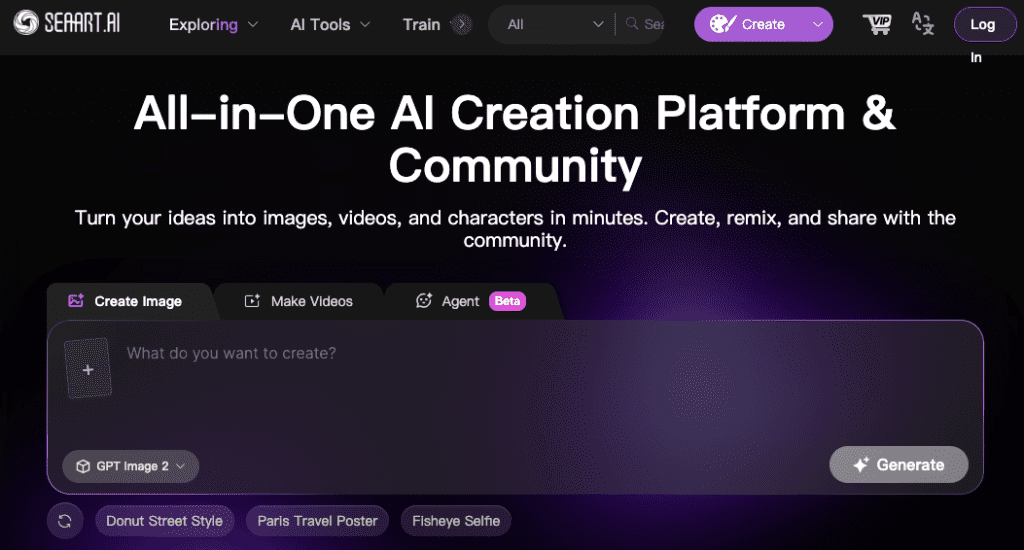
Winner: SeaArt — Web-based, daily free credits, $9.99/mo Pro
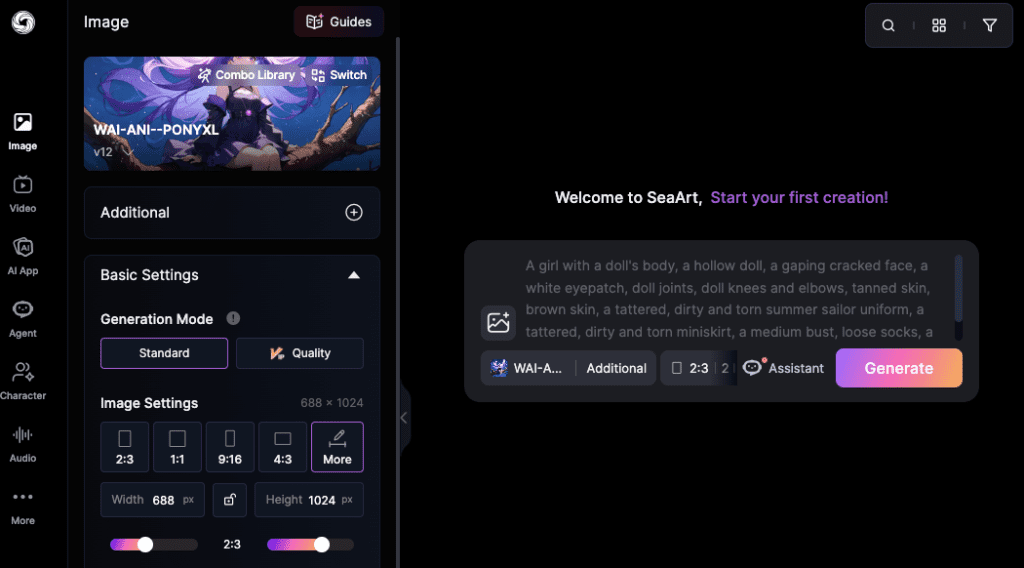
SeaArt takes the top spot by solving the biggest friction point: high-quality NSFW output without needing a GPU or technical setup. It runs SDXL-level models with ControlNet directly in the browser, so even beginners can use pose control, depth guidance, and reference images easily.
Output quality is consistently strong. In testing, it matched or beat local Stable Diffusion setups on anatomy and lighting—areas where most cloud tools fall short. Its LoRA library also covers a wide range of styles without extra work.
Trade-offs: The free tier uses daily credits (no rollover), and speeds can slow during peak times. Power users may need the Pro plan or a self-hosted setup. Content rules are relatively flexible, but not completely unrestricted.
Best Free Option
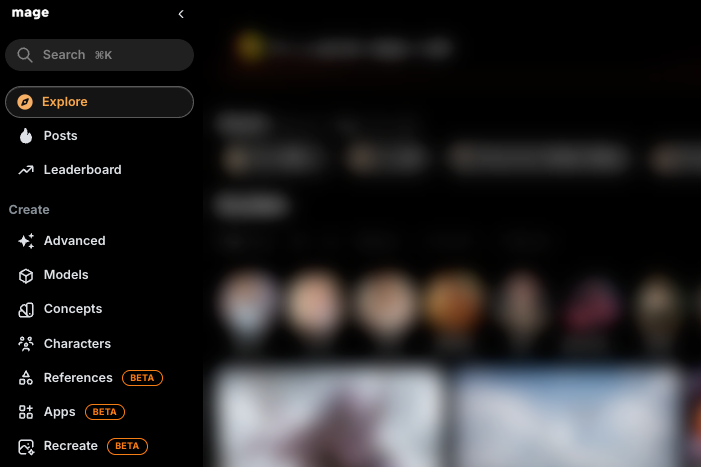
Winner: Mage.space — Unlimited free tier (standard queue), $4/mo Fast
Mage.space stands out for offering truly unlimited NSFW generation on a free plan, with no watermarks. The trade-off is speed—free users share a queue, so generations can take anywhere from seconds to a few minutes. If you’re not in a rush, it’s a strong zero-cost option.
The free tier includes multiple SDXL models and community fine-tunes, with up to 1024×1024 resolution. The $4/month plan improves speed and unlocks higher resolution, making it one of the cheapest paid upgrades available.
Trade-offs: Fewer control features than SeaArt—no built-in ControlNet, and LoRA usage is less beginner-friendly. It works best for users already familiar with prompting, but can be frustrating for newcomers.
Best for Anime and Illustration

Winner: NovelAI — Subscription only, from $10/mo
NovelAI is built specifically for anime-style generation, and it shows. Its custom-trained models deliver consistent character proportions, clean linework, and reliable NSFW output without workarounds—something SDXL-based tools often struggle to match.
It also includes strong editing tools like inpainting, outpainting, and reference-based consistency, making it ideal for comics or recurring characters. The Danbooru-style prompt system is familiar to experienced users and helps streamline control.
Trade-offs: It’s strictly focused on illustration—photorealism isn’t a priority. There’s no free tier, so you’ll need a subscription to try it, and most users will need a second tool for realistic content.
Best for Realistic Images
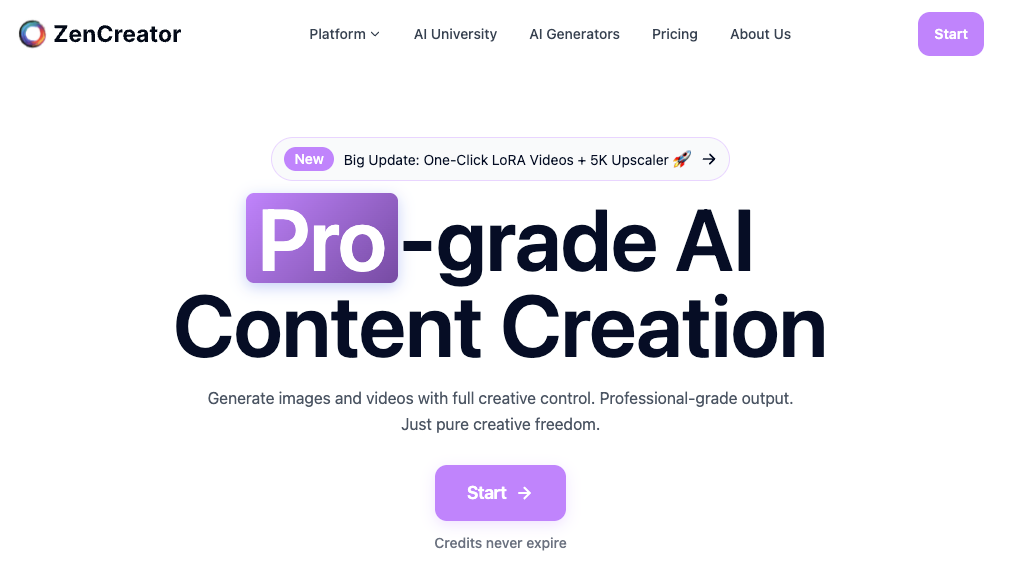
Winner: ZenCreator — From $19.99/mo, 4K output, face consistency tools
ZenCreator is purpose-built for photorealistic adult content generation, and it’s the only cloud platform in this article that routinely produces 4K-resolution outputs with reliable anatomical accuracy at default settings. The platform runs a custom diffusion model without the content filters that govern mainstream generators like Midjourney or DALL-E — which it describes explicitly as its design intent.
Face consistency tooling is the distinguishing feature: upload a reference image and subsequent generations maintain the same facial identity across different poses, lighting conditions, and settings. For creators building content sets that require character continuity — a recurring challenge in realistic NSFW production — this removes the main practical bottleneck.
Trade-offs: It’s the most expensive option here and has no free tier. Best suited for high-volume creators; casual users are better off starting with Mage.space or SeaArt.
Best for Image-to-Image Editing
Winner: Stable Diffusion with AUTOMATIC1111 (A1111) — Free, local install
For img2img workflows specifically — reference-guided generation, inpainting, outpainting, and iterative editing — nothing in the cloud matches what A1111 delivers locally. The AUTOMATIC1111 WebUI has accumulated years of community extensions explicitly built for these workflows: regional prompting, ControlNet with every preprocessor, detailed inpainting masks, and multi-pass refinement chains that would require multiple API calls on any cloud platform.
Img2img strength matters for NSFW specifically because many creator workflows start from a reference — a sketch, a photo, a prior generation — and iterate from there rather than generating from text alone. The cloud tools in this article handle this reasonably well; A1111 handles it exceptionally well, with fine-grained denoising strength controls that let you preserve exactly as much of the source image as you intend.
Trade-offs:Requires a local setup with a capable NVIDIA GPU (8GB+ VRAM recommended, 12GB+ preferred). Installation and configuration take time, but once set up, usage is free and unlimited. If your hardware isn’t strong enough, cloud tools like SeaArt or ZenCreator are better alternatives.
Best for Self-Hosting

Winner: ComfyUI + SDXL (Pony Diffusion or Juggernaut XL) — Free, node-based, GPU required
Self-hosting with ComfyUI gives you full control—no content filters, no prompt logging, and no reliance on platform policies. Its node-based system exposes every part of the diffusion process, making it more flexible than A1111 for advanced workflows.
For NSFW specifically, the model ecosystem on CivitAI is unmatched. Juggernaut XL is the most-downloaded SDXL checkpoint with over 1.4 million downloads and strong photorealistic output. Pony Diffusion V6 leads for stylized and anime content with 280M+ community generations. Both run without content filters by default in ComfyUI.
Trade-offs: Setup is complex and time-consuming, requiring a decent GPU and ongoing maintenance. It’s ideal for high-volume or advanced users, but overkill for beginners who are better off using cloud tools.
Comparison Table
All pricing as of May 2026. Free tiers subject to platform changes.
| Tool | Best For | Free Tier | Pricing From | Style | Self-Host |
| SeaArt | Overall | Yes (daily credits) | $9.99/mo | Realistic + Anime | No |
| Mage.space | Free users | Yes (unlimited) | Free / $4/mo | Multi-style | No |
| NovelAI | Anime / Illustration | No | $10/mo | Anime-first | No |
| ZenCreator | Realistic images | No | $19.99/mo | Photorealistic | No |
| Stable Diffusion (A1111) | img2img editing | Free (local) | Free | All styles | Yes |
| ComfyUI + SDXL | Self-hosting | Free (local) | Free | All styles | Yes |
Limits, Risks, and Compliance Boundaries
Every tool in this article operates within legal content boundaries that apply regardless of platform. Three categories are universally off-limits and enforced at the model level, the platform level, or both: content depicting minors in any sexual context, non-consensual imagery of identifiable real individuals, and synthetic content designed to deceive in ways that cause harm.
The legal picture around commercial use of AI-generated images is still developing. The U.S. Copyright Office’s 2025 report on AI copyrightability concluded that pure AI-generated outputs — content produced by prompt alone, without meaningful human creative contribution to expressive elements — are not currently eligible for copyright protection. Works where a human author has made sufficient creative contributions to arrangement, modification, or selection can qualify. For commercial creators, this matters: content sold on platforms like OnlyFans or Fansly may not carry the same IP protections as traditionally authored work.
Separately, the EFF has tracked a wave of legislative activity around digital replica laws at both federal and state levels. These laws target the unauthorized use of real individuals’ likeness in AI-generated content — relevant to any workflow that uses reference images of real people.
Platform-side, policy tightening has been the consistent trend. Tools that were broadly permissive in 2023 have narrowed their allowed content categories in response to payment processor pressure, app store requirements, and legal uncertainty. Self-hosted tools are not subject to these pressures — which is the strongest practical argument for the self-hosting path for creators whose workflows sit near policy edges.
The bottom line on compliance: know your jurisdiction’s laws on adult content creation and distribution, read the ToS of any platform you pay for, and treat platform policies as subject to change without notice.
FAQ
Which NSFW AI image generator is best overall?
SeaArt. It delivers the best combination of output quality, control toolkit, and accessible pricing for most adult content creators. The browser-based ControlNet support is what separates it from competitors at a similar price point.
Which one has the best free plan?
Mage.space. Unlimited generations on the free tier with no watermarks is an unusual offer at this price point ($0). The queue-based slowdowns are a real limitation for time-sensitive work, but for creators willing to batch their generation, it’s the strongest free option available.
Can NSFW AI images be used commercially?
It depends on both the platform’s terms and the current state of copyright law. Most platforms grant users a license to use generated content commercially, but that license is defined by the platform’s ToS, not by copyright ownership of the output. As noted above, the U.S. Copyright Office has concluded that purely AI-generated images — without sufficient human creative contribution — may not be copyrightable under current law. Review the Copyright Office’s AI guidance for the most current official position, and consult the specific ToS of whichever platform you use before monetizing output at scale.
Conclusion
The right tool in this category depends on what you’re actually trying to build. SeaArt is where most creators should start — capable, browser-accessible, and priced reasonably for sustained use. Mage.space is the honest answer for anyone who needs to stay at zero cost. NovelAI owns the anime illustration lane without meaningful competition. ZenCreator is the choice when photorealistic output quality is the non-negotiable. And for creators who need complete control, zero filtering, and no platform risk, the self-hosted path — A1111 for img2img depth, ComfyUI for workflow flexibility — remains the most powerful option available, at the cost of setup time and hardware investment.
None of these tools are perfect. All of them change their policies, pricing, and model availability with some regularity. The comparison table above will be updated as those changes happen. If a tool you rely on has shifted significantly since this was published, the self-hosted path is always the stable fallback.
Previous Posts: