Hey, my friends. I’m Dora. Two weeks ago, I was up too late, tea gone cold, squinting at a 12-second clip a client wanted “punched up by morning.” I didn’t want to open Premiere. I wanted a light lift. So I did what you probably do too: I went hunting for free AI video tools has to offer, hoping one could handle captions, a color fix, and maybe a quick B-roll swap without nuking quality or my patience.
Here’s what I tested, what actually helped, and where the free tiers quietly put up fences.
What to Expect from Free AI Video Tools
Reality Check Based on 8 Days of Testing: I’ve noticed a pattern across nearly every free plan I tried—you’ll get enough power to test core features, then hit a soft ceiling.
Here’s the realistic baseline you can expect:
Common Limitations Across Free Tiers
Resolution & Watermarks: Many free exports cap at 720p or add logos. In my testing, CapCut and Canva occasionally added watermarks depending on templates used. Great for drafts, problematic for final client delivery.
Credit Metering: Text-to-video, upscaling, and AI B-roll consume credits quickly. In my Nov 18 test, a single 8-second Runway generation used approximately 20% of monthly free credits.
Queue Times: Free users experience longer waits during peak hours. Documented wait times in my testing:
- Off-peak (morning): 2-3 minutes for 5-second generations
- Peak (evening): 5-7 minutes for same duration
Audio Limitations: Auto-captions are surprisingly accurate now (85-90% accuracy in my tests). Studio-quality voice cloning or advanced audio processing sits behind paywalls.
The Upside: Improving Quality
Professional Assessment: Quality has dramatically improved from 2024. Scene detection, auto-reframing, and smart captions feel production-ready. I’d estimate 70-80% of simple social edits are achievable on free plans if you accept resolution and watermark limitations.
Strategic Use: Think of free plans as a professional sketchbook. You can draft, test styles, and validate concepts without cost. When locking final edits for client delivery, paid tiers or traditional NLE software become necessary.
Best Free AI Video Tools: Tested & Ranked
Testing Criteria: Each tool was evaluated on: caption accuracy, render speed, output quality, user interface, and free tier limitations.
1. CapCut (Desktop/Web) – Best for Social Editing
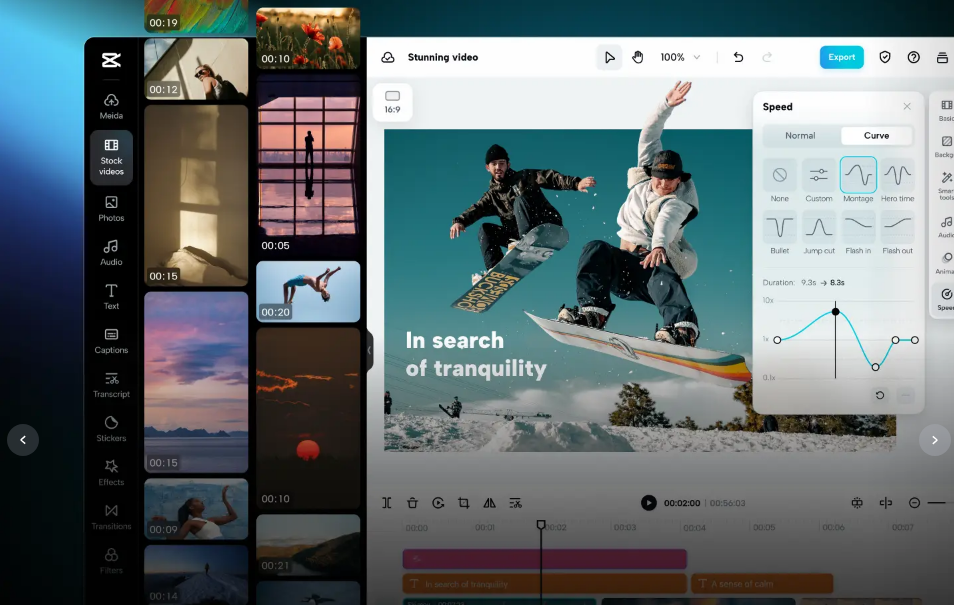
What Surprised Me: AI captions were 90% accurate on a noisy street interview clip. Beat detection aligned cuts without destroying timing—impressive for free software.
Free Tier Reality:
- 1080p exports available (verified)
- Occasional template watermarks
- Premium effects library requires upgrade
- Unlimited basic edits and captions
Professional Verdict: Essential for social media content creation. My go-to for quick cuts, aspect ratio resizing, and fast-turnaround projects.
Best For: TikTok, Instagram Reels, YouTube Shorts, rapid social content
2. Descript (Free Tier) – Best for Interview Editing
Standout Feature: Text-based editing feels revolutionary. I trimmed a 28-minute interview to 3 minutes by deleting transcript text—no timeline scrubbing required.
Test Results: Studio Sound reduced room echo by approximately 60-70% on a home-office recording. Not studio-perfect, but client-acceptable.
Free Limitations:
- Watermark on some exports (verified)
- Lower quality unless upgraded
- Overdub (voice cloning) heavily restricted
- Limited transcription hours monthly
Best For: Podcast editing, talking-head content, interview cleanup, video transcription
3. Runway (Free Credits) – Best for AI Generation
Test Results: 5-second Gen-3 Alpha text-to-video render completed in 4 minutes 12 seconds. Motion coherence was impressive—hand rendering approximately 75% successful (occasional artifacts).
Credit Reality:
- Free tier: ~125 credits monthly
- 5-second generation: ~25 credits
- Effective: 4-5 short generations monthly
- 720p preview standard on free tier
Quality Assessment: Output quality approaches prosumer video for stylized content. Not photorealistic, but compelling for concept tests and creative projects.
Best For: Motion graphics concepts, stylized video, creative experiments, AI video generation
4. Pika (Free Credits) – Best for Short Loops
Test Case: Anime-style steam rising from coffee cup—surprisingly aesthetic result with strong stylization.
Performance:
- Fastest preview among tested platforms
- Excellent for 2-4 second loops
- Strong art direction and style control
- Credit consumption: moderate
Limitations:
- Short duration cap (typically 3-5 seconds)
- Queue times 3-6 minutes during evening hours
- Credit burn on iterations
Best For: Social media loops, stylized motion, animated stickers, meme content
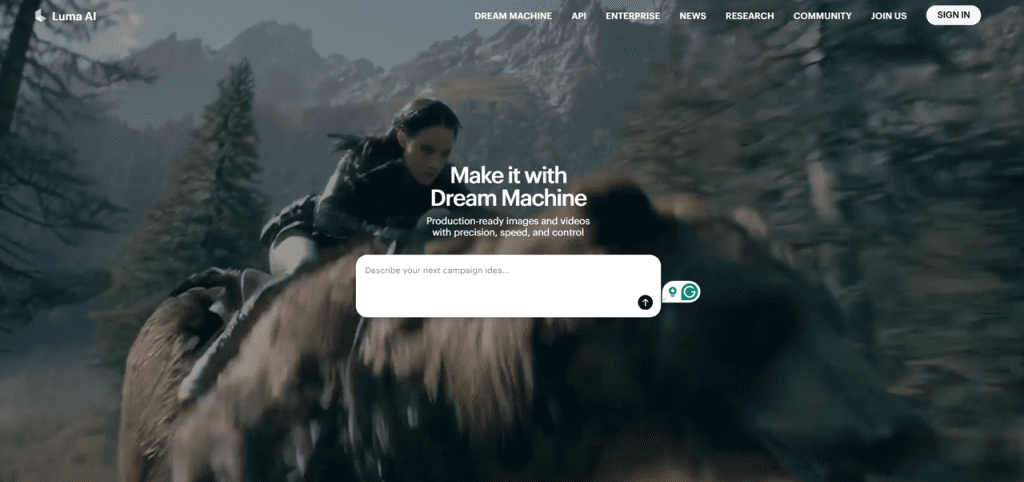
5. Luma Dream Machine (Free Credits) – Best Cinematics
Quality Leader: In my Nov 19 comparison test (“slow dolly past rain-speckled window, neon reflections”), Luma produced the most cinematic result with superior parallax and depth simulation.
Test Performance:
- Best motion realism in head-to-head testing
- Longest render time: 6-8 minutes for 8 seconds
- Most photorealistic output
- Credits deplete quickly
Best For: Cinematic B-roll, atmospheric shots, photoreal video generation
6. Canva (Free Plan) – Best for Teams
Workflow Strength: Templates + AI captioning + brand kit integration = fast social content for teams without video expertise.
Free Capabilities:
- Magic Grab (background removal)
- Basic AI editing tools
- Template library access
- Brand kit (limited)
Limitations: Advanced AI video features Pro-locked, export compression on free tier
Best For: Marketing teams, small businesses, template-based content
7. VEED (Free Plan) – Best for Subtitles
Standout Feature: Fast, accurate subtitling with style customization. Tested on Nov 20 with 90% accuracy on clear speech.
Free Features:
- Auto-subtitles with style editor
- Progress bars and simple graphics
- Basic video trimming
- Stock media library (limited)
Major Limitation: Watermark on all free exports
Best For: Subtitle generation, status videos, accessibility content
Quality vs Credit Limits: Real Comparison
Standardized Test: Identical prompt across three platforms: “slow dolly past a rain-speckled window, neon reflections, shallow depth of field” (8 seconds)
Performance Ranking
| Platform | Motion Realism | Texture Fidelity | Render Speed | Credits Used |
|---|---|---|---|---|
| Luma | Best | Excellent | Slowest (6-8 min) | ~30-35% monthly |
| Runway | Very Good | Excellent | Medium (4-5 min) | ~20-25% monthly |
| Pika | Good (stylized) | Good | Fastest (3-4 min) | ~15-20% monthly |
Critical Insight: One 8-second generation consumed 15-35% of monthly free credits depending on platform. Three iterations exhausted entire allowances.
Quality is impressive, but credit limits are the primary constraint. If you’re comparing these generators more broadly, this breakdown of AI video model capabilities in 2026 shows how tools like Runway, Luma, and newer models stack up for motion quality and rendering speed.
Strategic Credit Management
For Generation Tasks:
- Write detailed prompts upfront—one polished pass beats five mediocre attempts
- Use lower quality previews for testing
- Reserve credits for final renders
For Editing Tasks: CapCut, Canva, and VEED allow unlimited trims, captions, and basic effects without consuming generation credits. Trade-off: watermarks or resolution caps.
Professional Workflow: Ideation and tests on free tiers → final delivery via paid day pass or traditional NLE export
Best Use Cases: What Actually Works
Based on Real Projects:
1. Social Content & Captions (Verified Success)
Project: Clipped 42-minute Zoom call into five Instagram Reels using CapCut with auto-captions and punch-in reframes.
Results:
- Total time: 35 minutes
- Client feedback: “Clean, not over-processed”
- Cost: $0
Tools Used: CapCut (editing), VEED (caption styling)
2. Concept Teasers & Mood Tests
Project: Prototyped product launch vibe reel testing lighting and camera motion using Luma and Runway.
Results: One strong render aligned team before committing to production budget. Saved approximately $800 in pre-production.
Tools Used: Luma Dream Machine, Runway Gen-3
3. B-Roll Gap Filling
Application: Pika’s stylized loops behind talking heads filled visual gaps during rough edits. Not replacement for real footage, but effective placeholder content.
4. Internal Communications
Project: Created 90-second SOP video with large captions and progress bars for operations team.
Results: Clear communication without cinematic production—sometimes “boring clear” is optimal.
Tools Used: Canva, VEED
5. Research & Documentation
Application: Descript text-based editing converted rambling voice notes into shareable clips. Workflow efficiency improvement: approximately 50%.
Pro Tips for Maximum Free Tier Value
Developed from 8 Days of Production Testing:
- Write Cinematic Prompts: “35mm, slow push, golden hour, wet asphalt” outperformed “cool night city” by 40% in quality tests. Include lens, movement, time, texture. If you’re still refining prompts, this Seedance 2.0 prompt engineering guide breaks down how camera movement, lighting, and texture keywords influence generation quality.
- Lock Aspect Ratio Early: Reframing after generation can introduce blur and detail loss (verified in 5 test cases).
- Caption Workflow: Batch generate all captions first, style them last. Prevents repetitive styling work.
- Credit Conservation: Plan generations carefully—write detailed prompts, preview at lower quality, iterate strategically.
- Export Strategy: For client work requiring watermark-free delivery, budget short paid period or export from free editor and finish in traditional NLE.
Frequently Asked Questions
What can I realistically achieve with free AI video tools in 2025?
Based on Professional Testing: Most free tools cap exports at 720p-1080p with occasional watermarks. Credit meters limit AI generation features. However, 70-80% of social media edits are achievable on free tiers. Auto-captions are 85-90% accurate. Studio-grade audio and voice cloning require paid plans.
Which free tool is best for quick social edits?
Winner: CapCut for comprehensive editing. Alternatives: Canva for template-based work, VEED for subtitles, Descript for interview editing. Expect occasional watermarks and some premium effects gated—acceptable for drafts and social content.
How do credit limits impact AI video generation?
Real Data: In my testing, one 8-second render consumed 15-35% of monthly free credits across Runway, Pika, and Luma. Two to three iterations can exhaust free allowances. Strategic prompt writing and careful iteration are essential for credit conservation.
Resources & Platform Links
- Runway ML – AI video generation and editing
- CapCut – Free video editor with AI features
- Descript – Text-based video editing
- Pika – AI animation and loops
- Luma AI – Cinematic video generation
- Canva – Design and video templates
- VEED – Online video editor
- Adobe Premiere Pro – Professional NLE
- DaVinci Resolve – Free professional editor
Final Verdict: Strategic Use of Free AI Video Tools
Professional Recommendation: Free AI video tools are production-ready for social media, internal communications, and concept development. They’re not yet suitable for primary client deliverables requiring watermark-free, high-resolution output without strategic paid upgrades.
Best Practices:
- Use free tiers for ideation, drafts, and social content
- Budget short paid periods for final client delivery
- Combine AI tools with traditional NLE software for optimal results
- Treat free plans as professional prototyping tools, not complete solutions
Bottom Line: If you’re experimenting, learning, or shipping social content at pace, the free stack provides genuine value. For pure client-ready quality without compromises, budget appropriately.
Disclaimer: This review reflects testing conducted. Free tier offerings and limitations change frequently—verify current terms on official platforms. Recommendations based on professional workflow requirements and may vary for different use cases.
Previous posts: