
I’m Leo. A video team once asked me to review an adult image-to-video brief that looked organized at first. The source images were named, the intended clips were short, and the client had marked everything as “synthetic.” Then we opened the approval folder. No source notes. No consent record. No platform plan. One image also looked close enough to a real creator that nobody in the room wanted to defend it.
That is where an image to video ai nsfw workflow should stop.
This article is only about adult workflow boundaries: source review, consent checks, handoff notes, platform-aware publishing, and post-delivery records. It does not explain how AI turns images into video, does not provide prompts, does not recommend tools, and does not support real-person undressing, bypassing restrictions, or routing users toward unsafe services.
This is not legal advice or platform compliance advice. Adult content, likeness rights, copyright, consent, privacy, advertising, and platform policies vary by jurisdiction and change over time. Always check official, current rules before production or publication.
What Image to Video AI NSFW Workflows Involve
An image to video ai nsfw workflow turns a mature still image into a moving draft, but the risky part is not the motion. The risky part is whether the image should be used, what the motion implies, and where the result may appear.
For adult creators and video teams, the workflow should begin with a gate, not a generation step. If the source asset is not clearly allowed, the video stage should not begin. The same is true if age, consent, likeness, publication context, or client authority is unclear.
Static adult visual inputs
Static adult visual inputs can include synthetic images, licensed creator assets, approved performer images, or client-provided visuals. Each category needs a different review. A synthetic image still needs identity checks. A licensed photo needs usage terms. A client image needs proof that the client has the right to authorize edits and publication.
Search phrases like nsfw image to video, ai image to video nsfw, and photo to video ai nsfw can make the job sound like a simple conversion task. That is the wrong frame for production teams. The first question should be, “Is this input cleared for this exact video use?”
If the asset involves a real adult, the approval should cover source use, transformation into motion, distribution channel, commercial use, and retention. If the asset is synthetic, the team should confirm that it is adult-coded, non-identifiable, and not based on a real person.
Motion planning
Motion planning should not change the meaning of the image. It should define what the video draft is allowed to do: camera movement, pacing, crop, transition, scene duration, and whether any visual detail should remain fixed.
In adult workflows, motion can create new implications. A still image that reads as fictional can become more realistic once animated. A camera move can make a scene feel more intimate than the source approval allowed. A facial expression or body movement can imply consent, performance, or identity in ways the original image did not.
That is why motion notes should be reviewed before video generation. Keep them plain and production-oriented. They should describe allowed movement and forbidden changes, not push the scene toward a new adult scenario.
Review before export
Review before export is the last chance to catch source, identity, and platform problems before a file leaves the team. The reviewer should check whether the output still matches the approved asset, whether the motion introduced new meaning, and whether any person could reasonably be identified.
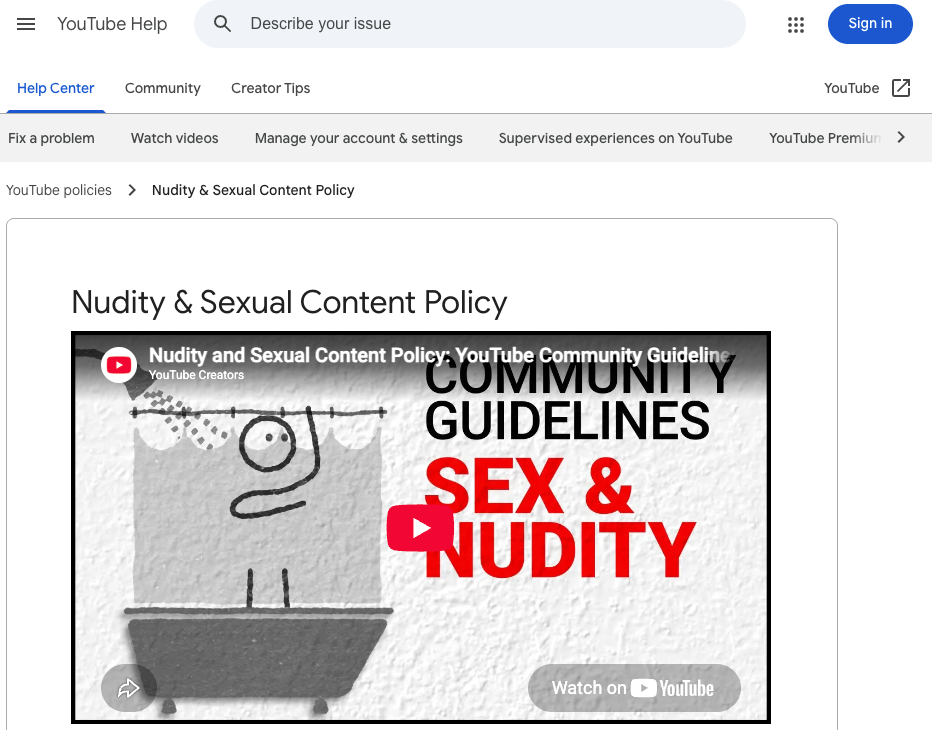
YouTube’s nudity and sexual content policy is one example of how platforms treat sexual content, non-consensual imagery, and unwanted sexualization as serious policy areas. Even if the final video is not for YouTube, reviewing major platform policies helps teams understand the kind of risk they are handling.
Consent and Source Asset Rules
Consent is the core of adult AI video rules. The workflow should be built around what is authorized, not what is technically possible.
Synthetic or authorized assets
The safest adult workflow uses synthetic-only assets that do not resemble real people or fully authorized assets with written consent. “AI-made” is not enough. A synthetic asset can still be unsafe if it imitates a celebrity, influencer, client, private person, former partner, employee, or creator.
StopNCII.org, which focuses on non-consensual intimate image abuse, is a useful reminder that intimate media misuse causes real harm. Teams should design workflows that prevent misuse before any draft exists.
If the asset is authorized, the permission record should be specific. It should say who approved the source image, what edits are allowed, whether image-to-video transformation is allowed, where the final file may appear, how long it may be used, and who can revoke or limit use.
Real-person likeness boundaries
Real-person likeness is the highest-risk area. If an image resembles a real person, the workflow needs explicit, use-specific permission or rejection. Do not rely on “inspired by,” “style of,” “similar to,” or “not exactly them” language.
Reject celebrity references, influencer lookalikes, private-person references, and any request based on an unapproved real person’s face or body. Reject any request that implies secrecy, revenge, humiliation, coercion, or “they will never know.” Those phrases are not in a production context. They are refusal signals.
If there is any possibility that a source image involves someone under 18, stop immediately. NCMEC’s Take It Down exists to help people remove or stop sharing nude, partially nude, or sexually explicit images or videos taken when they were under 18. Adult video teams should never transform, store, or circulate such material.
Client approval records
Client approval records should not live only in chat. Keep a structured record: source asset status, consent status, approved use, publication channel, version owner, review date, and final decision.
For commercial or sponsored adult-adjacent content, the FTC’s social media disclosure guidance is relevant when endorsements, paid relationships, or material connections are involved. Disclosure does not make unsafe content safe, but undisclosed commercial context can add another compliance risk.
From Image Asset to Video Draft
Once an asset passes source and consent checks, the team can move into production planning. This stage should still be controlled. The goal is to create a reviewable draft, not to improvise new adult content.
Scene intent
Scene intent explains why the image is becoming a video. Is the draft a looped visual for a creator page, a paid subscriber preview, a stylized teaser, or an internal concept? The intended use affects motion, crop, export, retention, and review.
A clear scene intent also prevents scope creep. If the approved purpose is a non-explicit mood clip, the editor should not create a more suggestive version without a new review.
Camera and motion notes
Camera and motion notes should be narrow. They can cover framing, speed, transition, duration, and visual consistency. They should also name what must not change: identity, age impression, context, setting, product, wardrobe category, or approved source boundaries.
This is where many NSFW video workflow failures happen. The source image may pass review, but motion changes the meaning. A reviewer should compare the draft against the source approval, not only against visual quality.
Still Image → Motion Risk Change Map
An approved source image does not automatically produce an approved video. Before export, compare the generated clip with the original still and record what changed.
- Identity: Does facial movement make the subject look more like an identifiable real person?
- Age impression: Do expressions, proportions, voice, or motion create any new age ambiguity?
- Consent implication: Does the movement suggest participation, intimacy, or approval that was not present in the source image?
- Intensity: Has camera movement, framing, or body motion made the scene more explicit or intimate than the approved brief?
- Publication context: Would the moving version require different consent, labeling, platform review, or distribution limits?
If any answer changes between the still image and the generated clip, the output should return to review. The team should not treat source approval as automatic approval for every motion variation.
Version handoff
Version handoff is where the next person receives the file and its rules. The handoff should include the source approval status, motion notes, rejected directions, export target, retention rules, and final reviewer.
Do not send a video draft without its context. A file separated from its consent record becomes a risk. For traceability, standards like the C2PA specification are useful to understand because they focus on media history and content credentials. Even if a small team uses a lightweight internal log, it should track what was generated, edited, approved, and delivered.
Platform and Publishing Boundaries
Publishing boundaries should be stricter than production boundaries. A draft created for internal review can leak. A private link can be shared. A subscriber-only post can be copied. Treat every exported adult file as if it could leave its intended context.
Before publishing, verify the platform’s latest rules on adult content, synthetic media, monetization, consent, likeness, and takedown procedures. Also check payment processor rules, hosting terms, creator marketplace policies, and local law.
If the video includes a real adult performer or creator, confirm that the publication channel matches the consent record. If permission was granted for one platform, do not assume it applies everywhere. If permission was withdrawn, do not keep old drafts in active production storage.
Rejected outputs should not remain in shared folders. Keep the decision record, not unsafe media. The record should explain why the file was rejected without preserving harmful or unnecessary content.
FAQ
Who owns records after NSFW video delivery?
The publishing party should own the complete consent and publication record. Agencies, freelancers, and editors may keep limited proof of approval according to contract terms, privacy duties, and retention policy.
The important part is clarity. Before delivery, the team should know who stores consent records, who can access adult source files, and who handles disputes or takedown requests.
What proof helps after a later content dispute?
Useful proof includes the original brief, source asset status, consent record, approved use, version history, handoff notes, reviewer names, export date, publication channel, and any permission changes.
Do not rely on memory. A calm, dated record is much stronger than a chat thread where everyone thinks someone else approved the file.
Who can reopen archived adult source files?
Only authorized people with a legitimate project, compliance, dispute, or takedown reason should reopen archived adult source files. Access should be logged. Casual browsing, training use, or “reference checking” should not be allowed.
Adult archives are sensitive records, not creative moodboards.
How should withdrawn permission affect old drafts?
Withdrawn permission should trigger an immediate review. Pause active use, identify all related drafts and exports, check the consent terms, and remove files from active production where required. If content is already published, follow the applicable contract, platform process, and legal guidance.
Old drafts should not stay available just because they were created before permission changed.
Conclusion
An image to video ai nsfw workflow should be governed by consent, source review, motion boundaries, handoff records, and publishing limits. The safest teams do not treat adult image-to-video work as a quick conversion step. They treat it as sensitive media production.
If the asset is not clearly synthetic or authorized, if the likeness is too close to a real person, if permission is missing, or if publication rules are unclear, the project should stop before video work begins.
Previous Posts: