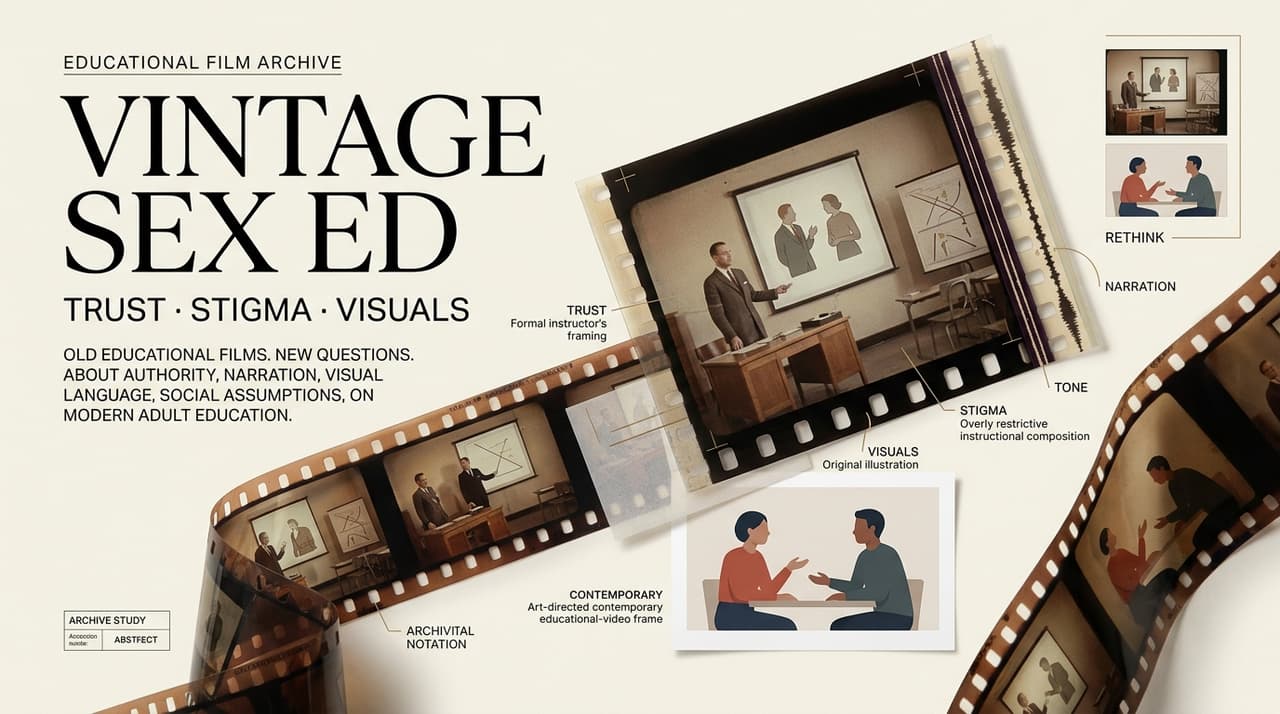
The clothes date these films; their assumptions matter more. Vintage sex education videos can teach creators how a calm voice and a simple diagram carry a lesson, while showing how easily a script turns a social norm into apparent fact. They are historical evidence, not current advice.
Why Vintage Sex Education Videos Still Matter
They Reveal How Social Norms Shaped the Message
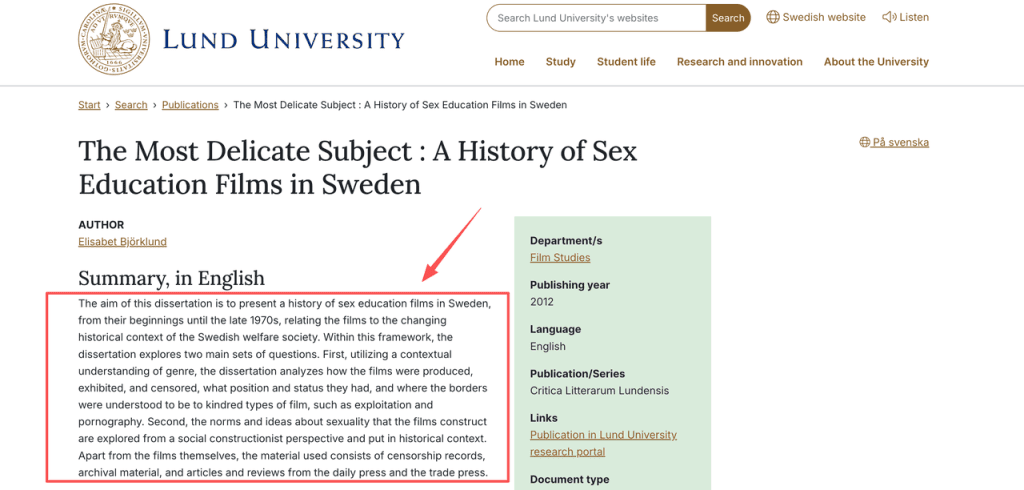
The history of sex education films is no tidy march from bad to good. Audiences and institutions differed. Research on Swedish sex education films and their exhibition context shows that production, censorship, and gender expectations shaped what audiences saw. Before borrowing a vintage clip, identify its country, date, sponsor, intended viewers, and original venue. A classroom reel and a theatrical film served different purposes.
Their Production Choices Make Assumptions Visible
The 1952 British film A Brother for Susan uses a girl’s family story, reassuring narration, and animation to explain reproduction. The archive description places an animated biology lesson inside one household story: an animated biology lesson sits inside one household model. In sex education film analysis, ask who gets to speak, who becomes an example, and whose questions never enter the script. Rights can differ within one archive collection, so viewing a film is not permission to reuse it.
What Older Videos Often Got Wrong
Fear-Based Framing Reduced Trust
Some films presented sex or pregnancy as a moral warning rather than a subject viewers could discuss. The 1973 British film Don’t Be Like Brenda treats premarital relationships harshly. That does not tell us how its original viewers reacted. It does show why a modern audience might expect judgment instead of help. In interviews with 49 Black women in Georgia and North Carolina, participants described fear- and shame-based sex education as making questions harder to ask; the study did not assess these films.
Narrow Gender Roles Excluded Real Audiences
A film can be gentle and still treat marriage, heterosexual partnership, and parenthood as everyone’s expected path. In some retro sex education videos, casting and pronouns reveal these limits before anyone states them aloud. For an adult remake, do not simply swap in more diverse faces. Check whether the explanation works for people with different relationships, bodies, identities, and plans for their lives.
Missing Consent Left Critical Gaps
An anatomy lesson can work within its scope. As a complete adult lesson, it falls short if it omits boundaries, refusal, and changing one’s mind. Do not insert a modern consent line into archival footage and pretend it was always there. Mark the gap honestly, then build a new section around consent and bodily autonomy in sexuality education. That guidance focuses on younger learners; adult scripts still need examples suited to adult relationships and decisions.
What Modern Creators Can Still Learn
Simple Visual Structure Can Improve Recall
The lesson is to show one idea as the narrator explains it, then pause before the next. In adult education video design, a clear route from a health question to an appointment may teach more than decorative motion. Decorative animation impaired recall in one physiology study; motion alone is no teaching strategy. Clear health visuals that reinforce one message are a sound design principle; the vintage film itself is not evidence that a particular diagram improved recall.
A Clear Narrator Can Guide Sensitive Topics
A calm narrator gives viewers time to understand unfamiliar terms without turning the material into a spectacle. But authority should come from accuracy, not a stern voice. Have a qualified reviewer check the script. Say what is known, what varies, and where viewers can seek help. A warm tone cannot rescue an outdated claim.
Rebuild the Format for Today’s Adult Audience
Update the Evidence and Language
Start with the question an adult actually has, not the historical film’s lesson title. Have a subject specialist review every medical statement against current evidence. Keep the old film’s date visible if showing an excerpt, and separate its original claim from your correction. Sexual health includes well-being and freedom from coercion, not merely the absence of disease.

Replace Stigma With Agency and Choice
Give the viewer a usable decision, not a warning disguised as education. For example, an illustrative remake of a disease-warning film could show how to ask a clinic a confidential question and what information to bring. It should not promise a diagnosis or imply that seeking care reveals bad character. Ask people from the intended audience to review the script before recording; they may catch assumptions the production team has stopped hearing.
Add Accessibility and Source Transparency
Provide captions that carry speech and meaningful sound, plus a transcript that describes essential visuals. Accessible prerecorded captions help viewers follow the lesson without audio. Show the review date and sources near the video. Keep a change log when advice changes. Before publication, check local law and the destination platform’s current rules. This article is not legal advice or a compliance guarantee.
FAQ
Are vintage sex education films in the public domain?
Not automatically. Check each film’s rights record, jurisdiction, and any added soundtrack or material. An online archive copy is not reuse permission.
Where can creators find surviving production notes or teaching guides?
Search finding aids by title, producer, or sponsor. Libraries and film institutes may hold guides separately from the reel.
How can audience reactions to old and modern versions be compared?
Show rights-cleared, labeled excerpts to consenting adults in alternating order, then ask the same comprehension and trust questions. Their answers describe today’s reactions, not historical ones.
Should a modern remake preserve the original aspect ratio and pacing?
Preserve an archival excerpt’s format. Design new material for its viewing context and test final-size readability.
How should excluded communities review a modern remake?
Invite paid reviewers before the script locks. Let them flag omissions, decline personal disclosure, and see what changed.
Conclusion
The best use of a vintage film is to study its choices, not to inherit its authority. Keep the visual clarity and measured narration where they help. Replace narrow assumptions with current evidence, consent, accessibility, and room for adults to make informed choices.