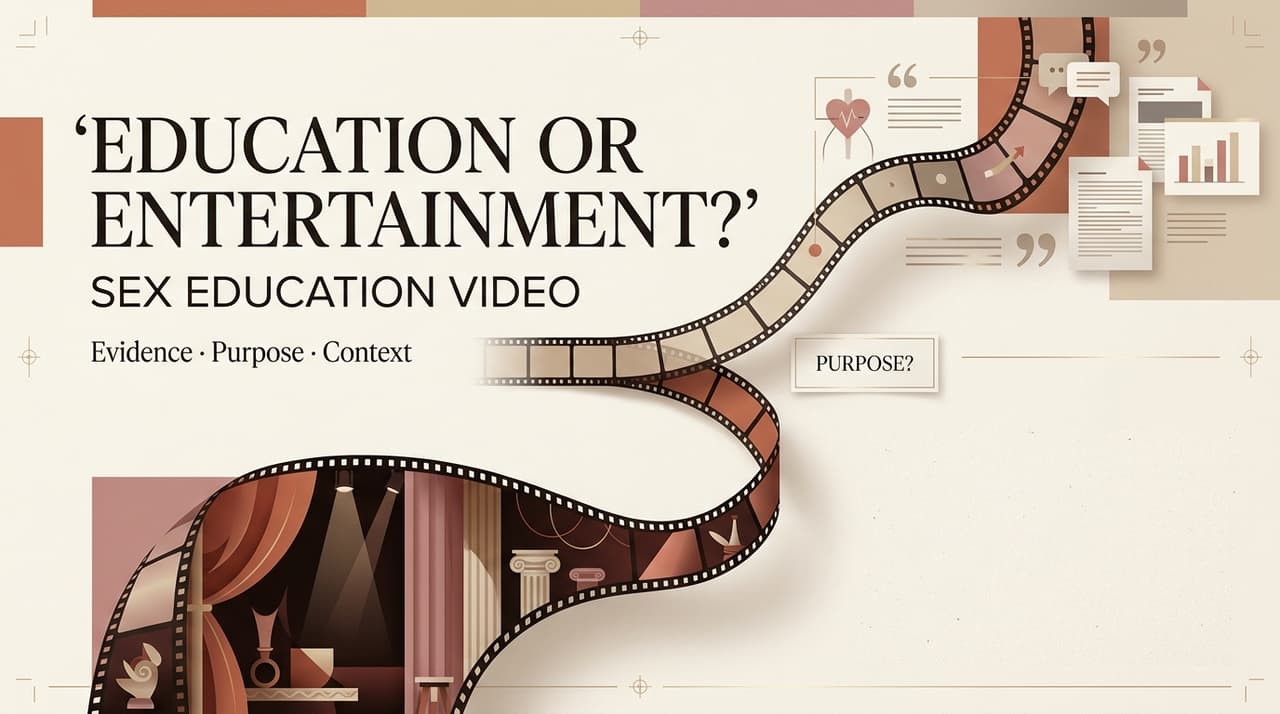
Searches for sex education porn videos can mix two different needs: reliable adult health information and sexual entertainment. Similar language does not make them the same product. Education has a stated learning outcome, evidence behind its claims, and context that supports informed decisions. Pornographic content is principally organized around arousal or entertainment.
This article concerns adult educational content only. It does not describe sexual activity, provide medical advice, or guarantee legal or platform compliance.
Sex Education and Porn Serve Different Purposes
The decisive question is not whether a video covers an adult subject. It is whether the viewer can learn something accurate and usable after watching it.
Learning Outcomes Define Education
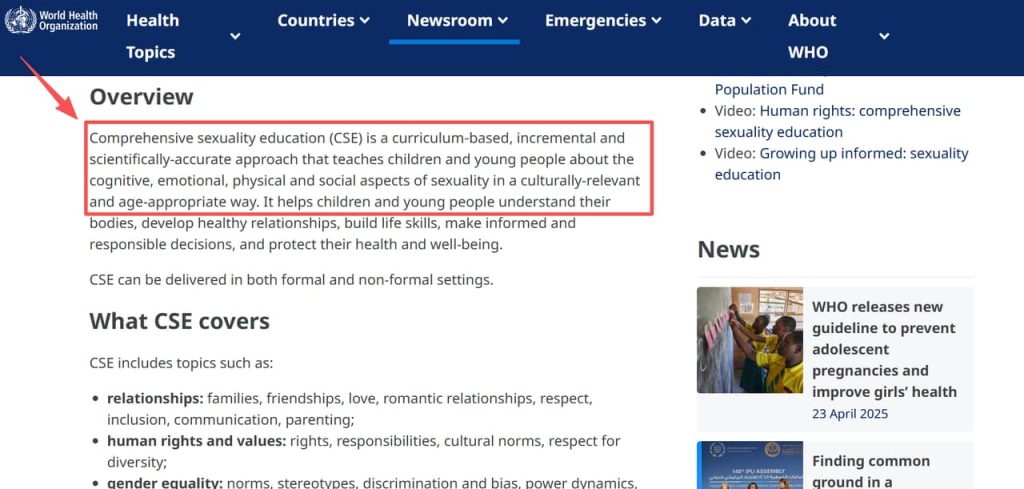
Start with an observable outcome: a viewer can identify a trustworthy health resource, understand a clinical term, recognize voluntary consent, or prepare questions for a healthcare visit. The World Health Organization’s comprehensive sexuality education overview describes quality education as scientifically accurate, age-appropriate, culturally relevant, and connected to respectful relationships and informed choices.
Every scene should support that outcome. Every health claim needs a reliable source and professional review. A video is not educational because it has a clinical tone; it is educational because it leaves the viewer better able to understand and act.
Arousal and Entertainment Define Pornographic Content
Pornographic content is made to arouse or entertain. Adding labels, captions, or health vocabulary does not change that purpose. Search phrases such as explicit sex education videos or sex education movie sex videos may be ambiguous, but a creator’s visual choices reveal the intended product.
If the thumbnail, pacing, framing, or call to action is more provocative than the lesson requires, the work is not functioning as education. Do not use an educational label to bypass adult-content rules or reach an audience under false expectations.
Use Evidence and Context to Draw the Boundary
Evidence-led health education can be plainspoken and engaging. It should reduce confusion, not turn sensitive information into spectacle.
Explain Anatomy and Behavior Without Sensationalism
Use labelled diagrams, neutral animation, illustrations, or licensed clinical media whenever they teach the point effectively. A sex education graphic video should be graphic in the sense of visually clear, not needlessly explicit.
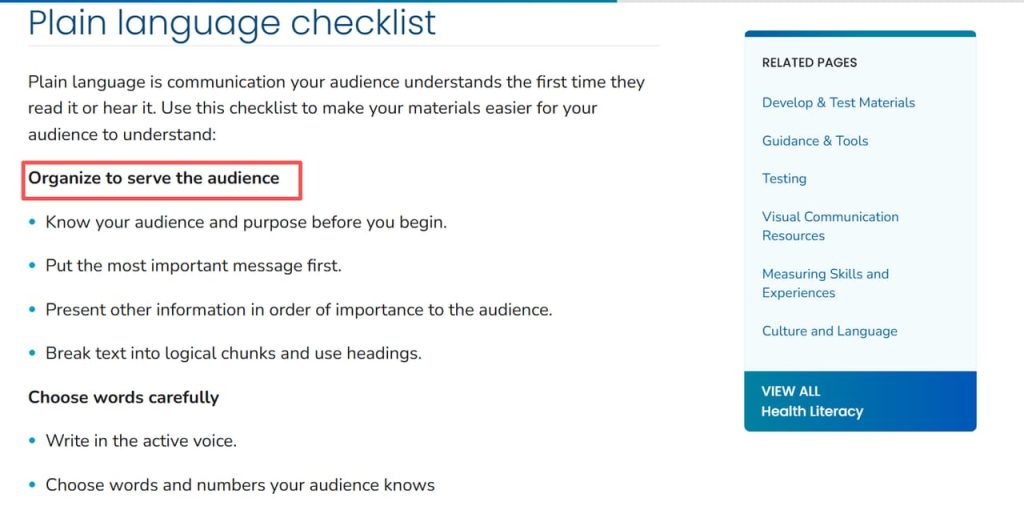
Use familiar language, define specialized terms once, and avoid diagnosis or individualized treatment claims. The CDC’s plain-language guidance offers a strong editing standard: organize around the audience’s purpose and make information easy to understand and use. Have a qualified clinician or credentialed health educator review claims, captions, translations, and links.
Center Consent, Communication, and Safer Decisions
Consent, boundaries, communication, privacy, and help-seeking should be part of the lesson plan, not an end-card disclaimer.
That provides a better creative test than “Will this perform?” Ask whether the material helps an adult make a more informed, safer, and more respectful decision.
Design Explicit Visuals Only When They Teach
The relevant visual-design question is not “Can this be shown?” It is “What must the viewer see to understand the lesson?”
Choose the Least Explicit Effective Format
Begin with the least explicit effective format: a diagram, animation, labelled illustration, visual metaphor, or narrated explanation. A sex education video graphic should become more detailed only when that detail is necessary for a documented learning outcome.
Any real person in the material must be an adult with informed consent for the specific use. Keep release records, licences, and source details with the project. Do not use recognizable people, downloaded creator media, or private material as production inputs without clear authorization.
Add Narration, Labels, and Viewer Preparation
Use an accurate title, a content note before playback, plain-language labels, and a description that explains the educational scope. Narration should explain why a visual appears and what the viewer should learn from it.
Plan accessibility during scripting. The W3C’s media-accessibility guidance recommends captions, transcripts, and descriptions where visual information is needed to understand the work. These features support both viewer choice and comprehension.
Publish for the Intended Adult Audience
Publishing is a separate decision from production. An asset can be accurate yet unsuitable for a particular destination.
Use Clear Descriptions and Age Controls
State that the material is for adults and describe its educational purpose precisely. Use the platform’s available age controls and content labels. Do not use misleading titles or thumbnails that promise entertainment the video does not provide.
Age gates do not resolve every issue. Check the intended territory, host policy, advertising and payment restrictions, and the surrounding presentation at the time of upload.
Check Medical, Legal, and Platform Requirements
A named human reviewer should approve the final export, including factual accuracy, adult consent, asset rights, labels, accessibility, links, and upload settings. For health content, use qualified sources such as ACOG’s guidance on comprehensive sexuality education. Confirm local legal and platform requirements when publishing; neither old policy screenshots nor a tool’s output is a compliance guarantee.
FAQ
Who should review anatomy or health claims before publication?
A qualified clinician or credentialed sexual-health educator should review claims within their scope. Record the sources, reviewed version, reviewer, and approval date.
How should translated terminology be checked for accuracy?
Use a health-experienced translator, then have a qualified reviewer check accuracy, clarity, cultural fit, and non-stigmatizing wording. Machine translation alone is not enough.
Which accessibility features matter for sensitive educational content?
Provide accurate captions, a transcript, readable labels, adequate contrast, and a descriptive alternative when visuals carry the lesson. Give viewers control over captions, playback, and volume.
Can this content qualify for professional continuing education credit?
Possibly, but only if the provider, faculty, assessment, documentation, and topic meet the relevant accreditor’s requirements. Informative content alone does not create credit eligibility.
How should viewer complaints and factual corrections be documented?
Log the complaint, asset version, date, issue, review decision, correction, and any viewer notice. Preserve the original record so later reviewers can see what changed.
Conclusion
Education and entertainment may use similar terms, but their responsibilities differ. Build adult education around a clear learning outcome, evidence, the least explicit effective visual, and human review before publication. That creates a resource viewers can understand and trust.