Hey everyone, Dora here. Last month, three hours into a client shoot, everything started falling apart—bad lighting, forgotten lines, and a $400 studio session that gave me just two usable clips. I walked out thinking there had to be a better way.
There is. I’ve spent the past few weeks testing it.
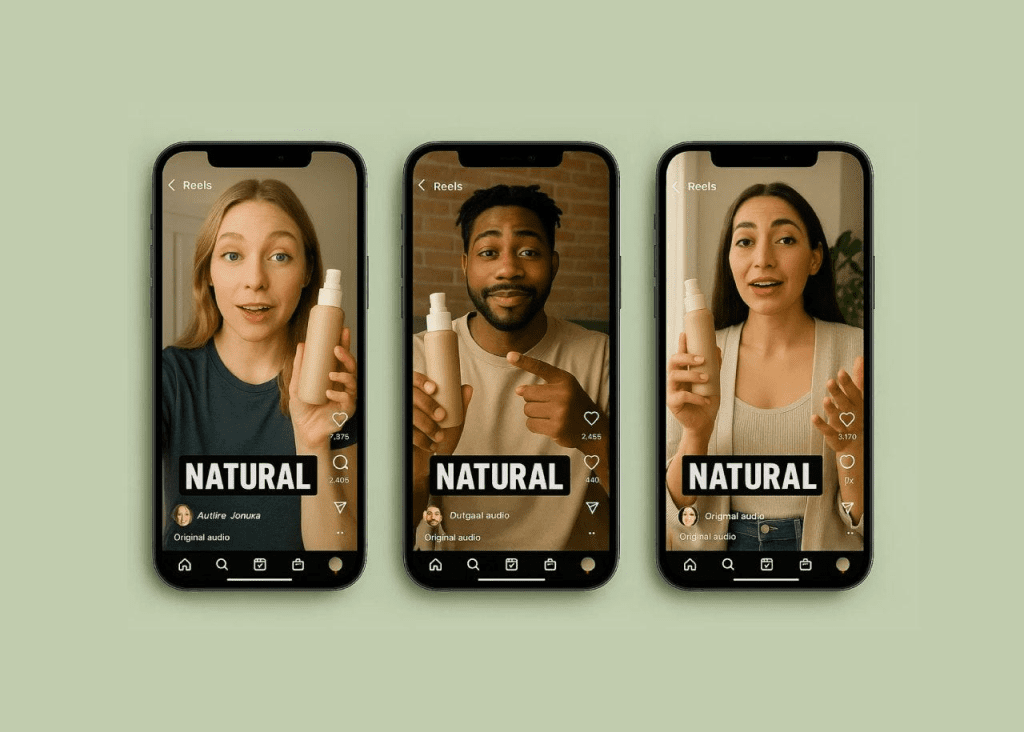
AI-generated UGC video has become one of the most practical tools for creators. It won’t replace everything, but it’s great for quickly testing hooks, scaling ad variations, and producing solid content on a tight budget.
In this guide, I’ll share the tools I tested, where they work, where they fall short, and what platforms actually allow when it comes to AI-generated content in 2026.
What Is UGC Video and Why It Matters
UGC, or user-generated content, is the raw, personal, “shot-on-a-phone” style video that often outperforms polished studio content because it feels more authentic and trustworthy.
The challenge is scale, since hiring real creators can cost anywhere from $150 to $2,000 per video and managing production takes significant time.
AI tools began filling this gap in 2024, improved rapidly through 2025, and by 2026 can produce content that, for certain use cases like short-form ads and product demos, is increasingly hard to distinguish from real creator footage.
How AI Helps with UGC Video Creation
After testing 15+ tools over the past year, here’s what I’ve learned: AI doesn’t replace the creative instinct that makes good UGC work. It replaces the production logistics that slow everything down.
Specifically, AI tools deliver:
- Script-to-video in minutes. Paste a brief or product URL and get a scripted talking-head video with an AI avatar, voiceover, and captions. What once took half a day now takes about 10 minutes.
- Hook testing at scale. Generate 20 avatar-led variants instead of shooting five versions with real creators. TikTok’s own data shows brands using AI-assisted production publish 5–8× more creative variants than traditional workflows.
- Localization without reshooting. Tools like HeyGen translate an existing video into 175+ languages with maintained lip-sync.
- PDF and document-to-video. Upload a product spec sheet, pitch deck, or customer review export and receive a finished video.
Best AI Tools for UGC Video
Best for Authentic-Style Video: Arcads
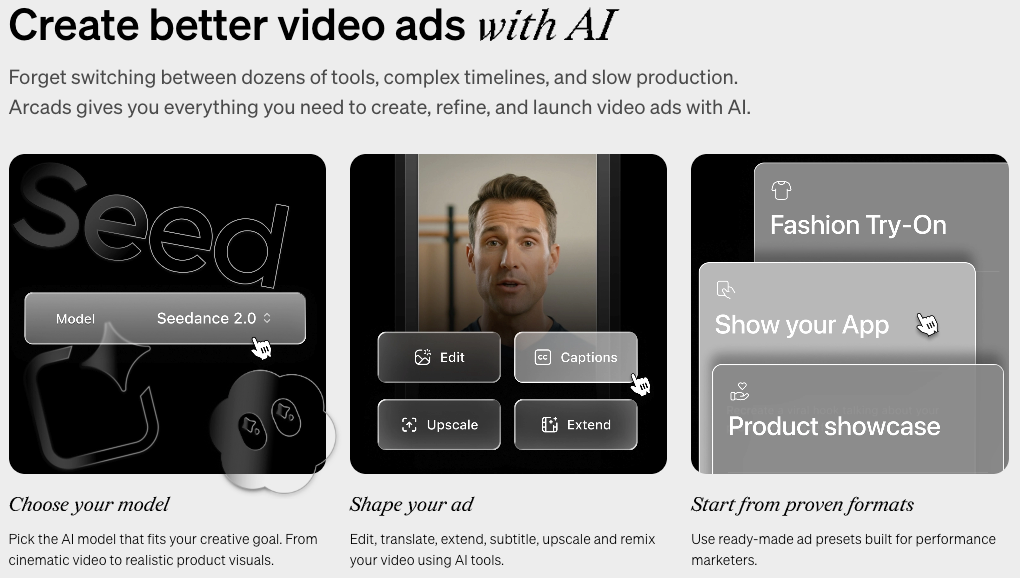
Arcads is the tool I’d reach for when the goal is making AI-generated video that doesn’t look AI-generated. The avatars show actual micro-expressions — little head tilts, natural pauses, gestures — that most tools miss. For ads under 60 seconds, the output is genuinely close to what you’d get from a mid-tier UGC creator.
The workflow is simple: drop in a product URL or script, choose an avatar and tone (casual, excited, authoritative), and export. It also auto-generates multiple hook variations — I got six usable hook variants from a single product brief without writing a single line of copy.
Pricing (verified April 2026): Starts at $110/month for 10 videos. The avatar library is smaller than competitors and multilingual support is limited, but for realistic English-language short-form ads, it’s the best I’ve tested. The per-video cost works out to $11 at base—still cheaper than a single mid-range creator.
Where it falls short: No URL-to-video feature (you write the script), no batch creation, and the per-video cap means high-volume testing gets expensive fast.
Verdict: Best for performance marketers who need top-tier output quality on English-language ads and can justify the price.
Best for Scale: Creatify
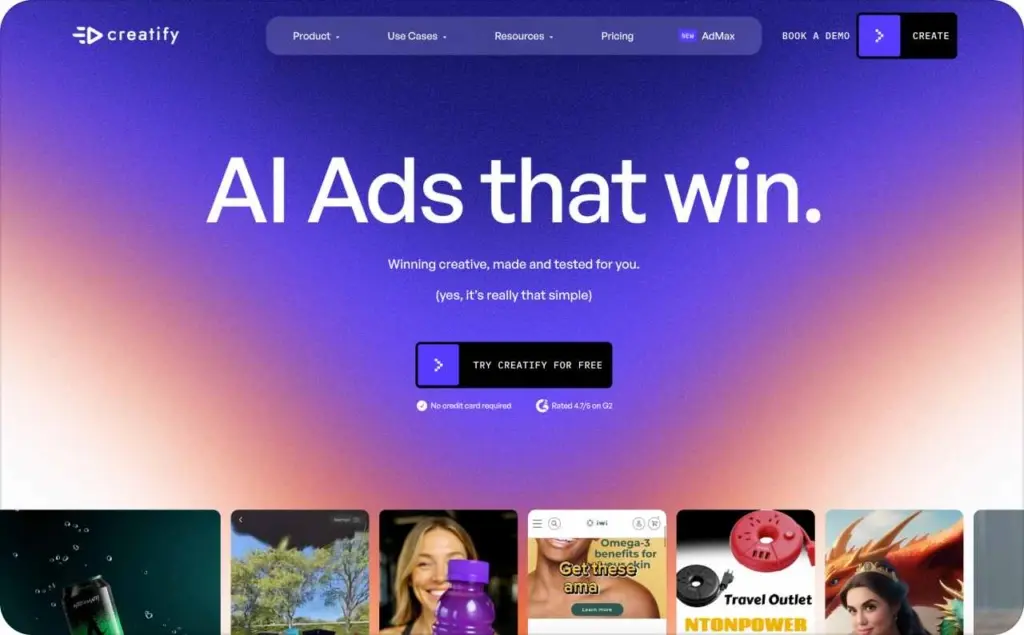
Creatify is what I’d call an “engine room” tool. The output isn’t the most polished, but it’s fast and built for scale. Its standout feature is URL-to-video, where you paste a Shopify, Amazon, or Etsy product link and it generates multiple ad variations with different hooks, avatars, and scripts in minutes.
In testing, I got eight usable variants in under 10 minutes. Not all were great, but several were solid enough to run, which is impressive at that speed. The bigger advantage is cost efficiency, since AI can generate dozens of ad variations for a fraction of what it would cost to hire real creators.
Pricing (verified March 2026 via Creatify’s pricing page): Free tier with 10 credits (approx. 2 watermarked videos — useful for testing, not publishing). Starter at $19/month, Pro at $49/month. Enterprise pricing is custom.
Where it falls short: Avatar realism lags behind Arcads. Output occasionally feels templated, especially on product categories it’s seen a lot of. Not great for nuanced storytelling.
Verdict: Best for e-commerce teams, high-volume ad testing, and anyone who needs more variants faster.
Best for Social Ads: HeyGen
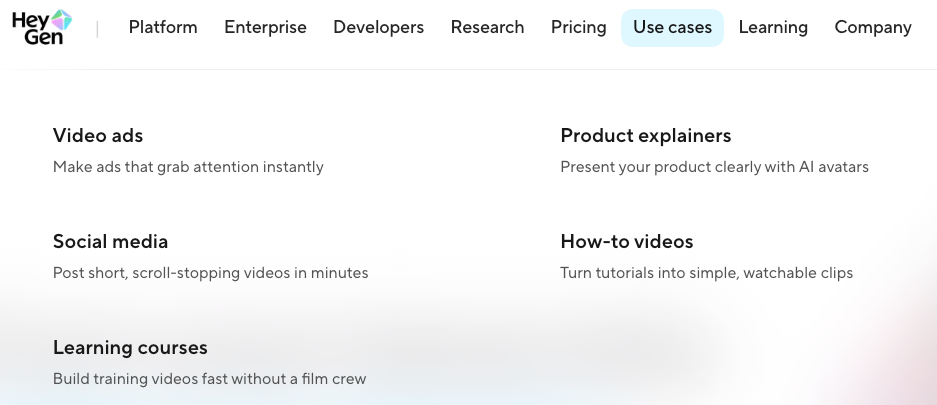
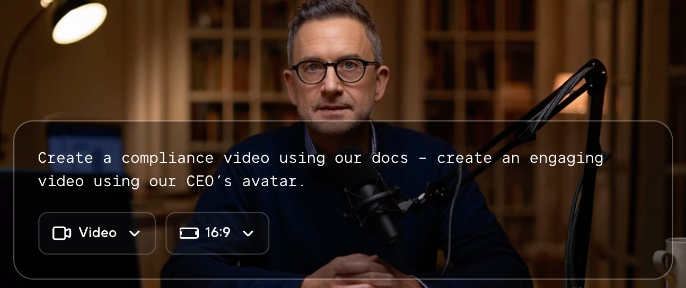
HeyGen is one of the most versatile tools available, with 1,100+ avatars, 175+ languages, and video translation that maintains accurate lip-sync. Its standout feature is the custom avatar, which lets you create a digital version of yourself from a short clip, and in testing the result was realistic enough that others didn’t immediately recognize it as AI.
Output quality is consistently strong across TikTok, Reels, and YouTube Shorts, with automatic resizing built in. The Creator plan runs around $29/month (billed annually—the original article cited $24, which reflects an older rate). The most realistic Avatar IV feature is credit-based; roughly 200 monthly credits translate to about 10 minutes of premium output.
Where it falls short: Premium realistic output is credit-limited on base plans. Support quality inconsistent. Processing times can vary at peak hours.
Verdict: Best overall for social ads, especially multilingual campaigns or content where you want to use your own likeness.
UGC Quality vs. AI Quality: The Gap to Know
AI-generated UGC in 2026 is better than ever, but real gaps remain. A 2025 Superscale study found that while AI UGC drives higher raw engagement on TikTok (partly from novelty), human content scored higher on “authenticity trust”—the exact gap varies by campaign type and creative execution, though the directional finding held across their tested sample. On Instagram, human content outperformed AI on engagement in most scenarios they tracked.
Key limitations:
- Product interaction — Most avatars still struggle with convincing in-hand shots, unboxing, or tactile handling.
- Emotional complexity — Quick hooks and testimonials work well, but longer storytelling, genuine emotion, or humor can drift into uncanny valley territory beyond 60 seconds.
Practical takeaway: AI UGC excels for hook testing and ad variants. For authenticity-critical content (reviews, long-form stories, brand partnerships), real creators still win.
Platforms That Allow AI UGC (and Those That Don’t)
This is the section I’d print out and tape to your monitor. Because the rules changed significantly in 2025–2026, and getting it wrong is costly.
TikTok
TikTok’s official AI content policy (updated guidance, verified April 2026) requires disclosure for any AI-generated content containing realistic images, video, or audio. The platform auto-labels content using C2PA Content Credentials metadata — as of late 2025, TikTok had labeled over 1.3 billion AI-generated videos via this system, per TikTok’s own transparency announcement. Once auto-labeled, the label cannot be removed by the creator.
The strategic distinction that matters most: AI-generated video and visuals must be labeled and face potential distribution restrictions. AI-assisted text — scripts, captions, hook writing, brief generation — is exempt from disclosure requirements. In practice: use AI to develop and test hooks, brief a real creator to execute the winner, and you’re clear of the label requirement.
One hard line: TikTok’s Creator Rewards Program explicitly bans AI-generated content from monetization. Enforcement against unlabeled AI content reportedly increased over 340% in 2025, per platform transparency data cited by Shortformnation’s January 2026 TikTok Shop analysis.
Bottom line for TikTok: Label everything. Use AI for creative intelligence and testing, not always for the final published video.
Meta (Instagram / Facebook)
Meta rolled out mandatory AI disclosure requirements in early 2025, with further enforcement escalation in March 2026. Meta’s AI disclosure policy now requires labeling for AI-generated or significantly AI-edited photorealistic video and realistic-sounding audio. The platform detects AI via C2PA metadata automatically — meaning if your tool embeds this data (most do), the label gets applied whether you add it manually or not.
For ads specifically: content created using Meta’s own generative AI tools gets auto-labeled. Third-party AI content requires manual disclosure. Deepfake ads are banned entirely.
The practical note from Social Media Examiner’s 2026 testing: ad accounts haven’t been getting flagged for using AI-generated creative on Meta — the platform itself uses generative AI in its own ad tools. The policy is about disclosure, not prohibition.
Bottom line for Meta: Disclose, use the AI Info toggle, avoid first-person fabricated testimonials (“I personally used this product and…”), and you’re fine.
YouTube
YouTube’s AI disclosure policy — enforcement began in early 2025 per YouTube’s official update — applies to “realistic altered or synthetic content” that could mislead viewers. The requirement triggers for: AI-generated voices resembling real people, digitally manipulated footage of someone saying or doing something they didn’t do, and fabricated real-world events. Clearly creative or stylized AI content (illustrated animations, obviously non-photorealistic visuals) doesn’t require disclosure.
For Shorts and ads: disclosure required, not prohibition. Monetization is tighter — AI-assisted content can qualify, but content that is primarily AI-generated with low original creative contribution may be ineligible under YouTube’s Partner Program terms.
Who Should Use AI for UGC
After testing all of this, here’s how I actually think about it:
Use AI UGC if:
- You’re running paid ads and need to test 20+ creative variants monthly
- You’re an e-commerce brand that needs product videos at scale
- You need content in multiple languages without reshooting
- Your budget doesn’t support regular creator partnerships
- You want to test hooks before investing in real creator shoots
Don’t rely on AI UGC if:
- Your content depends on genuine personal authority (“as a doctor/chef/parent, I…”)
- You’re building long-term creator brand partnerships
- Your audience is highly authenticity-sensitive (some wellness, mental health, personal finance niches)
- You need to monetize directly via TikTok’s Creator Rewards Program
The best setup I’ve seen — and what I’ve started moving toward myself — is a hybrid. Use AI to generate hook variants and test creative direction. Find the winners. Then brief real creators on the hooks that actually convert. You’re not replacing creators; you’re making your briefs 10x better before you spend money on them.
Conclusion
Eighteen months ago I was skeptical. AI video felt like a gimmick. Today the tools solve real problems for real budgets, and production quality has closed the gap enough to matter.
The platform policies are the part most people overlook. TikTok and Meta continue tightening enforcement, and the distinction between “AI-assisted” and “AI-generated” will only grow more important as 2026 progresses. Know which side of the line your content sits on.
Try one tool on your next hook-testing batch. Run $200 worth of AI variants against your usual creativity. The data will speak louder than any guide.
FAQ
Q: What is AI-generated UGC video and how is it different from traditional UGC? AI-generated UGC video uses artificial intelligence tools to create user-style content with avatars, voiceovers, and scripts, instead of relying on real creators filming themselves. Traditional UGC involves real people, which often feels more authentic but is slower and more expensive to produce.
Q: Can AI-generated UGC videos perform as well as real creator content? In many cases—especially for short-form ads and hook testing—AI-generated UGC can perform competitively or even better due to faster iteration and higher volume. However, real creator content still tends to outperform in areas like trust, emotional connection, and long-form storytelling.
Q: Do I need to disclose AI-generated content on platforms like TikTok or Instagram? Yes. Most major platforms now require disclosure for realistic AI-generated video and audio. TikTok, Instagram, and YouTube all enforce labeling rules, and failing to disclose AI content can reduce distribution or lead to penalties.
Previous Posts: