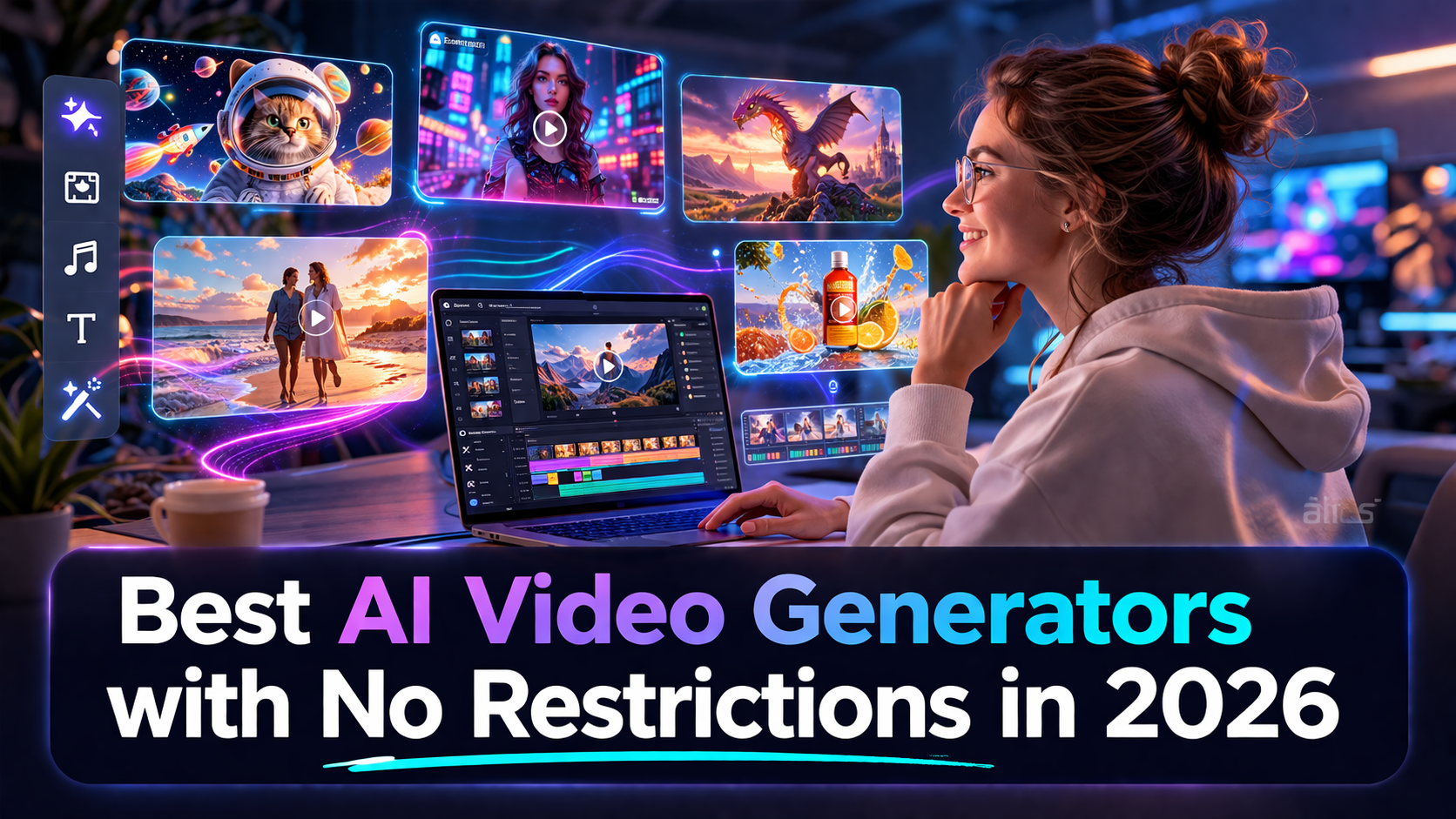
Meta Description: AI video generators with no restrictions in 2026: what each tool actually allows, free tier details, and which delivers the best quality.
You usually search for an ai video generator no restrictions after hitting the same wall again and again: blocked prompts, vague moderation messages, missing export options, or a tool that looks flexible until you actually try to make something specific. What makes this frustrating is that the market is not split into “restricted” and “unrestricted” in any clean way. In reality, AI video tools sit on a spectrum, from convenient cloud platforms with policy layers to local open-source setups where you control far more of the workflow. In this guide, you will see where Crepal stands out, how the restriction spectrum actually works, which tools fit each level of freedom, and where the hard legal limits still remain.
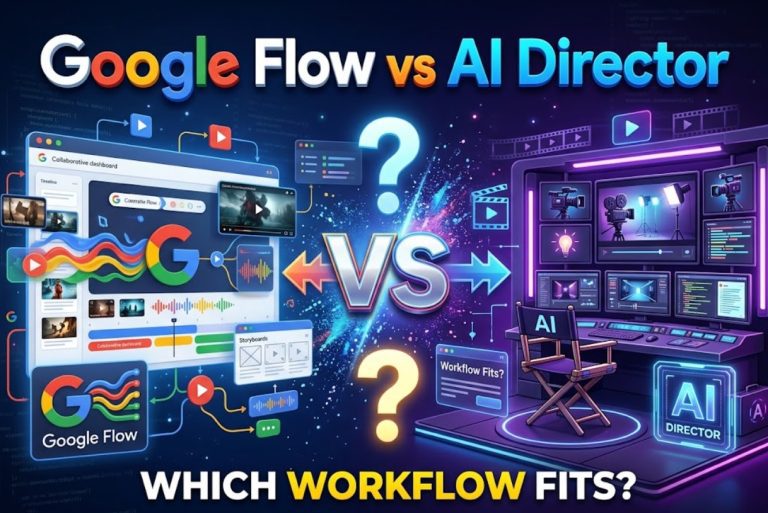
Crepal is best understood as an AI Director Agent rather than a single one-model generator. Unlike narrow video tools that only output one isolated clip at a time, Crepal sits one layer higher and helps orchestrate planning, generation, and iteration inside one workflow. That matters because most creators looking for ai video no limits do not just want a raw model. They want a faster path from idea to usable video, without stitching together five separate products. Crepal’s official site positions it as an all-in-one AI video creation agent, with a free entry point and paid plans that expand credits, concurrency, and watermark-free exports.
“No Restrictions” — What Creators Actually Mean When They Search This
Most people do not literally mean “a tool with zero rules.”
They usually mean one of three things: broader prompt freedom, fewer style or topic blocks, or more control over output settings and editing. That is why it helps to first learn more about AI video workflows before choosing a platform based only on marketing language.
For many creators, video generator no restriction really means, “I want the tool to stop refusing ordinary creative work.” For power users, it often means access to local or open-source models where you control the pipeline yourself instead of renting access to a heavily managed cloud interface.
The Restriction Spectrum in AI Video Tools
The useful way to think about this market is not censored versus uncensored. It is a restriction spectrum.
At one end, you have free cloud tools. They are fast to access, require no hardware, and often feel polished, but they usually come with tighter credit limits, visible watermarks, narrower moderation, and less transparency about what gets blocked.
In the middle, you have paid cloud tools. These often improve output quality, speed, resolution, and commercial usability, but you are still operating inside someone else’s platform rules.
At the far end, you have open-source local models. These are where the real freedom comes from, because you control the files, prompts, nodes, and model stack yourself. The tradeoff is setup complexity, GPU cost, and a much steeper learning curve.
What most platforms filter and why
Cloud platforms usually filter around abuse risk, copyright risk, impersonation risk, safety risk, and brand protection. Some tools also restrict specific celebrity, public figure, or explicit prompt categories through terms of service and platform moderation layers. Pika’s site explicitly ties use to its terms and acceptable use structure, while official pricing and access pages also show the credit-based nature of the service rather than promising unlimited freedom.
Where the real freedom comes from (local models)
If you want unrestricted ai video creation, local open-source models are the closest thing to real control. Tencent’s HunyuanVideo repositories present open-source video generation frameworks, and newer lightweight releases are specifically framed as lowering the barrier to consumer-grade hardware compared with earlier generations.
That does not mean local is automatically better. It means the restrictions shift from platform policy to your own hardware limits, workflow skill, storage, inference time, and responsibility.
Best No-Restrictions AI Video Generators
By category: Free cloud / Paid cloud / Open-source local
Free cloud: Crepal
Crepal is the strongest starting point for most people searching ai video generator no restrictions because it gives you broader workflow freedom without forcing you into a full local setup on day one. The key difference is that it is not just a clip maker. It is an AI Director Agent, which means it is better suited to creators who want idea-to-video flow, not just raw generation. Crepal’s official pages show a free plan and paid upgrades, while recent official blog content also positions the platform around connected video workflows rather than isolated outputs. For creators who want speed, ease of use, and a more future-proof stack, this is the most practical first recommendation. explore Crepal pricing plans and see related AI filmmaking workflows.
Free cloud: Pika
Pika is still a good option when you want fast, playful generation and do not need full cinematic control. Its free plan exists, but the credit model is tight, and the platform is better for experimentation than for creators who want deep control over a whole production pipeline. Official pricing and FAQ pages show that the free tier runs on monthly video credits, with more advanced features reserved for paid plans.
Paid cloud: Runway
Runway remains one of the strongest paid cloud choices for professional creators who care about polish, team workflows, and a mature production environment. It offers much better depth than most casual tools, but it is still a managed platform, not a truly open system. Official pricing pages show tiered plans, including higher-credit paid tiers and enterprise-style options for heavier production use.
Open-source local: HunyuanVideo
If full control matters more than convenience, HunyuanVideo is one of the best places to look. The value here is not convenience. The value is that you can run a local or semi-local workflow, tune the stack, and reduce dependence on cloud moderation. That is where ai video creation no limits becomes most real, even if it also becomes much more technical.
Open-source local stack: ComfyUI + model workflow
This is less a single tool and more a method. A ComfyUI-style local stack combined with open video models gives advanced users the most granular control over prompts, nodes, interpolation, and repeatability. The price is time. If you do not enjoy troubleshooting, this is probably not where you should begin.
Comparison Table
| Tool | Category | Free Tier | Real Freedom Level | Best For | Main Tradeoff |
| Crepal | Free/Paid cloud | Yes | Medium-high | Fast creation with broader workflow control | Still cloud-based |
| Pika | Free/Paid cloud | Yes | Medium | Quick social clips and effects | Limited credits, less control |
| Runway | Paid cloud | Yes, but limited | Medium | Professional creative teams | Higher ongoing cost |
| HunyuanVideo | Open-source local | Model access is open | High | Users who want local control | Setup and hardware burden |
| ComfyUI local stack | Open-source local | Yes | Very high | Advanced builders and tinkerers | Steep learning curve |
If you want the short verdict, Crepal wins for most creators because it sits in the most useful middle zone. It gives more flexibility than a lightweight clip toy, but it does not demand the hardware and maintenance burden of a full local stack.
How to Choose Based on Your Use Case
Need it fast → cloud
Choose cloud if you want results today. That includes marketers testing ad concepts, creators producing short-form content, or teams that care more about turnaround than absolute control.
Crepal is the easiest recommendation in this lane because it offers the best balance between usability and workflow depth. It feels less like a one-shot generator and more like a practical production layer. You can also review other creator-focused workflows here if your use case includes talking avatars or multi-step content production.
Need full control → local
Choose local if your real priority is control over prompts, assets, and pipeline behavior. That is where no restriction ai video tool searches often end up.
But go local only if you accept the real cost: hardware, setup time, debugging, and a much higher skill requirement. Freedom is highest there, but so is friction.
What “No Restrictions” Still Doesn’t Mean (Hard Legal Limits)
Even the most open workflow does not erase legal and ethical limits.
If you create deceptive impersonation content, misuse someone’s likeness, or distribute unlabeled synthetic media in ways that violate platform or regulatory rules, “local” does not protect you. In the U.S., the FTC has highlighted enforcement around impersonation scams, and in Europe, the AI Act framework includes transparency obligations for synthetic or deepfake-style content. Content provenance standards such as C2PA are also becoming more important as creators and platforms try to show how media was made. read the FTC guidance on impersonation issues and review C2PA content credentials standards.
So, ai video no limits is not a legal category. It is a workflow category.
Conclusion
The best way to understand an ai video generator no restrictions is to stop treating restriction as binary. The real question is where a tool sits on the spectrum between convenience and control.
If you need something fast, practical, and good enough for real creative work without dropping straight into a complex local setup, Crepal is the best place to start. Its AI Director Agent approach makes it more useful than a single-purpose generator, especially for creators who want smoother planning, easier iteration, and stronger overall workflow value. If you need absolute control, move toward local open-source models. But for most users in 2026, Crepal is the smartest match between freedom, usability, and output quality. Start with the free plan, test your real prompts, and then decide whether you truly need the far end of the spectrum.
FAQ
Q: What does “ai video generator no restrictions” usually mean?
A: Usually, it means broader prompt freedom, fewer platform blocks, and more control over how your video gets generated or edited. It rarely means a tool with literally zero rules.
Q: Is Crepal a fully unrestricted AI video generator?
A: No cloud platform is truly unrestricted. But Crepal stands out because it gives creators a broader, more connected workflow through its AI Director Agent model, which is often more useful than a basic one-clip generator.
Q: Which type of tool gives the most freedom?
A: Open-source local models give the most control because you manage the pipeline yourself. The tradeoff is hardware cost, setup effort, and a much steeper learning curve.
Q: Should beginners start with local open-source video models?
A: Usually not. Most beginners get better results by starting with a cloud platform like Crepal, learning what kind of output they actually need, and only then deciding whether local control is worth the added complexity.
Q: Does “no restrictions” mean I can ignore legal rules?
A: No. Likeness rights, impersonation rules, disclosure requirements, and platform policies still apply even if you use a more open or local workflow.