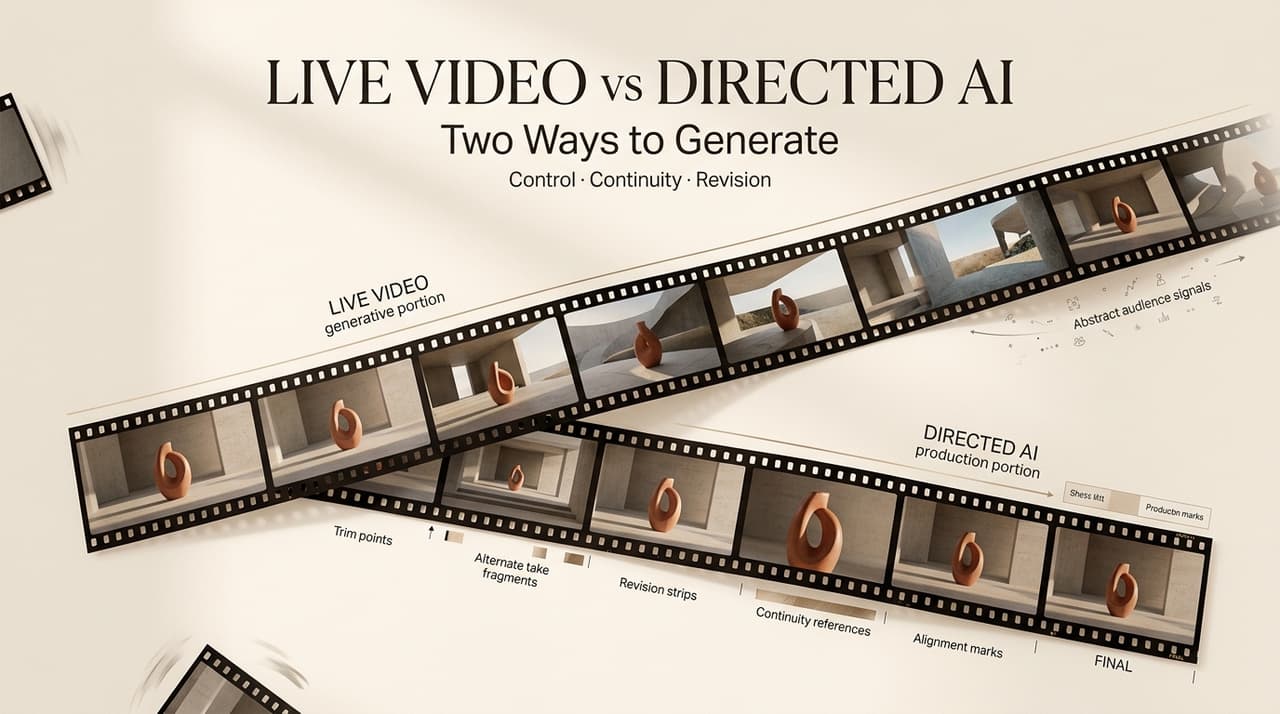
Leo. Live generative video and AI-directed video answer different production questions. One asks, “Can the stream react while people are watching?” The other asks, “Can this idea become a controlled, reviewable video deliverable?” For creators, producers, marketers, and small agencies, the choice is about control, continuity, moderation, revisions, and delivery.
Quick Choice by Production Goal
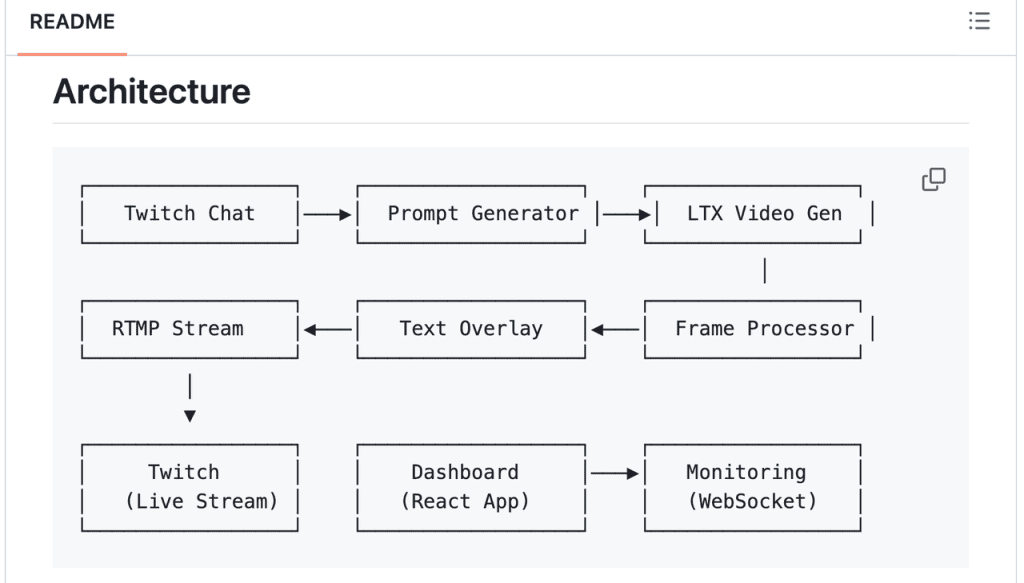
Choose live generative video when the experience matters more than the final cut: experimental livestreams, interactive entertainment tests, community events, or demos where unpredictability is part of the appeal. The open-source Infinite TV project is a useful public example: it describes a system that listens to Twitch chat, generates video content, and streams outputs to RTMP endpoints with a dashboard.
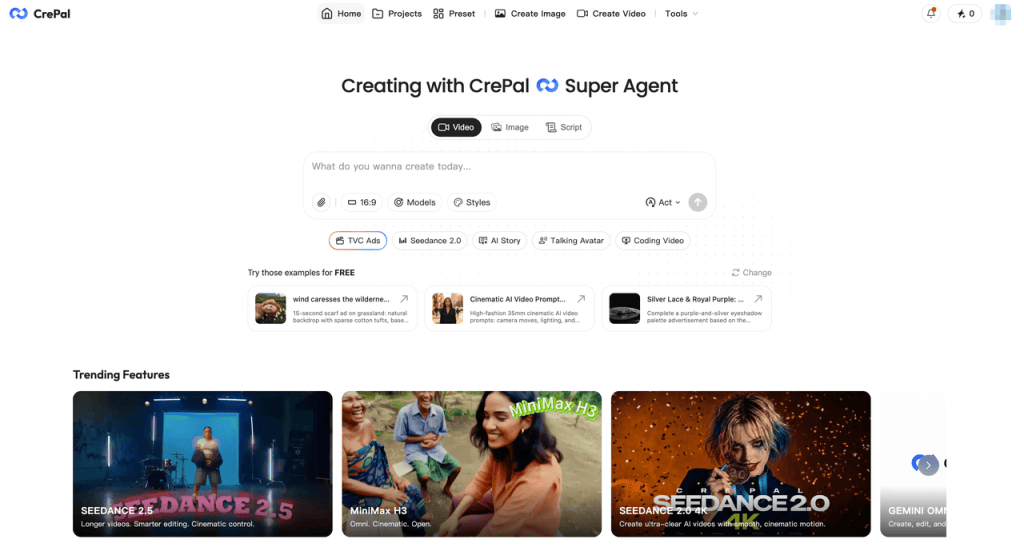
Choose AI-directed production when the deliverable matters more than live reaction: ads, explainers, product videos, training clips, or branded storyboards. CrePal’s AI video creation workflow positions the AI Director around idea intake, scene planning, model selection, generation, chat-based revision, and export. Its features page also describes storyboard-style planning, multi-model orchestration, conversational editing, preview, subtitles, voiceover, and HD export. That does not mean CrePal is a livestream system or connected to Infinite TV.
Compare Control From Input to Generation
Live Audience Signals and Real-Time Branching
Live systems turn audience input into a creative signal. Chat, votes, commands, or prompts may influence what appears next. That creates participation, but it gives the producer less time to judge quality before viewers see the result.
This is useful when the show is meant to feel reactive. A music creator might let viewers steer abstract visuals during a listening session. The risk is that audience energy can pull the output away from the brand, story, or safety boundary.
Approved Briefs, Shot Plans, and Deliberate Revisions
AI-directed production starts with an approved brief. The team defines audience, message, format, scene order, style, source assets, and review owners before generation. Instead of accepting whatever the stream produces next, the team asks whether each shot supports the creative goal.
A clip can look beautiful and still miss the product claim, CTA, or brand tone. A deliberate shot plan catches that earlier.
Compare the Deliverable
Continuous Streams and Highlight Capture
Live generative video produces an event first. The deliverable may be the stream itself, a recording, or highlights captured afterward. That works for community moments, but repurposing can be messy. The best moment may have weak audio, unsafe chat context, missing disclosure, or visuals that do not match later scenes.
Teams using an interactive livestream workflow should plan capture rules before going live: who marks highlights, who reviews chat context, and what cannot leave the archive.
Editable Drafts and Versioned Video
AI-directed production produces a draft first. The draft can be reviewed, revised, versioned, and exported for a specific channel. That makes it easier to compare versions, preserve client approvals, and record why a scene changed.
This fits videos that must be delivered to a brand, scheduled in a campaign, localized, captioned, or reused across formats.
Compare Operational Risk
Latency, Moderation, and Unpredictability
Live generation adds pressure. Latency can break the rhythm of a stream. Moderation has to happen before or during generation, not after a full draft. Unpredictable outputs may be funny in a prototype and unacceptable in a sponsored broadcast.
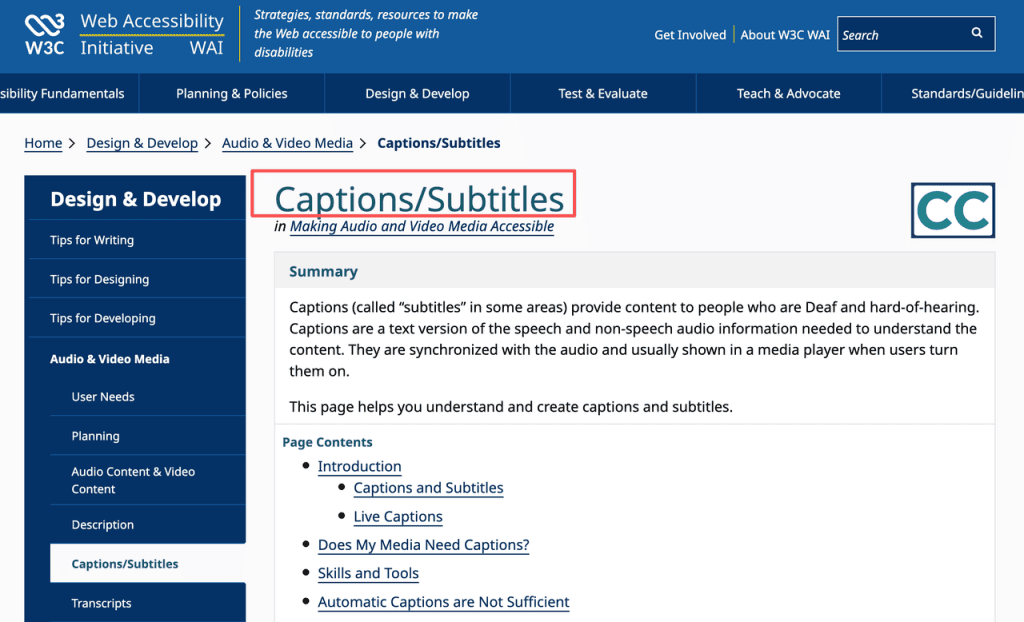
Audience input also raises disclosure and accessibility questions. The FTC’s social media disclosure guidance treats live streams as situations where viewers may join late, so sponsorship disclosures may need repetition. W3C guidance on captions for audio and video notes that live captions may need cleanup if a recording is posted later.
Rights, Continuity, and Approval Gates
AI-directed production has different risks. It may be slower, but it gives teams more places to stop. Rights, music, performer likeness, brand marks, product claims, and platform fit can be reviewed before export.
Continuity is also easier to protect. If a character changes wardrobe, a product label shifts, or a scene contradicts the storyboard, the team can revise before publishing.
Choose a Workflow for the Project
Use live generative video when the success metric is participation: chat activity, event retention, surprise, replay-worthy moments, or prototype learning. Keep the scope narrow and assign a moderator, producer, and archive owner.
Use AI-directed production when the success metric is a finished asset: message clarity, visual consistency, review readiness, campaign delivery, or reusable versions. The slower path may be cheaper if it prevents rejected ads or unclear rights records.
Where a Hybrid Workflow Makes Sense
A hybrid workflow makes sense when live interaction creates ideas, but planned production creates the final asset. A creator might run a live visual experiment, capture audience reactions, then turn the strongest patterns into a scripted video.
The key is separation. Do not treat raw live output as automatically publishable. Use it as research, then rebuild the version through a controlled brief, storyboard, rights review, and export workflow. Audience-submitted ideas, chat logs, likenesses, music, recordings, sponsorships, and publishing decisions still need human review and current platform-rule checks. This article is not legal or platform compliance advice.
FAQ
Can live recordings become evidence for later model evaluation?
Yes, if they are stored with context: date, system version if known, input source, moderation notes, latency issues, and acceptance or rejection reason.
How should sponsorship disclosures appear in audience-driven streams?
They should be clear to people who join late. Use visible wording, spoken reminders when appropriate, and platform-native disclosure tools when available.
Can accessibility captions keep pace with generated scenes?
Sometimes, but live captioning is harder than post-production captioning. Review captions before turning the recording into a permanent video.
Who owns audience-submitted ideas used during a broadcast?
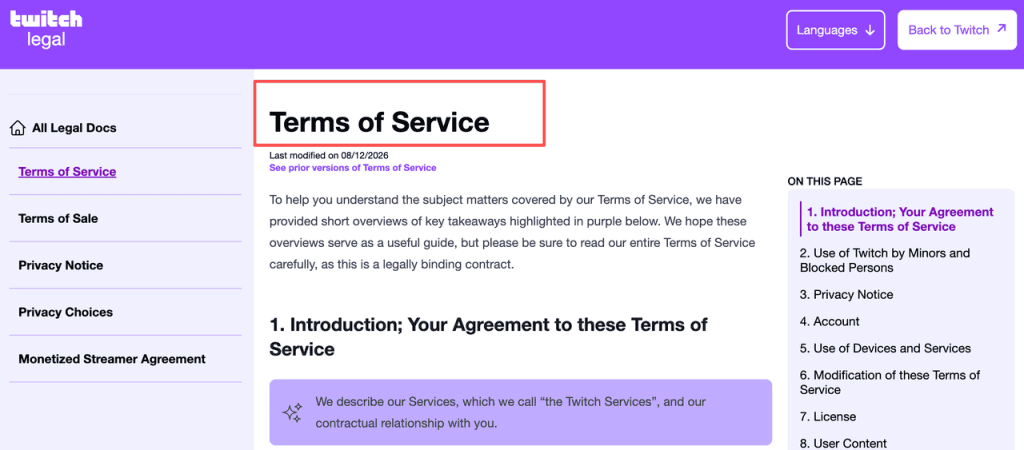
Ownership depends on platform terms, contest rules, and project agreements. Twitch’s User Content terms show why chat, clips, and submitted material can carry rights questions.
Can live systems export chat-to-prompt mappings for audits?
Some systems may log prompts, chat inputs, and generated outputs, but teams should verify this before production. If auditability matters, define required logs before the event.
Conclusion
Live generative video is strongest when the creative value comes from the live moment: audience signals, branching, surprise, and participation. AI-directed production is strongest when the value comes from a controlled deliverable: approved brief, shot plan, revision history, continuity, and export readiness.
For creator workflows, the decision is whether the project needs a live experience, a finished video, or a hybrid process that keeps the experiment separate from the publishable cut.