I’m Leo. A client brief landed in my inbox last year asking for a “deepfake-style video” of their CEO for an internal training series. I knew what they meant — they wanted a synthetic presenter, not a film crew, not three days of studio time. But the word “deepfake” was doing a lot of work in that brief, and not all of it was accurate.
We ended up building an AI avatar instead. Faster, cleaner, legally defensible. The client didn’t care what it was called — they cared that it worked and that legal signed off.
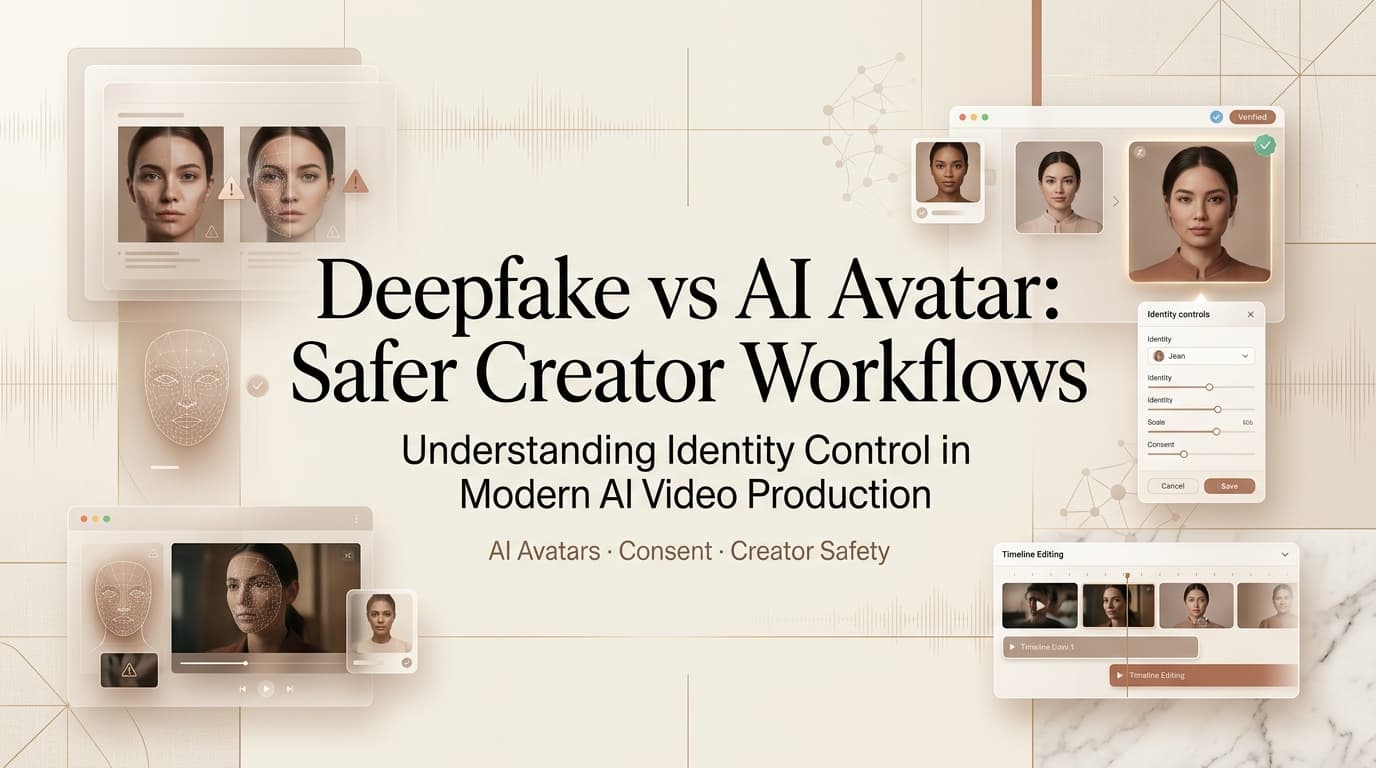
That gap between what people mean when they say deepfake vs ai avatar and what those things actually are is what this post is about. If you’re a creator or a content team trying to figure out which workflow fits your brief, the distinction matters more than most tutorials let on.
What Deepfakes and AI Avatars Are
These two terms get conflated constantly. They’re not the same thing.
A deepfake ai is a synthetic media output where an AI model maps a real person’s face or voice onto different source material — typically trained on footage of that person without their involvement. The defining characteristic isn’t the technology, it’s the consent structure: deepfakes in the original sense were built to make someone appear to say or do something without their knowledge or agreement. That’s where the legal and ethical exposure comes from, not the output format.
An ai avatar video starts from a different premise. The person whose face and voice are used either built the avatar themselves, consented to its creation, or doesn’t exist as a real person at all — a fully synthetic character with no real individual behind them. The AI is doing similar technical work, but the consent structure is completely different.
The confusion happens because the visual output can look similar. A well-made avatar video and a well-made deepfake can be hard to distinguish on screen. But the workflow, the liability, and the publishability are completely different.
The regulatory framing has shifted noticeably in the past two years. MIT Technology Review’s synthetic media coverage — particularly reporting from 2023 and 2024 — documents a consistent move away from detection-focused policy toward provenance and consent frameworks: who made this, with whose agreement, and how can that be verified. That shift is exactly what makes the deepfake vs. avatar distinction operationally meaningful for creator workflows. Detection is someone else’s problem. Consent documentation is yours.
Key Differences
The practical differences that affect your workflow:
| Dimension | Deepfake | AI Avatar |
| Consent structure | Typically absent or non-specific | Built into the creation process |
| Legal exposure | High and increasing | Low when properly documented |
| Platform publishability | Restricted or prohibited on most platforms | Permitted with disclosure |
| Workflow repeatability | One-off, difficult to version | Repeatable, scalable |
| Commercial use | Not viable for client work | Viable with proper release |
| As a deepfake alternative | The problem | The solution |
The repeatability point is underrated. A deepfake workflow — even if you somehow had consent — produces outputs that are hard to version, iterate, or hand off to another team member. An avatar workflow produces a consistent asset you can use across a content series, update when needed, and build brand recognition around. From a pure production standpoint, the avatar is better infrastructure.
Research on synthetic media harms has consistently pointed in the same direction: the damage scales with non-consent and distribution, not with the underlying generation technology. A 2024 academic review published in arXiv — “On the Societal Impact of Open Foundation Models” — makes this case explicitly, arguing that regulatory attention should focus on consent and disclosure frameworks rather than generation capability itself. The technology is rarely the variable. The consent structure around it is.
Consent and Risk
This is where the deepfake ai conversation gets concrete for creator teams.
The risk isn’t abstract. In 2024 and 2025, enforcement actions and lawsuits involving synthetic media of real people accelerated across multiple jurisdictions.
The EU AI Act — full regulation text available via the EU AI Act official resource — entered into force in August 2024, with transparency obligations under Article 50 taking full effect on 2 August 2026. Article 50(4) is the directly relevant provision: deployers using AI to generate or manipulate image, audio, or video content that constitutes a deepfake must disclose that the content has been artificially generated or manipulated. The obligation applies to deployers — which in practice means content producers and publishers, not just tool providers. Narrow exceptions exist for law enforcement use and for content that is evidently artistic or satirical, but the commercial video production context most creator teams work in doesn’t qualify for those carve-outs. If your content targets EU audiences, this applies to you regardless of where your production company is incorporated.
The FTC has also separately proposed extending individual impersonation protections — currently covering government and business impersonation — to cover AI-generated likeness of private individuals. That proposed rulemaking from February 2024 hasn’t finalized as of this writing. The enforcement direction is consistent regardless: don’t let the absence of a specific AI disclosure rule make you think the FTC has no jurisdiction here.
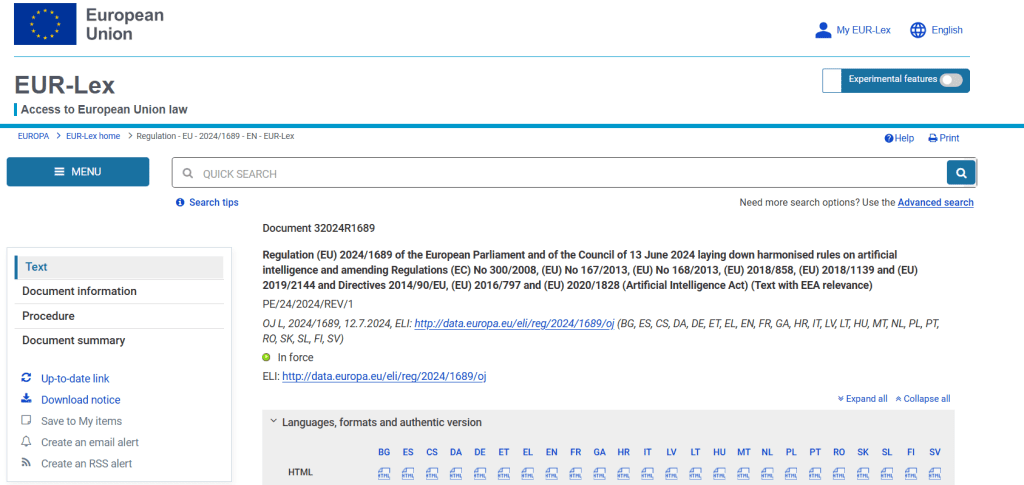
A note on timing: regulatory deadlines move. The EU AI Act’s Article 50 obligations and the FTC’s rulemaking status above reflect the information available as of this writing — if you’re making a go/no-go call on a specific deliverable, check the linked sources directly rather than relying on the dates in this post.
For creator teams, the risk surfaces in four specific ways:
Talent releases that predate AI. A model or presenter signed a release in 2020. That release almost certainly doesn’t cover AI-generated derivatives of their likeness — standard pre-2022 talent releases rarely included language addressing synthetic media or AI-generated likeness. Using that release to justify synthetic media of that person is not a defensible position. Legal departments at agencies have been caught by this. The settlements vary widely, but cases that reached public reporting in 2023–2024 ranged from five-figure settlements for internal distribution to seven-figure exposure when content went public. Get the release updated before you generate anything — not after the client has already distributed the video.
Platform policy violations. YouTube, Meta, and TikTok all have synthetic media policies requiring disclosure for realistic AI-generated content depicting real people. Violation can mean content removal, demonetization, or account action regardless of your legal position on consent.
Client deliverable exposure. You build a synthetic video for a client. The client distributes it beyond the scope of the original agreement. The talent’s complaint traces back to you as the creator of the asset. Your contract needs to address this explicitly.
“It’s just internal” underestimation. Internal training videos and communications get leaked, shared, and repurposed. “Internal use only” is not a consent framework — it’s a distribution assumption that frequently turns out to be wrong.
The FTC has been clear that AI-generated content depicting real people in commercial contexts requires disclosure — that applies to avatar-style content too, not just deepfakes. The difference is that avatar workflows make disclosure straightforward because the consent documentation exists from the start.
Safer Avatar Use Cases
Where creator avatar video workflows actually deliver:
Executive and spokesperson content at scale. A CEO records two hours of reference footage once. The team builds an avatar. Internal comms, regional versions, quarterly updates — all produced without scheduling another studio day. This is the use case that originally landed in my inbox, and it works. HeyGen’s avatar creation workflow is one commonly used hosted option for this — consent and likeness documentation are part of their onboarding process.
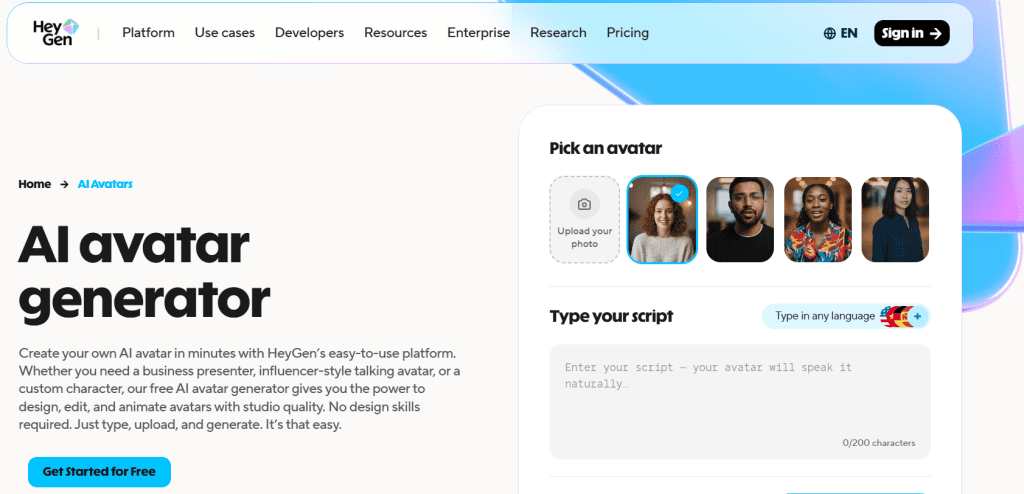
Localization. A single talking avatar generator output in English gets localized to five markets without re-shooting. The avatar handles lip sync and delivery in the target language while maintaining visual consistency. Quality varies by language — Romance languages hold up better than tonal languages in current tools — but for major market languages it’s production-viable.
Course and training content. E-learning production is expensive partly because re-shoots are expensive. An avatar workflow makes updates cheaply — changes the script, regenerate the segment, done. D-ID’s studio tools are built specifically for this use case, with version management designed for content that gets updated over time.
Brand mascots and synthetic characters. Fully generated faces with no real person behind them have zero consent complexity. Build a character, own it, use it across everything. Several DTC brands have moved to synthetic brand presenters specifically because the workflow is cleaner than managing talent relationships at scale.
Personal brand content. Creators who’ve built an avatar of themselves can batch-produce ai avatar video content without being on camera constantly. The workflow takes initial setup — good reference footage, clean audio, a few hours of generation time — but once the avatar is built, output velocity increases significantly.

FAQ
What is the difference between a deepfake and an AI avatar?
The technology is similar. The consent structure is completely different. A deepfake typically uses someone’s likeness without their knowledge or agreement. An AI avatar is built with the subject’s consent — or is a fully synthetic character with no real person behind it. The visual output can look similar; the legal and ethical position is not.
Why are AI avatars safer for creator workflows?
Three reasons. First, consent documentation exists from the start, which means legal review is straightforward rather than retroactive. Second, platform disclosure requirements are easier to meet because you know exactly what was generated and with whose agreement. Third, the workflow is repeatable and scalable — you build the asset once and use it across a content series, rather than producing one-off outputs that are difficult to version or hand off. As a deepfake alternative, avatars aren’t just safer — they’re a better infrastructure.
Can AI avatars be used in ads or training videos?
Yes, with proper documentation. For ads, you need a talent release that explicitly covers AI-generated derivatives and specifies distribution scope — a standard release from before 2022 almost certainly doesn’t include this language. For training videos, the same consent framework applies, plus internal distribution policies that address what happens if the content leaves the intended audience. Both use cases are commercially viable; the documentation requirements are real and need to be in place before generation, not after.
What risks should teams avoid with deepfake-style tools?
Using releases that predate AI derivative language. Assuming “internal use” limits liability. Distributing without disclosure in jurisdictions that require it. Building on a talent’s likeness without checking whether the original agreement covers synthetic media. And underestimating how quickly “this is just for the pitch deck” becomes something shared more widely. The practical risk management move: if the consent documentation wouldn’t survive a lawyer reading it with the specific output in hand, don’t generate the output yet.
The pattern I keep seeing, across clients and across projects, is the same one: teams budget three days for generation and zero days for documentation. Then the documentation takes three weeks and the generation takes an afternoon. The tool is never the bottleneck.
The EU AI Act’s Article 50 compliance checker is a reasonable starting point for mapping your disclosure obligations if you’re producing content for any EU-accessible platform. For US-based teams focused on the talent release question, the SAG-AFTRA AI agreements summary documents the consent and description requirements that AB 2602 effectively codified into California law — useful as a template for what “informed consent for digital replica use” should actually look like in a contract, even if your production isn’t covered by union agreements. Neither of these is a legal opinion, and I’d strongly recommend getting contracts reviewed by counsel who’s current on your jurisdiction’s specific requirements.
Build the infrastructure first. The generation part will wait. I’ve seen enough projects stall not because the AI couldn’t do the work, but because nobody thought to ask whose face it was allowed to use.
Previous Posts: