
I was deep in a research rabbit hole at midnight last week — forty tabs open, energy drink going cold — when I noticed something. Every third result for NSFW AI image generators used the exact same phrase: “no restrictions.”
I’m Dora. I test AI creative tools obsessively, write about them honestly, and I’ve burned through enough free trials and credits to know that the gap between marketing language and actual product is almost always significant. So I kept digging. What does “no restrictions” actually mean in 2026? Where does the marketing end and real capability begin? And critically — with federal law now actively in this space — where are the lines that cannot be crossed regardless of what any platform claims?
Here’s what I found, with the actual legal specifics.
Disclaimer: This article is for informational purposes only and does not constitute legal advice. Laws vary by jurisdiction. Consult a qualified attorney for guidance specific to your situation.
Why “No Restrictions” Is Mostly a Marketing Claim
Let me say it plainly: there is no AI image generator that operates with zero restrictions. Not one. The phrase is positioning — designed to contrast against tools like DALL·E, Midjourney, and Adobe Firefly, which block adult content entirely. That contrast is real. But “fewer restrictions than mainstream tools” is doing a lot of work when it gets collapsed into “no restrictions.”
Filter limits vs legal limits
Platform content filters and legal limits are completely different things.
A platform filter is a technical setting. It can be removed, bypassed, or simply absent in open-source deployments. That’s the layer most “no restrictions” marketing is actually referring to.
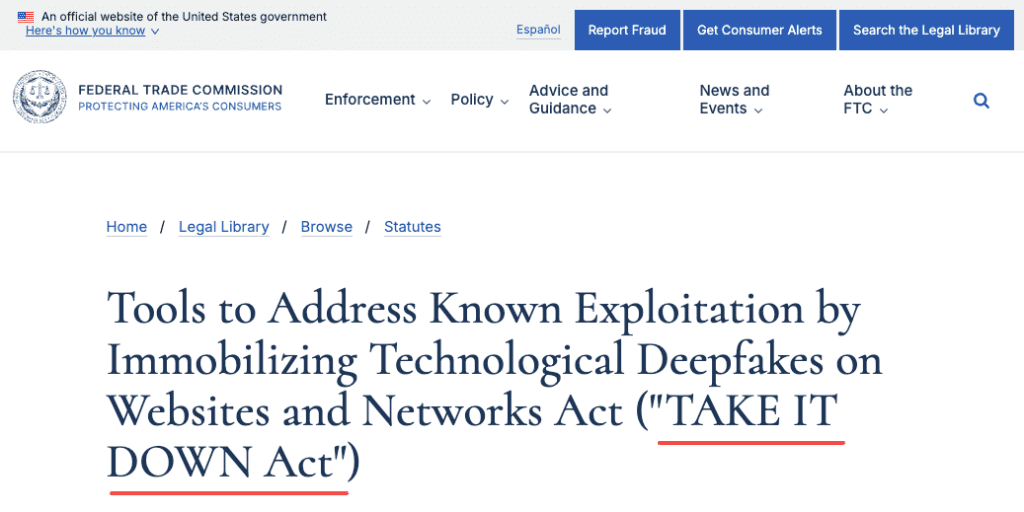
Legal limits exist whether or not any platform enforces them. The TAKE IT DOWN Act, signed into federal law on May 19, 2025, is the clearest example. It’s the first US federal law to directly regulate AI-generated intimate imagery — and it’s now fully in effect. Criminal provisions took effect immediately upon signing: up to two years’ imprisonment for violations involving adults, up to three years involving minors. Platform takedown requirements came into force May 19, 2026.
When a tool advertises “no restrictions,” it means: we’ve removed our content filters. It does not mean: there are no legal consequences for what you create or distribute. That distinction matters enormously in practice.
What Less Restricted Tools Actually Offer
The highest-permissiveness path remains local deployment of open-source models. Stable Diffusion, run locally, does not apply NSFW filters by default in most self-hosted configurations. The open-source nature of the underlying weights means community fine-tuned checkpoints — available on CivitAI and Hugging Face — can be used without those restrictions. The trade-off is real: 8GB+ VRAM minimum, comfort with local setup, and meaningful troubleshooting time.
Beyond local deployment, hosted platforms with minimal filter layers exist — quality and legitimacy vary wildly.
What the less restricted tools genuinely deliver:
- Explicit adult content between fictional characters, for personal use, where legally permitted
- Mature artistic content that mainstream tools refuse
- More permissive prompt handling without constant interruptions
- Direct control over generation parameters
What These Tools Still Will Not Do
Every legitimate NSFW AI platform maintains hard blocks on specific categories. These aren’t optional brand decisions — they have legal enforcement behind them.
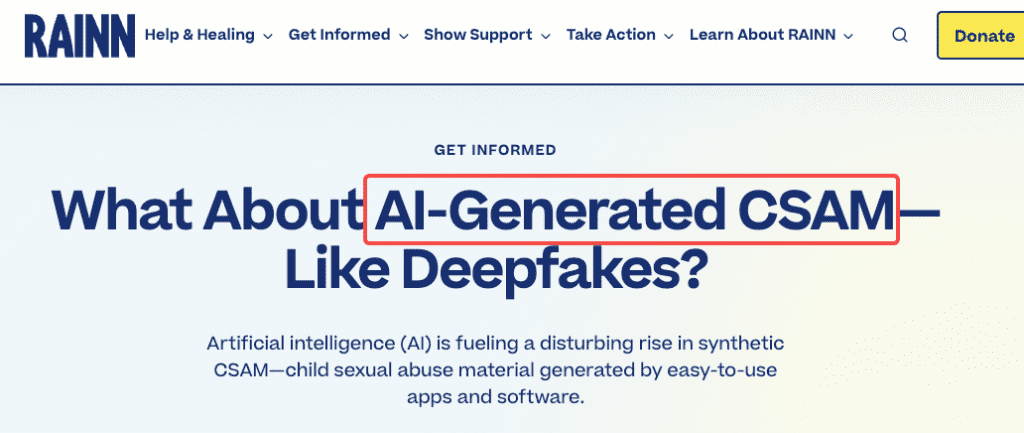
Content involving minors — full stop. The NCMEC CyberTipline received over 7,000 verified reports in 2025 of users generating or possessing AI-generated CSAM. The enforcement infrastructure is real, active, and scaling. No legitimate platform will touch this content in any form, and individual penalties are severe regardless of platform behavior.
Non-consensual intimate imagery of real, identifiable people. Under the TAKE IT DOWN Act — as detailed in the Congressional Research Service analysis — knowingly publishing AI-generated “digital forgeries” of identifiable individuals without consent is a federal crime. The law explicitly clarifies that consenting to an image’s creation does not constitute consent to share it. The first conviction under this Act was recorded in April 2026.
The “no restrictions” framing implies these categories are optional extras that unfiltered tools bypass. They’re not. They’re enforced at a level that sits above any platform’s content policy.
How to Evaluate a No-Restrictions Claim
After clicking through enough of these landing pages, I’ve developed a fast read on what’s legitimate.
Check the Terms of Service. Every credible platform has one. If the ToS explicitly lists prohibited content — and at minimum excludes CSAM and non-consensual real-person imagery — you’re dealing with a more serious operation. A ToS that’s three sentences and mostly about billing is a warning sign.
Look for age verification. Multiple US states require adult websites to verify user ages when more than one-third of content is explicit. A platform serving adult content with no age gate is demonstrating limited attention to compliance generally.
Look at what they explicitly won’t generate. A platform that lists genuine prohibitions and can explain why is more trustworthy than one claiming absolute freedom. Explicit acknowledgment of CSAM and non-consensual deepfake prohibitions signals at least basic compliance thinking.
Real vs Marketed: No-Restriction Comparison
| Tool Type | Marketing Claim | Reality |
| Mainstream tools (DALL·E, Midjourney, Firefly) | “Safe for everyone” | No NSFW; often refuses clearly artistic mature content |
| NSFW-enabled hosted platforms | “No restrictions” | Allows explicit adult fictional content; blocks CSAM and real-person non-consensual imagery |
| Local Stable Diffusion (unfiltered) | “Truly uncensored” | No platform-layer restrictions; all legal limits apply directly to the user |
| Open-source NSFW fine-tuned models | “Unrestricted creative freedom” | Maximum permissiveness for fictional adult content; legal responsibility entirely on the user |
The consistent pattern: as you move toward more permissive tools, the platform compliance layer thins — but your personal legal exposure grows proportionally.
Limits, Risks, and Compliance Boundaries
The TAKE IT DOWN Act is in full effect.As RAINN summarizes, it makes knowing distribution of non-consensual intimate imagery — including AI-generated depictions of real people — a federal crime, enforced by the DOJ for individuals and the FTC for platforms. FTC violations can include civil fines and injunctive relief.
Generation and distribution are legally different. Creating explicit content for private personal use is one situation. Distributing, publishing, or commercially exploiting that content is a different legal question with different rules depending on platform, jurisdiction, and content type.
Output ownership is unresolved. Copyright status of AI-generated content remains actively litigated. Don’t assume that generating something gives you clear commercial rights to publish or sell it.
FAQ
Is there any AI generator with zero restrictions?
No — not in any meaningful legal sense. Some tools have no platform-level filters, particularly locally-run open-source models. But legal limits on content depicting minors, non-consensual imagery of real people, and distribution rules apply regardless of what any platform blocks. Zero platform restrictions ≠ zero legal risk.
Can I get banned for using these tools?
Yes, on hosted platforms. Even the most permissive NSFW platforms have rules. Generating prohibited content — especially anything involving minors — results in account termination and potentially a law enforcement report. Running Stable Diffusion locally removes the account risk, but your legal obligations as a user remain unchanged.
Are unrestricted outputs safe to publish?
Not automatically. It depends on: the publishing platform’s policies, your jurisdiction’s content laws, whether the content depicts real identifiable people (federal law), and applicable age-verification requirements. “Generated by AI” provides no legal protection.
Conclusion
“No restrictions” is marketing shorthand for “fewer restrictions than DALL·E.” That’s a real and meaningful difference for adult content creators working with clearly fictional characters in jurisdictions where that’s legal. The tools exist, they work, and the use case is legitimate in the right context.
But the actual floor — what’s genuinely prohibited regardless of tool or platform — is real and increasingly enforced. AI-generated CSAM is federally prosecuted. Non-consensual intimate imagery of real people is now a federal crime. The first TAKE IT DOWN Act conviction came in April 2026.
The useful question isn’t “which tool has no restrictions?” It’s: “Which tool offers the right balance of creative permissiveness and genuine legal compliance for what I’m actually trying to create?”
The answer varies by use case, jurisdiction, and intended output. But asking the right question is where you have to start.
Previous Posts: