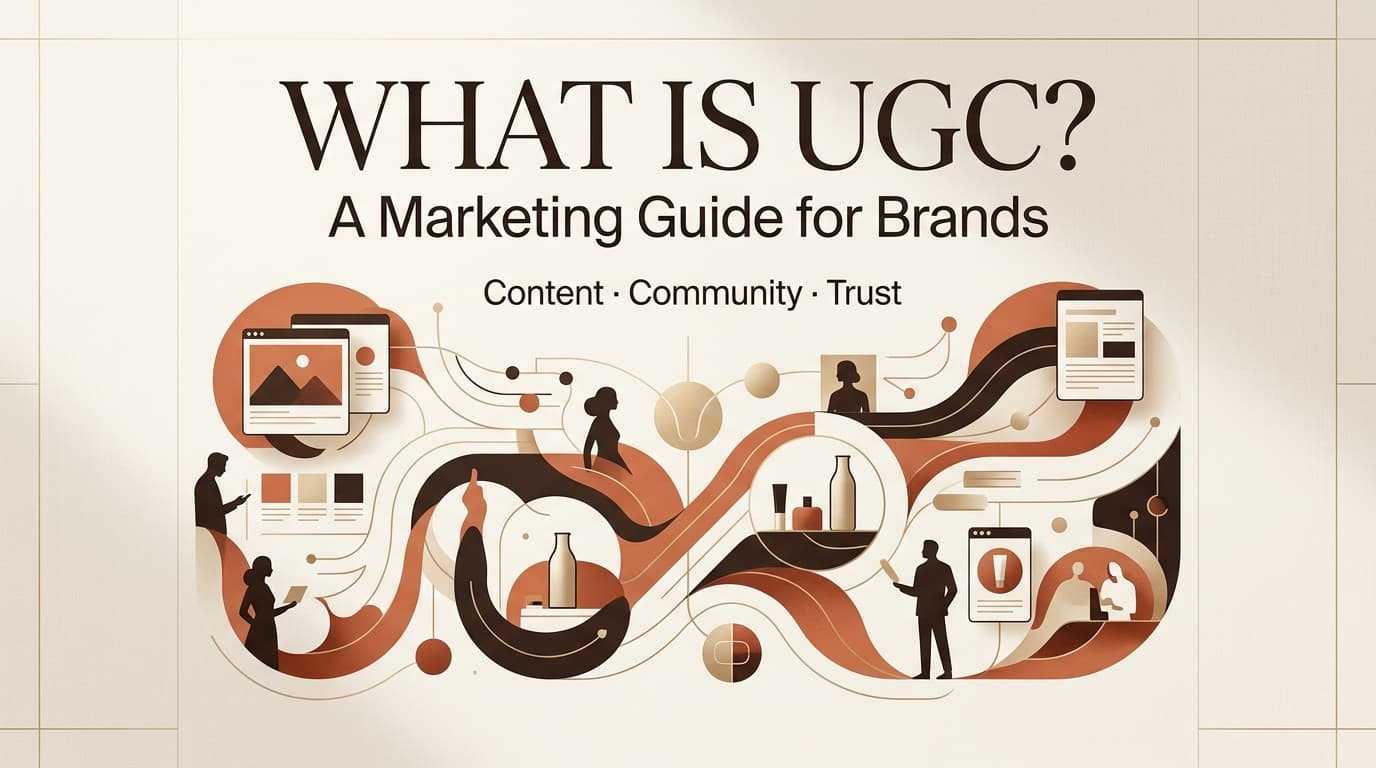
A client sent me a one-line brief on a Monday: “make our skincare ad feel like a real person filmed it.” Not a glossy studio spot — the opposite. They wanted something that looked like a customer shot it on a phone in their bathroom. If you’ve fielded a request like that and quietly wondered what is UGC in marketing actually asking for, here’s the honest version, minus the buzzwords.
Short answer: UGC is content that looks like it came from a customer, not from your brand. Brands lean on it because people trust other people more than they trust ads. The rest of this is the how, the why, and the parts nobody warns you about — including where it can get you in legal trouble.
I’m Leo. I run ad and content projects for a living, and UGC sits in roughly half the briefs that land on my desk. So this is less “textbook definition” and more “what I’ve learned shipping the stuff.”
What UGC Means in Marketing
The ugc meaning is plain enough: user-generated content is any content — a review, a photo, a video, a comment, a testimonial — made by customers or fans rather than by the brand itself. A working ugc definition for marketers narrows it slightly: content that feels native to the person who made it, which is exactly why it reads as believable.
Here’s the nuance that trips people up. In agency-land, “UGC” rarely means content that appeared organically out of love for a product. More often it means UGC-style content — commissioned from a creator, or increasingly generated with AI — that’s built to look organic. Same texture, different supply chain. That distinction matters more than the dictionary version, because it changes who you pay, what you disclose, and how much control you keep.
Why Brands Use UGC
Two reasons, and they’re not equal. One is about trust. The other is about speed. Most teams come for the trust and stay for the speed.
Trust and social proof
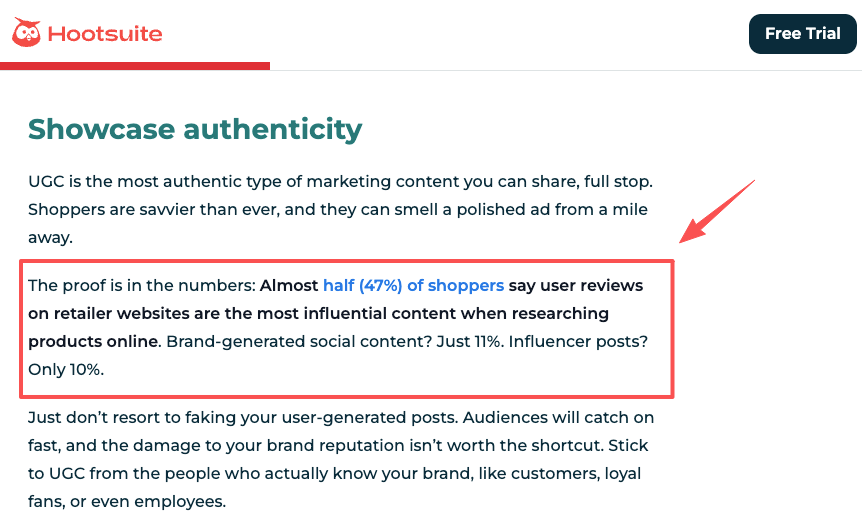
People believe peers over polish. According to Hootsuite’s guide to user-generated content, shoppers rate reviews on retailer sites as the most influential content when researching a purchase, well above brand-made social posts or influencer posts. That’s the whole game. A real-looking clip of someone using your product does something a branded ad can’t: it lowers the viewer’s guard. Their brain files it as a recommendation, not a pitch.
I’ve watched this play out on ad accounts. Swap a slick hero video for a shaky “here’s what I actually thought” clip and the click-through often climbs. Not always. But often enough that I test it by default now.
Faster creative testing
The second reason is unglamorous and, honestly, the one I care about more day to day. UGC is cheap to produce in volume, which means you can test more angles. Performance marketing lives and dies on having enough creative to test — five hooks beat one polished spot when you don’t yet know what lands. UGC gives you the raw material to feed that machine without booking a studio every week.
Common UGC Content Examples
When people ask for ugc examples, they usually picture one format. It’s broader than that. The most common ugc content examples include:
- Customer reviews and ratings — the original UGC, still the most persuasive.
- Unboxing and “first impression” videos — strong for products where the reveal matters.
- Testimonial clips — a person talking to camera about a result they got.
- Photos of the product in real life — what it actually looks like, not the catalog shot.
- Comments, Q&A threads, and social mentions — quieter, but proof the conversation is real.
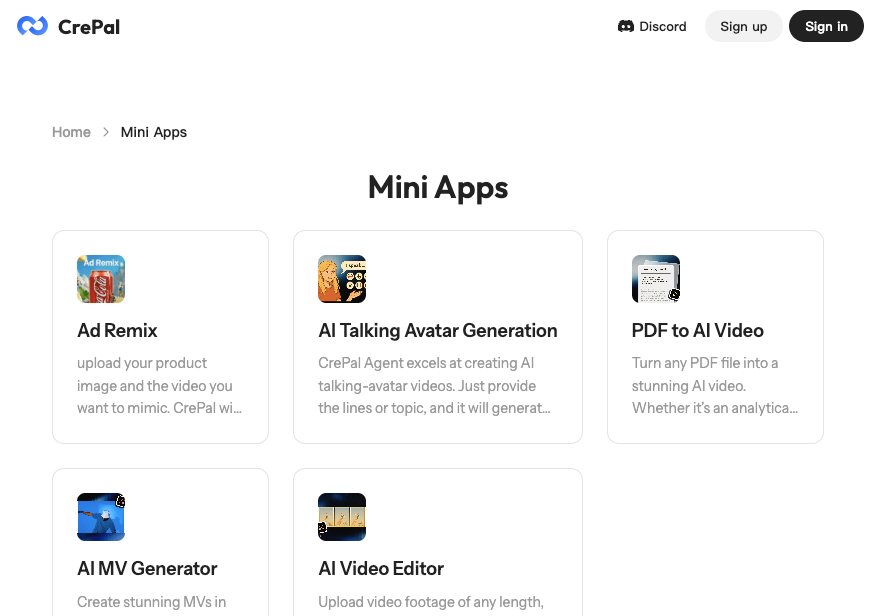
These ugc examples share one trait: a real person is visibly the author. The moment that illusion breaks — too scripted, too lit, too perfect — the trust advantage evaporates. That’s the tightrope. Increasingly these same formats get produced with AI, too; CrePal’s library of mini apps can spin up UGC-style stories, avatars, and ad edits, which leads straight into the next question.
Where AI Fits in UGC Marketing
Here’s where my actual job has changed. A year ago, “UGC at scale” meant hiring a roster of creators. Now a chunk of it is AI-assisted, because the bottleneck was never the idea — it was stitching together script, visuals, voice, and edits across four different tools.
Tools like CrePal — an AI video agent with chat-to-edit and a transparent task panel — collapse that into one flow: you describe the ad, it drafts hooks, breaks the idea into scenes, generates visuals, and lets you revise by chat instead of starting over. For variant testing — hook A, hook B, hook C off a single brief — that’s a real time saver. Being able to say “make hook two more urgent” and watch it adjust is the part that actually saves the late night.
Where it falls down: if you need frame-level control, or you’re chasing true “authentic creator” texture for a brand partnership, AI still hits a ceiling. I use it for volume and early testing, then bring real creators in for the hero work. Good is good — AI’s good enough for a lot of jobs — but it’s not magic, and pretending otherwise gets you caught.
Limits and Brand Risks
This is the section I wish someone had taped to my monitor early on.
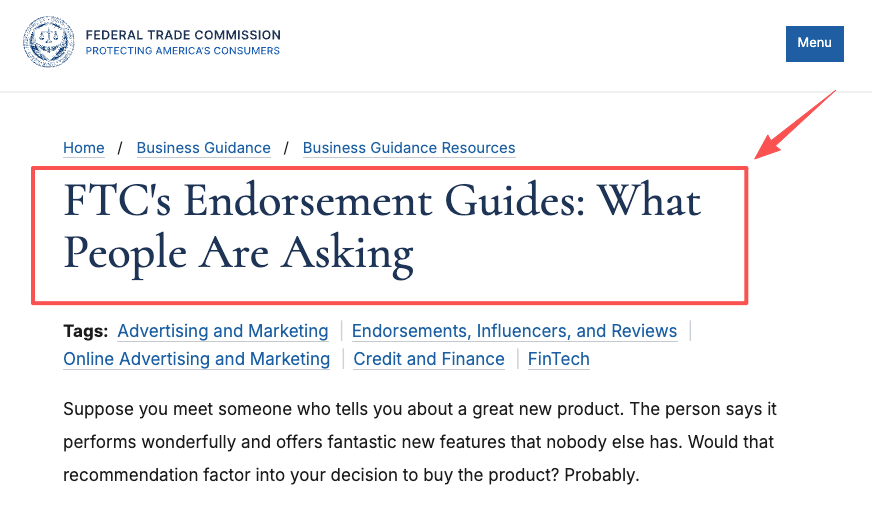
If you commission or incentivize content, you have to disclose it. The FTC’s endorsement guides are blunt: a material connection — payment, a free product, a discount in exchange for a post — must be disclosed clearly and conspicuously. Burying “#ad” in a wall of hashtags doesn’t cut it, and leaning on a platform’s built-in “paid partnership” tag alone isn’t enough either.
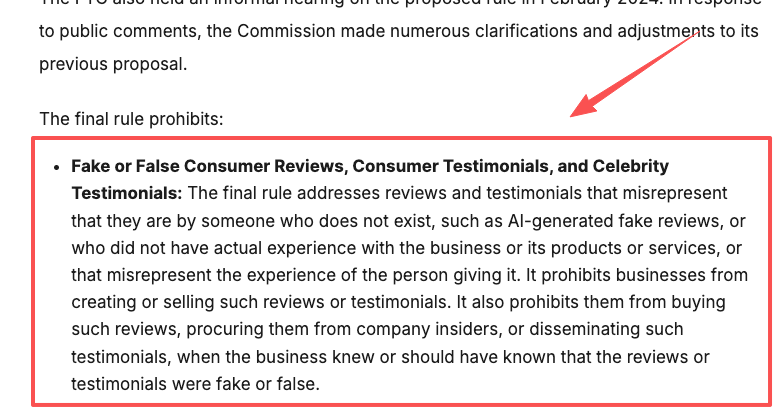
It gets sharper. The FTC’s final rule banning fake reviews and testimonials, in effect since October 2024, makes buying, selling, or fabricating reviews — including AI-generated fake ones — punishable by civil penalties now exceeding $50,000 per violation. In December 2025 the agency sent its first round of warning letters under it. So “let’s just generate some five-star reviews” isn’t a growth hack — it’s a liability.
The other risk is softer but just as real: fake-feeling UGC. Audiences can smell a staged “authentic” clip, and the backlash costs more than the ad ever earned. Authenticity is the entire value. The second you fake it, you’ve spent the one thing you came for.
FAQ
What does UGC mean in marketing?
In practice, it’s often “content that feels like it came from a real customer” even when the brand is involved behind the scenes. Many teams I work with treat UGC as a spectrum: true organic posts at one end, commissioned creator videos in the middle, and AI-assisted “UGC-style” assets at the other. The key operational difference is intent — organic UGC builds trust through authenticity, while brand-driven UGC-style content is built for scale and testing. Understanding where your piece sits on that spectrum helps you decide how much human touch and disclosure it actually needs.
Is UGC the same as influencer content?
Not really — the trust mechanics are different. Influencer content borrows credibility from a known personality and their audience. UGC-style content borrows credibility from perceived anonymity (“this could be me”). In my client work, I’ve seen campaigns where swapping an influencer video for a plain UGC-style clip increased conversion because viewers didn’t feel they were being sold to by someone with 200k followers. The distinction matters most for disclosure strategy and how you brief creators or AI tools.
What are good UGC examples for brands?
The strongest ones solve a specific buyer doubt. For skincare, a “day in the life” clip showing someone applying the product in bad bathroom lighting with zero makeup does more than a perfect studio shot. For supplements, a shaky “here’s what happened after 30 days” video with visible results beats polished testimonials. The pattern I’ve noticed: the more imperfect and specific the context, the higher the trust transfer. Generic “happy person holding product” clips rarely move the needle.
Can brands create UGC-style content with AI?
Yes, and many already do it successfully for early testing and volume. The practical approach I’ve seen work is using AI for first drafts and variants (hooks, scripts, rough cuts), then layering human edits — changing the voiceover tone, swapping one B-roll clip, or adding a personal opinion line. This hybrid method keeps the speed advantage while reducing the “everything looks the same” risk. The brands getting it right treat AI as a fast junior creative, not the final decision maker.
Conclusion
So, what is UGC in marketing? It’s the most believable content you can put in front of a buyer, because a peer made it — or it’s built to feel that way. Brands use it for trust first, then realize the speed of testing is the bigger prize. AI now handles a real share of the production, as long as you stay honest about what’s generated and disclose what’s paid.
If you’re starting out, don’t overthink it. Take one product, make three plain-spoken variants, and run them against your current best ad. Watch what the numbers say. That single test will teach you more about UGC than another guide will — this one included.
Previous posts: