Leo here. Two weeks ago a skincare brand handed me a Friday deadline and a brief that basically read: “twelve UGC product ads, four hooks each, and please don’t make them look like robots.” I didn’t book a single actor. I ran the whole batch through AI avatars instead. Some of it shipped and beat the client’s old creative. Some of it I deleted before anyone saw it. This is my honest field report on the best AI avatar solutions for UGC product ads in 2026 — which tools I actually open, where they fall apart, and the disclosure stuff nobody warns you about until an ad gets flagged.
The 30-second version: For e-commerce demos, Creatify. For the most natural presenter, Arcads. For fast variants across languages, HeyGen. Disclose AI use by default — the FTC and every major platform now expect it. And real creators still win when trust is the entire pitch.
What Makes a Good AI Avatar for UGC Product Ads
I judge every one of these tools on four things. Not feature lists — outcomes.
Does the face hold up? The tell is the eyes and the lip-sync. On a 6-second hook almost anything passes. Push past 20 seconds and you get the dead-eyed stare and the mouth drifting off the words.
Can it handle the product? The one most “talking head” tools fail. For UGC product ads the avatar needs to hold the thing, gesture at it, keep it in frame. A perfect presenter beside a floating product looks worse than a mediocre one holding it.
How fast does it spit out variants? My real job is testing hooks. If a tool can’t give me five clean versions of one script before lunch, it’s not built for performance ads.
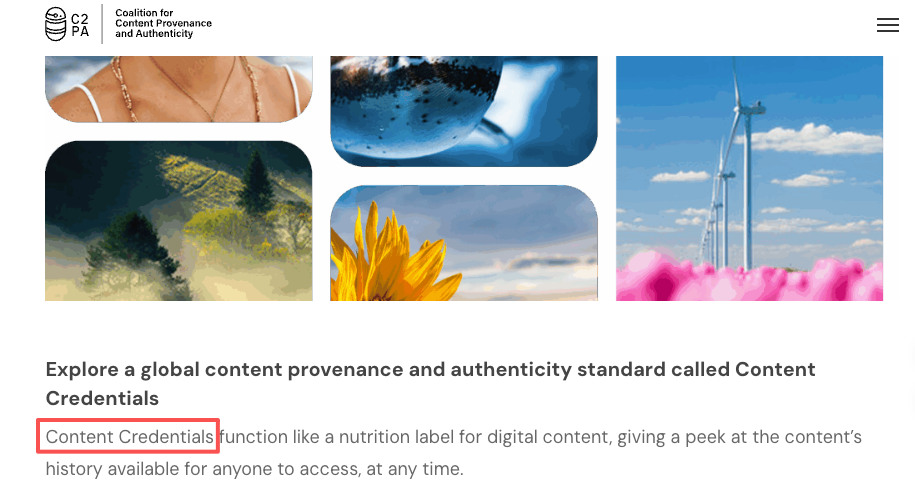
Is the output disclosure-ready? Underrated. Good tools embed provenance metadata — the Content Credentials standard from C2PA that TikTok and Meta now read automatically — so labeling happens cleanly instead of getting forced on you later.
My filter every time: does it let me switch one less tool, cut one revision round, or ship more without more overtime? No on all three, and I don’t care how shiny the demo looked.
Best AI Avatar Tools for Product Ads
I’ve sat through enough reviews of UGC video creation platforms with AI avatars to know the marketing screenshots lie. Here’s what held up when I ran actual product ads through them — not what the landing pages claim.
Best for ecommerce demos
Creatify. If you’re trying to compare AI avatar software for e-commerce product ads, this is where I’d start, full stop. You paste a product URL, it scrapes the page — images, copy, price — writes a script, picks an avatar, and builds a vertical ad. For a DTC founder working off a Shopify or Amazon link, that’s the shortest path from “I have a product” to “I have ten ads to test.”
There’s a free tier, and paid plans start around $39/month (verify current pricing — they change it constantly). The catch: auto-written scripts are generic, so I rewrite every hook. But the structure and product framing save me a real hour per batch.
Best for natural presenter style
Arcads. When the avatar is the ad — someone talking straight to camera like they filmed it in their kitchen — Arcads is the most convincing I’ve used. 300-plus AI actors, and you control the performance through text: “excited,” “skeptical,” “calm.” The actors show hand gestures and micro-expressions the stiffer tools just can’t fake, and they can hold your product.
Honest grey area: I ran the same skincare script five times. Three were scroll-stopping. Two had that uncanny pause where the eyes go nowhere — prompt phrasing and luck both matter. It’s also pricier, Starter around $110/month, so I save it for campaigns with budget where realism is the whole game.
Best for fast ad variants
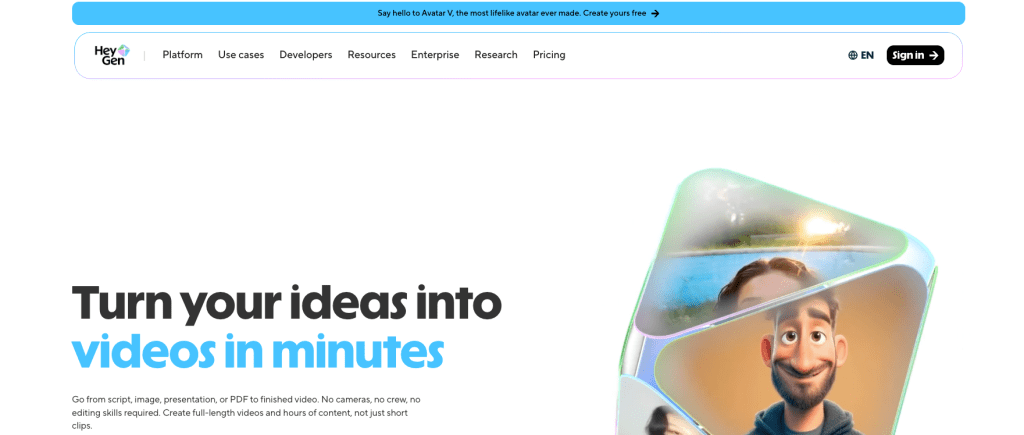
HeyGen. When I need volume and reach fast, HeyGen is the workhorse. Paste a script, pick from 1,100-plus avatars, generate, and it’ll localize across a stack of languages with lip-sync that actually tracks. Plans start free, with a Creator tier around $24/month.
The honest knock: it leans polished. Great for a SaaS spokesperson or clean explainer, stiff when you want gritty casual UGC. I use it for demos and multilingual variants, not “trust me, I bought this myself” energy.
Avatar Comparison Table
Here’s how I compare AI avatars for UGC video ads at a glance. Pricing shifts month to month, so treat the numbers as a starting point and confirm on each tool’s site before you commit.
| Tool | Best for | Avatar realism | Product handling | Variant speed | From (approx.) | Watch out for |
| Arcads | Natural UGC presenters | Highest | Strong (holds product) | Bulk variants | ~$110/mo | Inconsistent runs; price |
| Creatify | E-commerce / URL-to-ad | Good | Good | Fast batch | ~$39/mo + free tier | Generic auto-scripts |
| HeyGen | Multilingual, fast variants | High | Moderate | Very fast | Free / ~$24/mo | Polished, feels stiff for UGC |
| Synthesia | Corporate / training | High | Weak for ads | Slow for ads | ~$22–29/mo | Governance tool, not UGC-native |
| Captions | Polishing real footage | N/A (enhances real) | N/A | Fast | Varies | Needs real footage input |
Synthesia and Captions are in there on purpose. Synthesia is excellent — for training and compliance-heavy corporate work, not casual product ads. Captions shines when you already shot real footage and want to polish it. Wrong job, both, if pure UGC avatars are what you need.
Disclosure and Platform Policy Notes
This is the part that quietly wrecks campaigns. You can make a flawless ad and still get it throttled because you skipped a checkbox. Read this section twice.
FTC endorsement and synthetic media considerations
First, calm down about “new 2026 rules.” There’s no fresh statute aimed at creators. The binding framework is still the FTC’s Endorsement Guides, revised in 2023. What changed is enforcement temperature, plus a May 2026 update that spells out how the guides apply to synthetic spokespeople specifically.
The line that matters: if the endorser itself is synthetic — an AI avatar delivering a “my experience” narrative — disclose it. AI for caption cleanup or B-roll is production assistance and doesn’t trigger that. Don’t assume a contract shifts risk to the brand either; the FTC doesn’t honor private liability deals, and penalties run into the tens of thousands per violation.
My rule: never let an avatar imply real, lived product use that didn’t happen. Use it to communicate the message, not to fake a customer.
Platform rules to verify before publishing
Each platform has its own toggle, and “when in doubt, disclose” is the safest read across all of them.
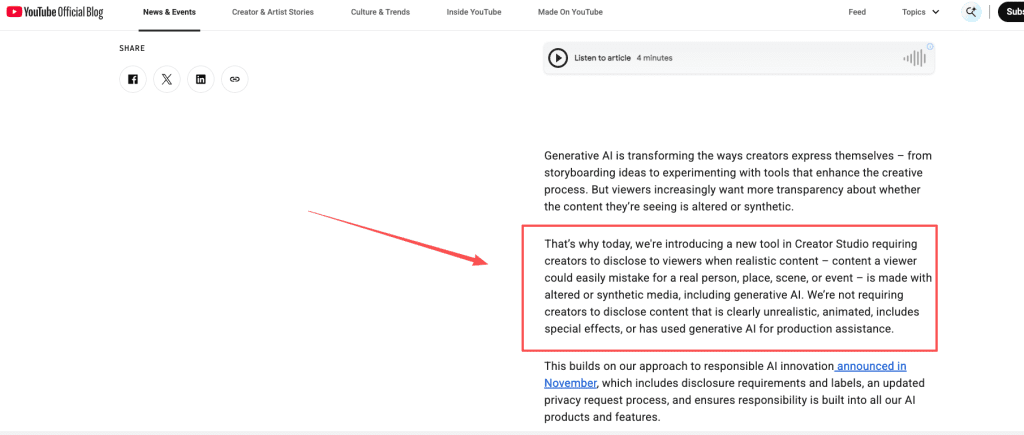
- YouTube: flip the “Altered or Synthetic Content” toggle in Studio if your video has realistic synthetic people or voices. It adds a “Modified or Synthetic” label. YouTube’s own breakdown is clear that realism — not whether AI touched the file — is the trigger.
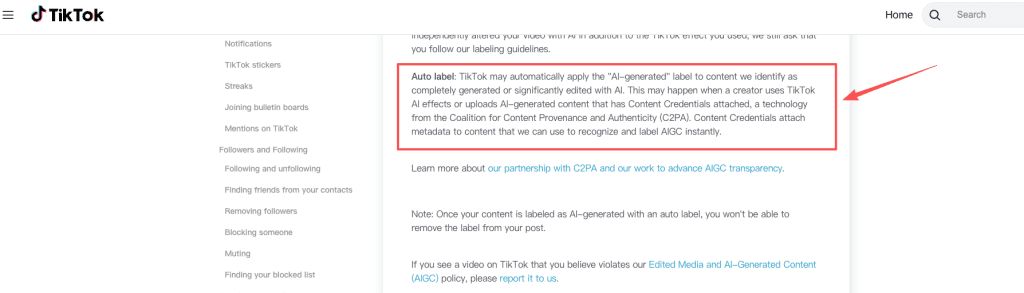
- TikTok: turn on the AI-generated content toggle. Per TikTok’s AI content policy, it also auto-detects via Content Credentials and will slap the label on whether you disclosed or not — and once it’s auto-applied, you can’t remove it.
- Meta: ads built with generative AI features get an “AI Info” label, and Meta’s ad labeling rules cover both self-disclosure and detection. Skip it on a realistic synthetic spokesperson and you risk the ad getting rejected as misleading.
When Real Creators Still Work Better
I’ll say it plainly: avatars are not a replacement for a real person when the pitch is the person. If your ad’s whole value is “I genuinely use this every morning,” a synthetic face undercuts you the second a viewer clocks it — and in 2026, plenty of them do.
Real creators still win for authentic testimonials, genuine reactions, and regulated claims (health, finance) where credibility is everything. AI avatars are for volume, hook testing, demos, and localization. Don’t ask them to carry trust they didn’t earn.
FAQ
How realistic are AI avatars for UGC product ads in 2026?
Top tools like Arcads and HeyGen create convincing short clips, but issues with eye contact, micro-expressions, and hand movements still appear in longer videos. Most users run 5–15 second hooks successfully and combine with real footage for hero content.
Which AI avatar tool works best for quick product URL to video conversion?
Creatify is the most frequently mentioned for this workflow. Paste a Shopify or Amazon link, and it generates scripted drafts with avatars and product shots. Users like the speed for initial testing, though scripts often need manual rewriting.
Do AI avatar ads perform well on Meta and TikTok compared to real creator content?
They work well for hook testing and volume, but real creators still outperform on trust-heavy campaigns. AI avatars excel at low-cost variant testing; many agencies use them early in the funnel and real talent for final scaled creative.
How do platforms detect and label AI avatar content automatically?
TikTok, Meta, and YouTube use Content Credentials (C2PA) metadata and AI classifiers. If the tool embeds proper provenance data, labeling often happens automatically. Without it, you must manually disclose to avoid reduced reach or rejection.
What’s the biggest challenge when scaling AI avatar UGC campaigns?
Output inconsistency across generations is the top complaint. The same prompt can produce great and poor results. Agencies budget extra QA time and use strong brand kits + prompt templates to reduce variance.
Are there good free or low-cost ways to test AI avatars before committing to paid plans?
Most tools offer limited free tiers (HeyGen and Creatify are commonly tested first). Users recommend running one real product brief through the free credits to check realism and workflow fit before upgrading.
Conclusion
If you want the honest shortlist of the best AI avatars for UGC product ads, it’s Creatify for e-commerce, Arcads for realism, HeyGen for fast multilingual variants — and a disclosure habit baked into every upload. Try one this week with a real product page and run three hook variants; you’ll learn more in an afternoon than from any roundup, mine included.
One more thing. When the avatar is just one shot in a longer cut — hook, then b-roll, then a demo — I stop juggling four tools and let a video agent like CrePal handle the avatar plus the rest of the edit in a single workflow. For straight talking-head UGC, though, the specialists above still win, and I’ll tell you when that flips.
If you’re testing these too, drop your worst uncanny-valley clip in the comments. I want to see it.
Precious posts: