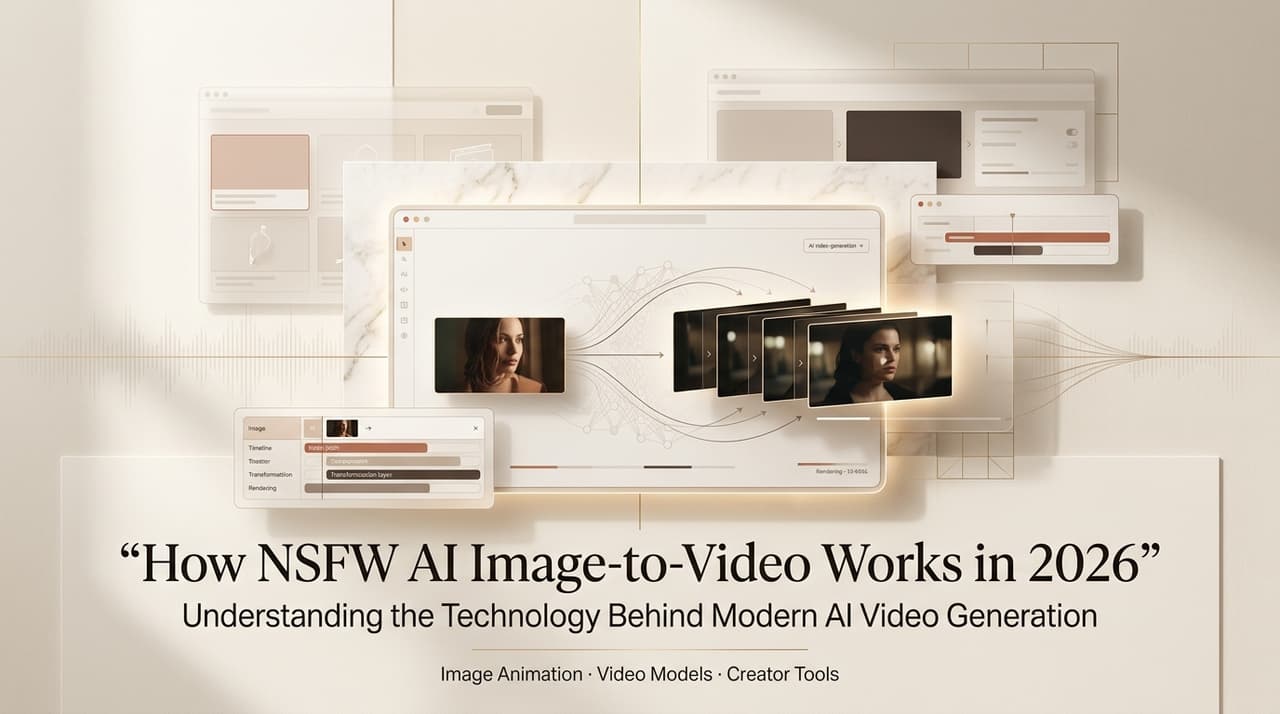
Dora here. I was deep in a research rabbit hole one night — testing image animation pipelines for a project — when a question kept coming up in the forums I was reading: “Can I actually use this for mature content?” People weren’t asking because they wanted to break rules. They were asking because the line between what’s technically possible and what’s actually permitted on any given platform is genuinely confusing. And in 2026, with AI image-to-video NSFW workflows becoming more capable, that confusion has only gotten louder.
So let me break down what’s actually happening under the hood, where platforms commonly draw lines, and what a safer working approach looks like — without the hype, without the hand-wraving, just the real picture.
What NSFW AI Image to Video Means
“NSFW” stands for Not Safe For Work — a loose umbrella covering mature, explicit, or otherwise adult-flagged visual content. In the context of NSFW AI image to video, it typically refers to animating static source images that fall into that category: stylized adult art, explicit illustration, or mature photography.
The term nsfw image to video ai gets searched a lot, but it describes a workflow more than a specific product category. Searches for image to video ai nsfw have grown noticeably in 2025–2026 as generative video quality improved — creators are essentially asking: can an AI animation model take a mature still image and turn it into a moving clip — preserving the original’s style, subject, and level of explicitness — the same way it would for any other source image?
Technically, the underlying pipeline is identical. What changes is whether the platform running that pipeline permits it — and that gap is where most of the confusion lives.
The phrase nsfw ai image to video also sometimes refers specifically to fine-tuned or uncensored model variants. Some open-source communities have trained animation models with fewer content restrictions. Some open-source communities have trained animation models specifically for adult content — these run locally, outside any platform’s moderation layer, and that’s exactly where the legal complexity concentrates.
How Image-to-Video Works in Mature Content Workflows
I’ve run this pipeline on three different setups: a mainstream commercial platform (which I won’t name because their policy changed mid-test), a self-hosted ComfyUI workflow on my own machine, and one of the adult-oriented SaaS tools. The technical architecture is identical across all three — same latent encoding, same motion conditioning. What’s completely different is where and when the content filter fires. Here’s what I actually observed.
Source image input
Everything starts with a still image. The model analyzes visual features: subject position, lighting, texture, implied depth. For mature content specifically, this step becomes the first moderation checkpoint on most commercial platforms — the image is scanned before any animation begins. Some platforms use perceptual hash databases to flag known illegal material; others use classifier models trained on policy-violating categories.
If you’re working with original illustrated or artistic content (not photographic), the pipeline still works the same way. The source image gets encoded into a latent representation, which the video model then uses as a starting condition.
Motion prompts
Once the source image is encoded, a motion prompt (or motion guidance settings) tells the model how to animate it. This might be as simple as “gentle camera push” or as specific as “character turns head slightly, hair moves in breeze.” For mature content workflows, motion prompts are another policy checkpoint — explicit motion instructions often trigger filters on commercial platforms even when the source image passed initial review.
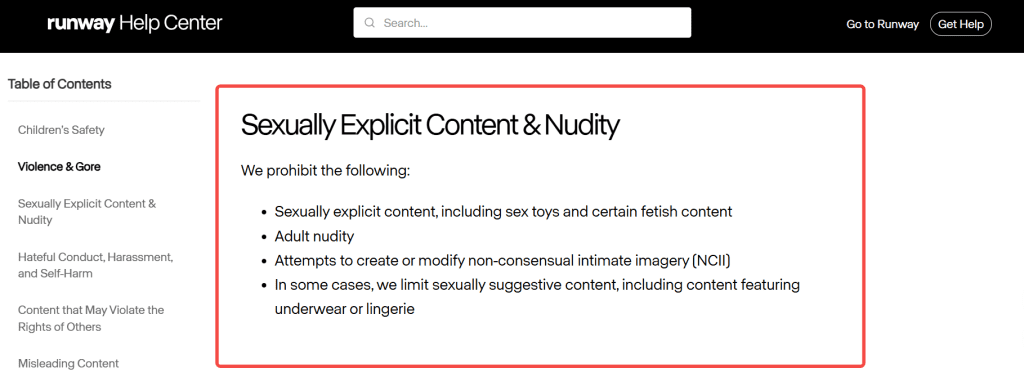
The Runway content policy is a useful reference here: it explicitly prohibits generating sexually explicit content regardless of whether the source image itself was flagged. Motion intent matters as much as source input. I ran into this exactly once on a mainstream platform — uploaded illustrated source material that cleared input review without issue, then wrote a motion prompt that included directional body movement. Output got flagged before rendering completed. The source image wasn’t the trigger. The motion instruction was. That’s the part most creators don’t expect the first time.
Passing an input check does not mean every generated motion is cleared for use. This image-to-video workflow boundary checklist explains how to compare the source still with the animated output for changes in identity, age impression, consent implication, and scene intensity.
Moderation checks
Most commercial image-to-video tools run at least two moderation passes: one at input and one at output. The output check exists because models can sometimes generate content that wasn’t obviously implied by the source — a relatively mild input image can produce an output the platform considers policy-violating depending on how motion is applied.
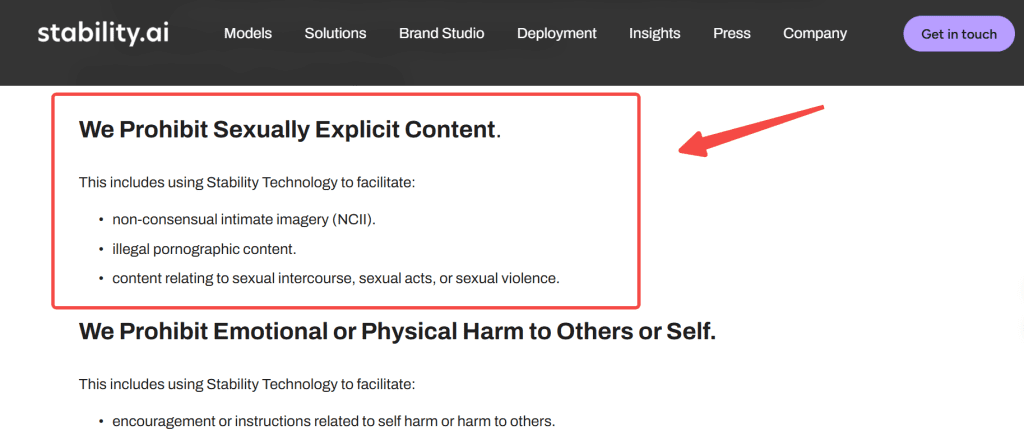
According to Stability AI’s usage policies, content that sexualizes minors is a hard block at every stage — input, processing, and output — with no exceptions. This isn’t unique to Stability; it’s a legal baseline that all responsible AI platforms maintain in compliance with laws like the PROTECT Act in the US.
Where Platforms Commonly Set Boundaries
Here’s the honest summary: most mainstream commercial AI video platforms do not permit explicit NSFW output, full stop. This applies whether you’re animating a mature image or generating from text. The restrictions aren’t arbitrary — they exist for legal, liability, and community-standards reasons.
Where platforms vary is in how they handle the adjacent territory:
Stylized adult art (non-photographic): Some platforms permit suggestive but non-explicit content. Others treat any sexually suggestive material the same as explicit. Check the specific platform’s acceptable use policy before uploading — policies updated frequently in early 2026.
Artistic nudity vs. explicit content: A small number of platforms differentiate between classical artistic nudity (non-sexual) and explicit sexual content. The Internet Watch Foundation’s guidance on illegal imagery is relevant context here: regardless of artistic framing, content involving minors is illegal under any label, everywhere.
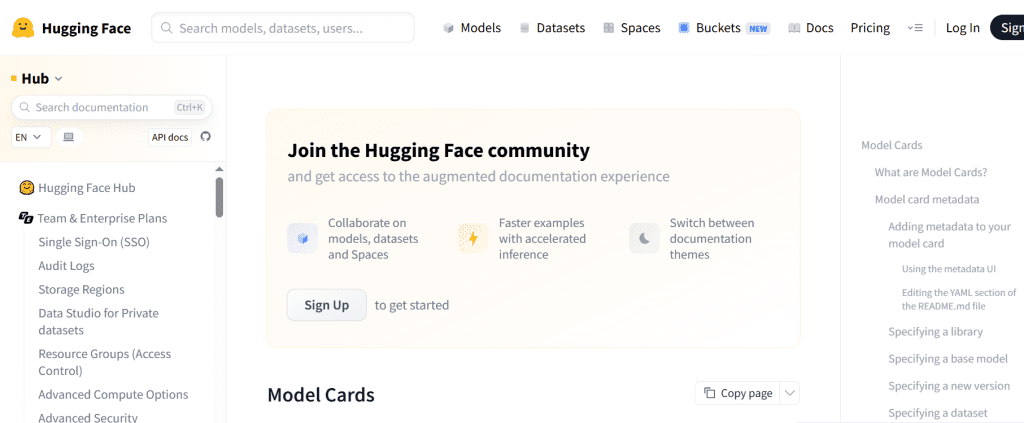
Open-source and self-hosted models: This is where the real gray zone sits. Models available on platforms like Hugging Face can be run locally without a platform’s content filters. Some have been fine-tuned specifically for adult content. Self-hosting removes platform moderation — but it does not remove legal liability. What you generate on your own hardware is still subject to the laws of your jurisdiction.
Safer Creator Workflow Principles
I’ve talked to enough creators working in mature content spaces to know that “just check the ToS” is advice that sounds obvious but gets ignored constantly. Here’s what actually helps:
Read the acceptable use policy before uploading anything. And I mean the specific content or acceptable use page, not the main ToS. They’re separate documents and the ToS usually won’t tell you what you actually need to know.
I learned this the hard way. Read the main terms, didn’t see a problem, uploaded my project, got the account flagged on day two. Turned out there was a separate “Content Policy” document buried in the help center. Fifteen minutes I wish I’d spent upfront.
Worth knowing: major platform policies updated multiple times between late 2025 and mid-2026. I check before starting any new project type — not just when I first sign up.
Assume output moderation exists even when input passes. A lot of creators upload something, it clears input review, and they assume they’re good. Then the output gets flagged or their account actioned. Both checkpoints are real.
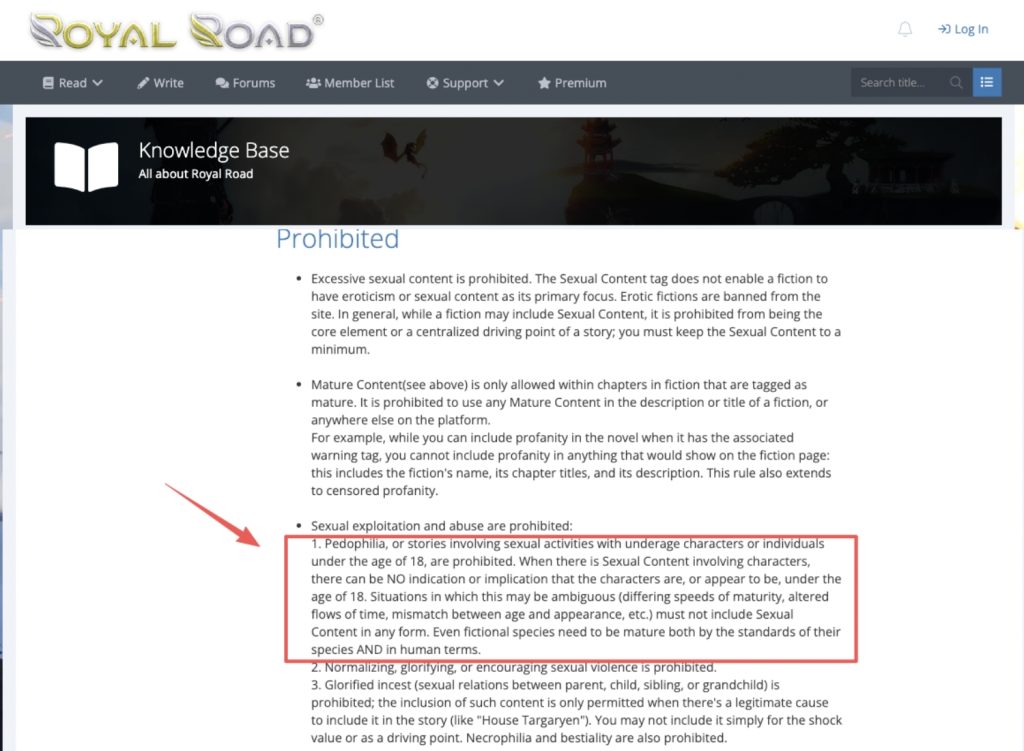
Treat age ambiguity as a hard stop. If you cannot confidently determine that every person depicted is an adult, do not proceed with creating or editing explicit content. Many platforms, trust-and-safety teams, and child-protection organizations apply a precautionary approach because uncertainty about age creates significant legal and safety risks.
For self-hosted models, your jurisdiction’s laws apply. This surprises people. Running an uncensored model locally doesn’t create a legal exemption — it removes a platform’s enforcement layer, which is not the same thing as removing your legal obligations.
Keep source material documented. If you work with licensed adult content — stock art, commissioned illustration — keep your licensing records. Platforms that do permit mature content increasingly require proof of rights for commercial use.
FAQ
Are there any mainstream commercial platforms that allow full NSFW AI image to video in 2026?
Most creators searching for this are disappointed. Major platforms like Runway and Stability AI prohibit explicit sexual content outright. Some specialized or regional services are more permissive, but they carry higher account and legal risks. Always check the current Acceptable Use Policy before uploading.
What is the safest way to run NSFW image-to-video workflows locally?
A very common question among privacy-conscious creators. Use open-source models on tools like ComfyUI with strong sandboxing, isolated hardware (or VMs), and read-only permissions where possible. Document all source materials and avoid real-person likenesses without clear consent.
Can I animate real photos of consenting adults with NSFW AI image to video tools?
This legal question comes up constantly. Technically possible with self-hosted models, but it requires explicit written consent and model releases. Even then, deepfake and likeness laws in many jurisdictions create significant liability. Most experienced creators stick to fictional or fully licensed illustrated characters.
How do AI platforms detect explicit content during image-to-video generation?
Users frequently ask about the technical side. Platforms typically run perceptual hashing and classifiers on the source image, then again during/after motion generation. Explicit motion prompts or resulting frames often trigger flags even if the initial image passed.
Conclusion
The technical capability behind AI image-to-video NSFW workflows isn’t some niche underground thing anymore — it’s the same generative animation architecture that powers mainstream tools, applied to a different content category. Understanding how source input, motion prompting, and moderation checkpoints actually work helps clarify why the experience varies so wildly across platforms.
Three things that don’t change, no matter which tool you’re using: content involving minors is a hard legal line everywhere; self-hosting removes the platform filter but doesn’t remove your legal exposure; and “it passed input review” is not the same as being cleared — output moderation is real and it fires separately.
Those are the constants. Everything else — which platform allows what, which model handles which content category — is policy detail that shifts. Verify it the day you’re about to start, not the day you set up your account six months ago.
Previous posts: