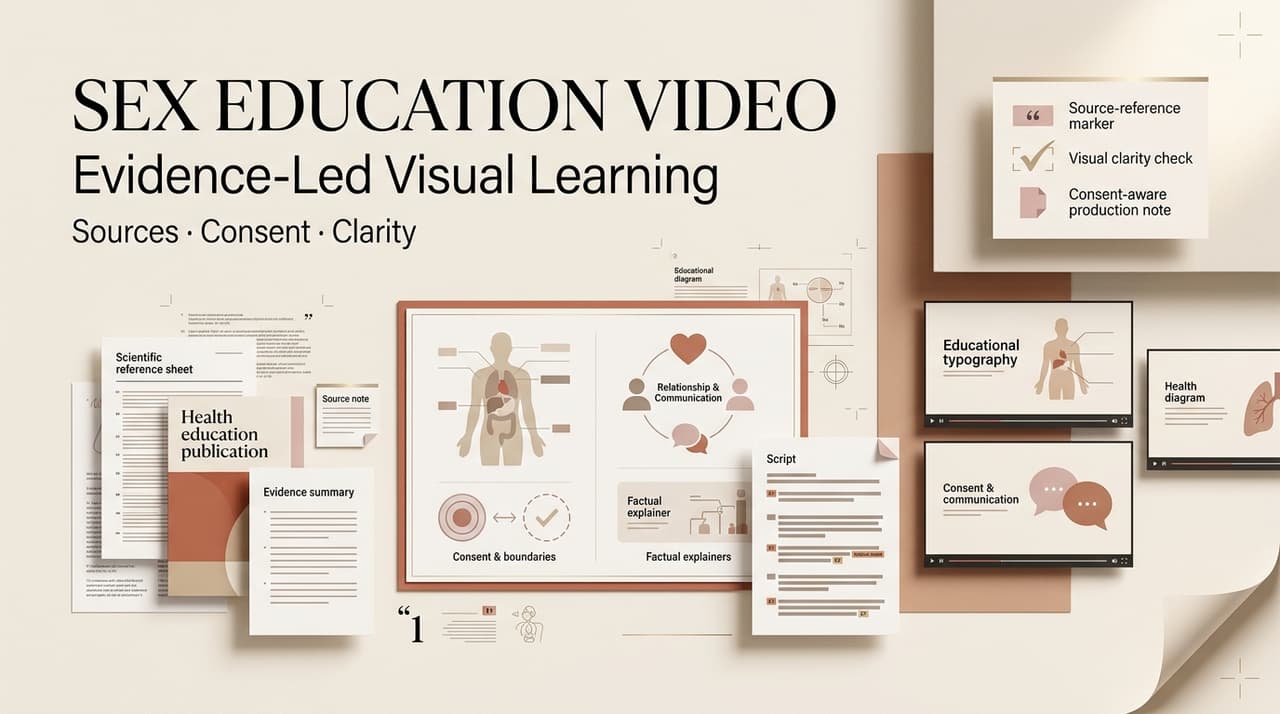
Leo here. A credible sex education video should help an adult viewer understand one specific topic, make a safer decision, or know when professional support is needed. It should not imitate entertainment content, present personal opinion as medical fact, or use provocative visuals to compensate for weak teaching.
This distinction matters across searches such as “sex education videos adults,” “sex education video real,” and “sex education videos free.” A viewer may be looking for practical information, but free access does not make unverified claims reliable, and realistic visuals do not automatically make education clearer. This article presents a planning and production workflow for creators, education teams, and small institutions. It does not provide diagnosis or individual medical advice, and it is not legal advice or a guarantee of platform compliance.
What Makes a Sex Education Video Credible?
Define One Adult Learning Outcome
Start with one learning outcome that an adult viewer can understand and act on. “Learn everything about sexual health” is too broad for one video. A stronger outcome might be recognizing common communication barriers, understanding the purpose of a health screening, or knowing which questions to discuss with a qualified clinician.
The outcome should determine the script, visuals, review standard, and ending. If the video is about consent, viewers should leave with a clearer understanding of voluntary agreement, communication, boundaries, and the ability to change one’s mind. If it is about contraception, the content should explain the relevant options, limitations, and questions for professional advice without pretending that one method fits every person.
Audience knowledge matters too. Adults are not one uniform group. A beginner may need definitions and context, while an informed viewer may need clarification about a specific misconception. Instead of trying to satisfy everyone with a longer video, define the intended knowledge level and use plain language consistently.
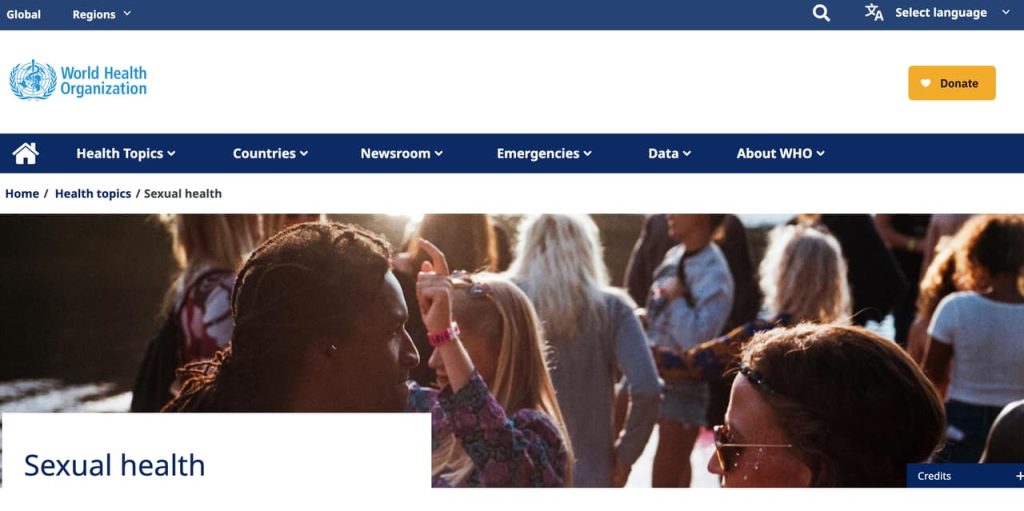
The WHO working definition of sexual health frames sexual health through physical, emotional, mental, and social well-being, together with respect, safety, freedom from coercion, and human rights. That gives creators a useful editorial test: a video should not reduce sexual health to performance, anatomy, or the absence of disease.
Separate Evidence From Personal Opinion
Create a source record before writing the script. For every health or anatomy claim, note the source, publication or update date, the exact point it supports, and any limitation. Use current guidance from public health agencies, professional associations, peer-reviewed research, or qualified clinical reviewers.
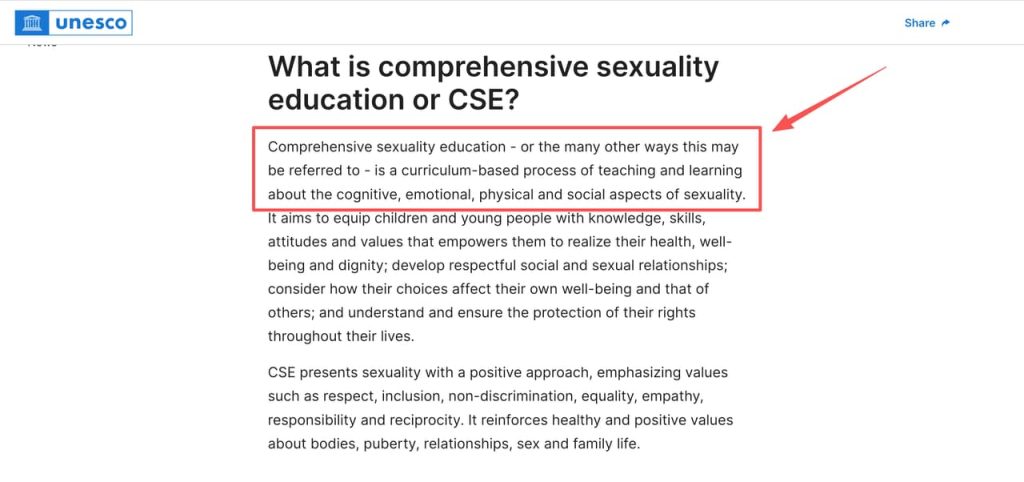
The UNESCO comprehensive sexuality education framework describes sexuality education as a curriculum-based process covering cognitive, emotional, physical, and social aspects of sexuality. Its current framing emphasizes knowledge, skills, attitudes, values, respect, inclusion, equality, and responsibility. For an adult-facing video, these principles can be adapted to the audience, but they should not be turned into a claim that every topic has one universal script or one culturally neutral presentation.
Mark sentences that are evidence-based, interpretive, or editorial. For example, “This intervention is recommended in current clinical guidance” is different from “This approach may help some viewers feel more prepared.” A personal story may add empathy, but it should be labeled as an experience rather than presented as proof.
A qualified reviewer should check claims about symptoms, risk, treatment, anatomy, contraception, sexually transmitted infections, pregnancy, trauma, or mental health. The reviewer does not need to rewrite the whole video. Their job is to identify inaccurate wording, missing caveats, misleading visuals, and places where a viewer could interpret general information as personal medical advice.
Plan the Video Before Generating Visuals
Turn the Learning Goal Into a Clear Script
A strong script usually moves through a small number of teaching functions. It introduces the question, defines the terms, explains the central idea, addresses a common misunderstanding, and gives the viewer a responsible next step.
The opening should establish who the material is for and what it will cover. Avoid promises such as “This will solve your sex life” or “Everything you need to know.” Those phrases create pressure and make a serious subject sound like a sales pitch.
Write health claims in language that leaves room for individual variation. “Some people may experience…” is often more accurate than “Everyone will…” When a topic depends on age, medication, disability, pregnancy status, gender identity, relationship context, or medical history, say so clearly and direct the viewer to an appropriate professional resource.
The script should also define what the video will not cover. A short explainer about communication should not quietly drift into treatment advice. A video about anatomy should not imply that visual appearance can diagnose a health condition. Clear boundaries improve trust.
Build a Consent-Aware Storyboard
A consent-aware storyboard treats every person shown, heard, or represented as a rights holder rather than a decoration. All presenters, performers, voice actors, reference images, and recordings should involve adults with documented permission for the intended use.
Consent applies to production as well as the topic being taught. A creator may have permission to use a voice in an educational video but not to clone it, alter it, or place it in a realistic scenario that the speaker never approved. Keep releases, usage scope, expiry terms, and withdrawal procedures with the project record.
The storyboard can use diagrams, labeled illustrations, abstract silhouettes, animated text, clinical-style graphics, or fully synthetic adult presenters. The choice should follow the teaching goal. If a visual does not clarify anatomy, context, safety, or communication, it may be there only for attention. Remove it.
Avoid real-person likenesses unless the person has given explicit permission for this specific educational use. Do not use private photographs, intimate recordings, or realistic synthetic bodies to create a sense of authenticity. A video can be medically accurate without being visually explicit.
Choose Visuals That Clarify Without Sensationalizing
Visual direction should explain relationships between concepts. Use callouts, neutral diagrams, comparisons, timelines, and on-screen definitions when they reduce confusion. Keep the camera, cropping, lighting, and motion subordinate to the lesson.
A search for a “sex position education video” does not justify turning an educational video into a performance tutorial. If a topic includes sexual positions, the responsible approach can focus on communication, comfort, consent, accessibility, boundaries, and stopping conditions. It should not present bodies as proof of what viewers should perform or imply that one position is universally safe or desirable.
Visuals should also represent adults without relying on stereotypes. Consider different bodies, relationships, orientations, abilities, and cultural contexts when they are relevant to the learning goal. Inclusion should be purposeful, not a token montage.
The same rule applies to a search for “sex education video real.” Realism can help viewers recognize a situation, but realistic acting, synthetic presenters, and photorealistic AI scenes can also make fictional claims appear medically authoritative. The visual style must never outrun the evidence.
Produce the Video With an AI-Assisted Workflow
Create Rights-Cleared Reference Assets
Before generation, build an asset register. Include the asset owner, adult status where relevant, permission scope, source location, voice or likeness rights, intended platforms, and deletion or withdrawal instructions.
For synthetic presenters, define the character as fictional and adult. Do not begin with a real person’s private photo or use a celebrity likeness to make the lesson appear endorsed. For voice work, use an authorized voice or a clearly synthetic voice. Keep the presenter separate from the medical authority unless a real professional has explicitly approved the representation and wording.
An AI workflow does not remove responsibility for source materials. A rights-cleared stock illustration, a licensed anatomical diagram, and a client-provided photograph may have completely different usage conditions. Store them separately and label them before they enter a generation step.
A workflow layer such as CrePal can help organize the script, storyboard, source assets, scene decisions, and revision notes. That is an organizational role. It should not be presented as an unrestricted adult-generation system or as a substitute for clinical review.
Generate and Review Scenes in Small Batches
Generate scenes in small batches so that errors are found before they spread through the whole project. Each scene should have a purpose, a source reference, an acceptance criterion, and an owner for review.
Check more than visual polish. Review whether the presenter appears adult, whether anatomy is drawn accurately, whether labels point to the right areas, whether hands or objects introduce misleading details, and whether the scene implies a claim that the script never made. AI-generated visuals can look authoritative while quietly changing proportions, adding anatomy, or turning a neutral explanation into a suggestive scene.
Keep rejected outputs in a controlled research or review folder rather than mixing them with approved assets. Record why they failed. A wrong label, misleading pose, unapproved likeness, or accidental explicit detail should be treated as a production finding, not merely a bad render.
Do not use generation volume as a substitute for teaching quality. More variants do not make an unsupported claim safer. The review gate should be based on accuracy, clarity, consent, and viewer fit.
Add Voice, Captions, and Accessibility
The voice should sound calm, respectful, and appropriately qualified for the subject. Do not make a synthetic presenter sound like a real clinician unless the relationship is clear and authorized. If a professional reviews the script but does not appear in the video, describe their role accurately. Review is not endorsement.
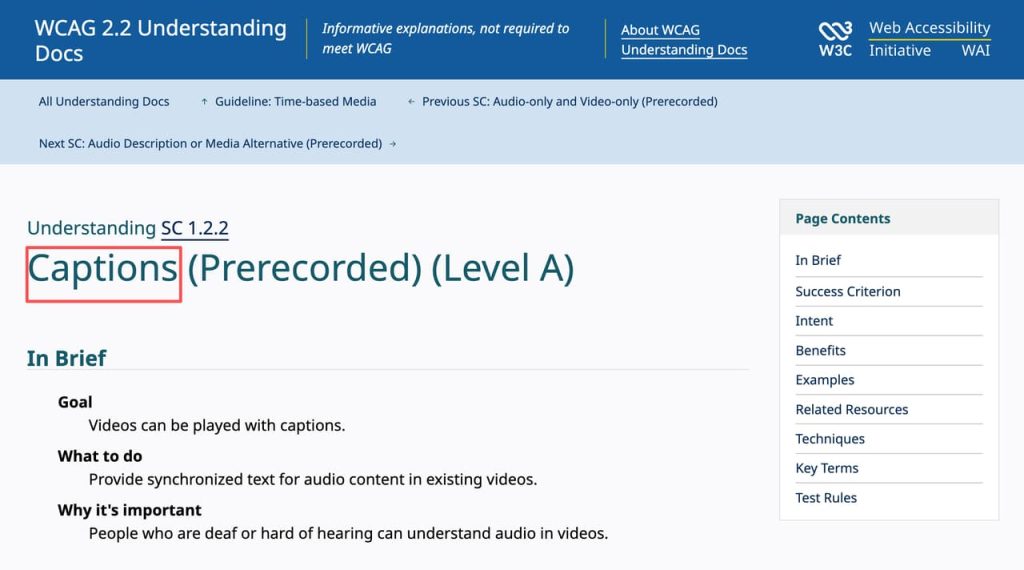
Captions should be checked against the final voice track, not only the script. Names, anatomical terms, medication names, and health terminology are easy to mishear. The W3C guidance for prerecorded captions treats captions as a synchronized alternative that covers dialogue and important non-speech audio, not merely a rough transcript.
Use readable contrast, sensible pacing, speaker identification, and text large enough for mobile viewing. Where visuals carry essential meaning, consider an audio description or a text alternative. Translations also require review because a literal translation can change the meaning of consent, risk, or medical uncertainty.
Review Accuracy, Safety, and Viewer Fit
Use a Qualified Expert Review
The final review should include someone qualified for the subject. Depending on the topic, that may be a licensed clinician, sexual health educator, reproductive health specialist, therapist, or another appropriately trained professional.
Ask the reviewer to check three layers. First, are the facts correct and current? Second, does the explanation preserve uncertainty and individual variation? Third, could a viewer misunderstand the content as a diagnosis, prescription, or guarantee?
Add a visible source list or reference note where appropriate. If a source has changed, update the script, captions, graphics, and description together. A correction that changes only the written description may leave the video itself misleading.
The expert review should also examine tone. A technically accurate video can still shame viewers, normalize coercion, imply that disability reduces consent, or treat a relationship preference as a medical problem. Accuracy includes the frame in which information is delivered.
Check Age Gating, Privacy, and Distribution Rules
Adult education content needs an audience and distribution plan before publication. Check the applicable law, age-gating requirements, health advertising rules, privacy obligations, and current policies of every target platform. A video that is educational in intent may still be restricted because of its visuals, language, thumbnails, or targeting.
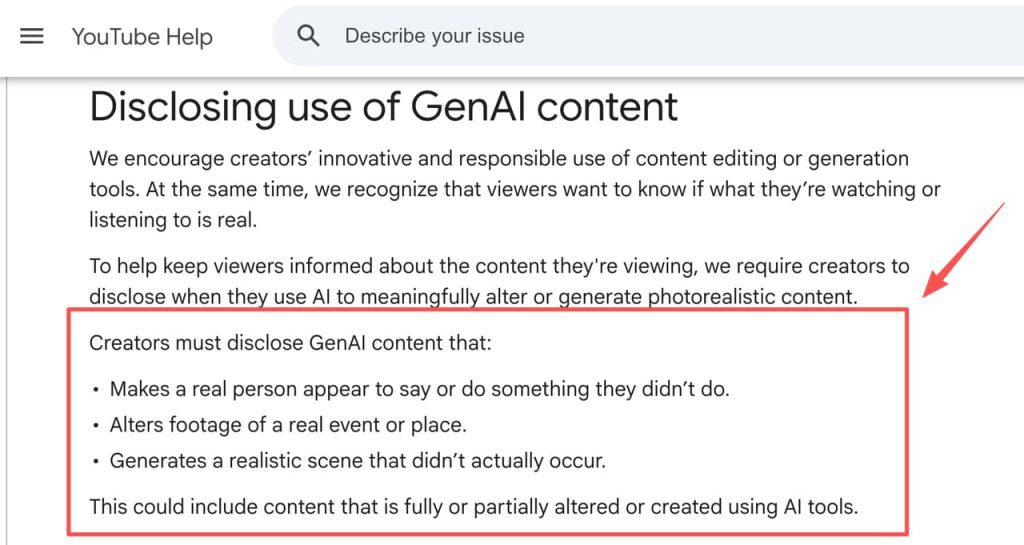
Platform disclosures are separate from medical credibility. On YouTube, current GenAI disclosure guidance requires disclosure for realistic AI-generated or meaningfully altered content in defined situations. Other platforms may use different standards, and policies can change.
If an AI presenter, synthetic voice, or realistic scene could make viewers believe a real person delivered the advice, disclose the production method plainly. Do not imply that an AI-generated presenter is a clinician, patient, or witness.
Viewer questions need privacy protection too. Avoid collecting intimate stories in public comments as the main research method. Use a moderated form, remove names and identifying details, explain how submissions will be used, and never publish a question that could reveal a person’s medical history, relationship, location, or identity without specific permission.
FAQ
How should corrections be handled after publication?
Keep a correction log connected to the script version and source record. For a minor wording issue, update the transcript, captions, description, and source note together. For a material health error, pause promotion, add a visible correction, seek expert review, and decide whether the original video should be replaced or removed.
Can one video serve adults with different levels of prior knowledge?
It can, but only within limits. Use plain definitions, optional deeper explanations, chapters, and a short recap. If beginners and professionals need fundamentally different context, create separate versions or a series. A longer video is not automatically more inclusive.
How can viewer questions be collected without exposing identities?
Use a form that minimizes personal data and clearly explains retention, access, and deletion. Encourage general questions instead of personal case histories. Before publication, remove names, locations, dates, photographs, and any combination of details that could identify the sender.
When should a topic become a series instead of one long video?
Split the topic when the claims require different sources, the audience needs different levels of background, or the safety caveats would make one episode difficult to follow. A series also allows corrections to be isolated and makes expert review more focused.
How should AI-generated presenters be disclosed in educational videos?
Disclose when and how AI was used, especially when the presenter appears realistic or could be mistaken for a real educator. Explain whether the voice, face, script, visuals, or editing were AI-assisted. Keep the disclosure separate from the qualifications of the human reviewer. AI assistance does not turn a synthetic presenter into a medical professional.
Conclusion
An evidence-led sex education video begins with a specific adult learning outcome, not a visual style or a search keyword. Build the script from current sources, separate evidence from opinion, use only authorized adult voices and images, and design visuals that clarify without sensationalizing. AI can help organize assets, draft scenes, and manage revisions, but qualified review, privacy protection, accessibility, and platform checks remain human responsibilities. That is what makes a sex education video useful, credible, and safer to publish.