
A faster model matters when it changes how quickly creators can make decisions. This H3 Max review focuses on one question: can a team move from a fixed brief to a usable video direction with fewer waiting gaps and reruns? It is an evidence-led review, not a hands-on benchmark.
Quick Verdict for Rapid Video Iteration
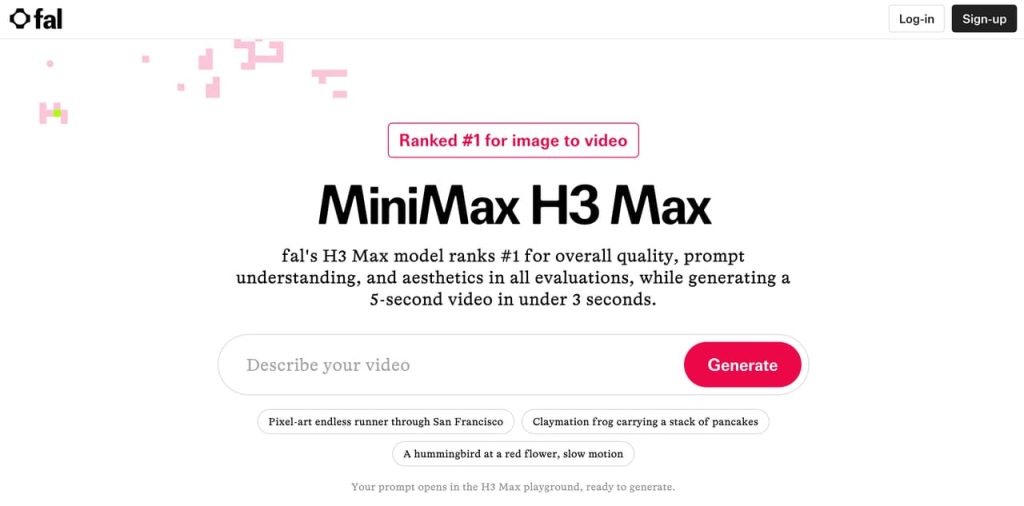
H3 Max may suit teams that need to explore several motion directions for one advertisement, social clip, or shot concept. fal presents it as a post-trained version of MiniMax H3 and claims that a five-second video can be generated in under three seconds. That claim is vendor-reported, not independently verified.
The potential advantage is faster creative review. It does not guarantee better continuity, easier editing, or a production-ready final cut.
What Fal Changed From MiniMax H3
Post-Training, Inference, and Model Ownership
The fal launch explanation for H3 Max describes it as a post-trained version of MiniMax H3, developed by fal Research and served through an inference stack designed for higher throughput.
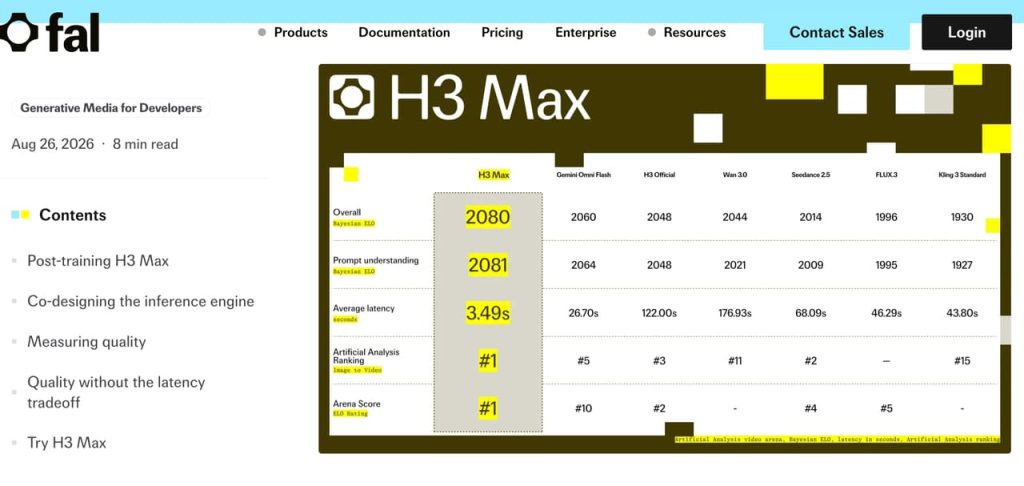
That means H3 Max should not be treated as MiniMax H3 running on faster hardware. fal describes additional post-training focused on prompt adherence and visual quality, combined with model-specific inference engineering.
For a MiniMax H3 Max review, the distinction matters. MiniMax H3 is the base reference, while H3 Max is fal’s post-trained service variant. A production team should record that relationship clearly instead of treating performance claims about one endpoint as evidence about every MiniMax service.
Vendor Claims Versus Independent Evidence
fal describes human preference evaluations covering overall quality, prompt understanding, and aesthetics. Its launch material also references outside benchmark results. These are useful signals, but they do not replace testing with a team’s own briefs, formats, and acceptance criteria.
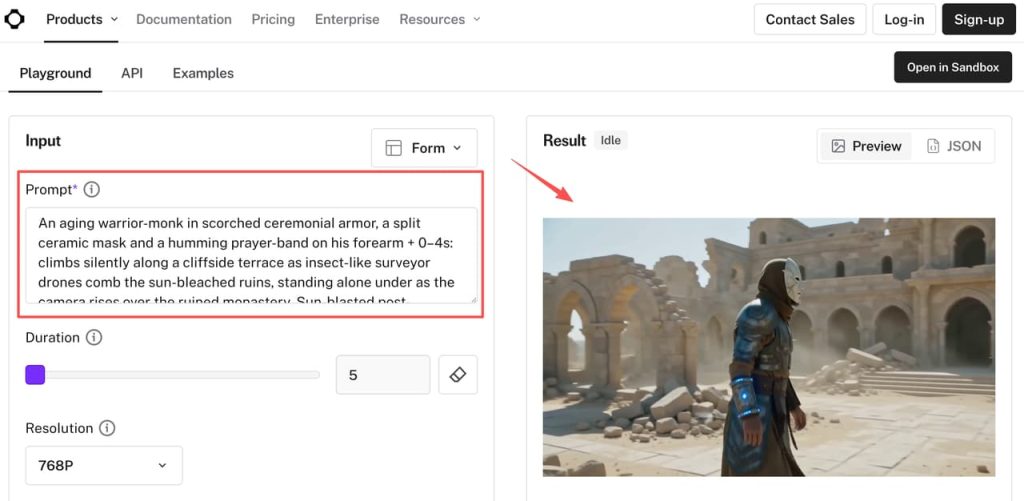
The current H3 Max model listing exposes text-to-video generation, duration and resolution fields, and a commercial-use label. Availability, pricing, and licensing can change, so teams should verify the live listing before production.
Evaluate One Concept-to-Select Loop
Use One Brief and Fixed Acceptance Criteria
A useful H3 Max workflow begins with one locked brief. Define the audience, subject, shot purpose, aspect ratio, duration, and required motion. Then decide what makes a clip usable before generating it.
For example, a product team may require a stable product silhouette, one clear camera movement, readable action, and no distracting object changes. Those criteria are more useful than a vague request for something cinematic.
Keep the brief and review standard fixed when comparing outputs. Otherwise, the result measures changing creative preferences instead of model behavior.
Track Waiting Time, Reruns, and Usable Selects
Record submission time, queue time, inference time when available, rerun reasons, and whether each result survives review. Also record why a clip fails. The problem may be incorrect motion, subject drift, unstable framing, or poor editability.
This is where a fast AI video model can change a workflow. The useful measure is not one impressive render. It is how many usable directions the team finds before running out of time, budget, or attention.
Where Lower Latency Changes Creative Decisions
Explore More Motion Directions Before Review
H3 Max speed may let a director test several interpretations of the same shot, such as a slow product reveal, a lateral camera move, or a close-up action beat.
That can improve review meetings. Instead of debating abstract descriptions, the team compares concrete options and sees which motion supports the message.
Reject Weak Concepts Earlier
Faster generation also makes rejection less expensive. If the first motion idea does not support the brief, the team can discard it before building a full edit around it.
The benefit only appears when someone owns the review. More drafts without a decision owner simply create a larger archive of uncertain clips.
Limits Speed Does Not Remove
Continuity, Editability, and Final Polish
Lower latency does not solve character drift, changing props, inconsistent lighting, awkward transitions, or timing problems between shots. It also does not prove that a clip can be extended, reframed, color-matched, or edited cleanly.
A selected clip should be tested inside a rough edit. A shot that looks good alone may fail when it needs to connect with the previous and next scene.
Queue Conditions, Resolution, and Cost Variation
The under-three-second claim refers to fal’s reported wall-time result for a five-second generation. Real production time may include upload, queueing, prompt expansion, retries, account limits, and review delays.
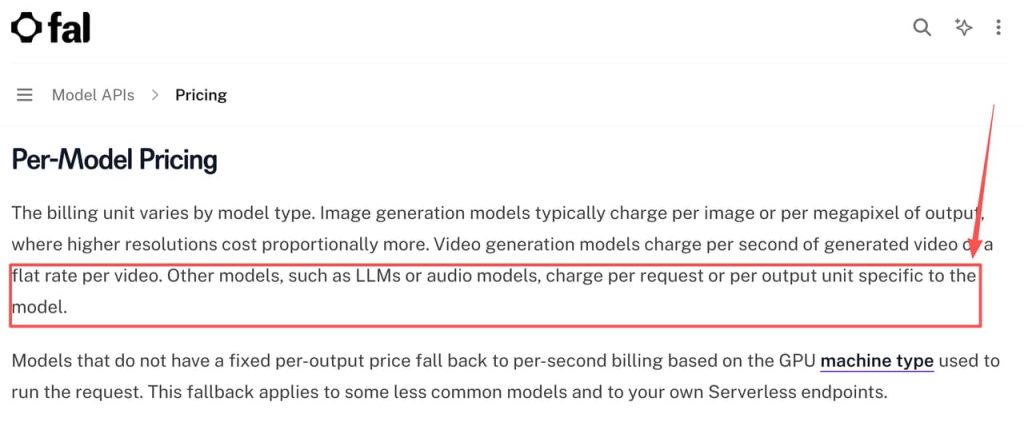
The fal model API pricing rules explain that billing depends on each model’s unit and that prices may change. The fal concurrency guidance also notes that account limits and endpoint conditions affect how requests are processed.
For production planning, measure the complete request-to-select loop. Do not use inference time alone as the project estimate.
Who Should Consider H3 Max
H3 Max may fit creators, marketers, and small teams that repeatedly test short shot directions and can review results quickly. It is less compelling when a project depends mainly on long-form continuity, precise editing control, or a locked final performance.
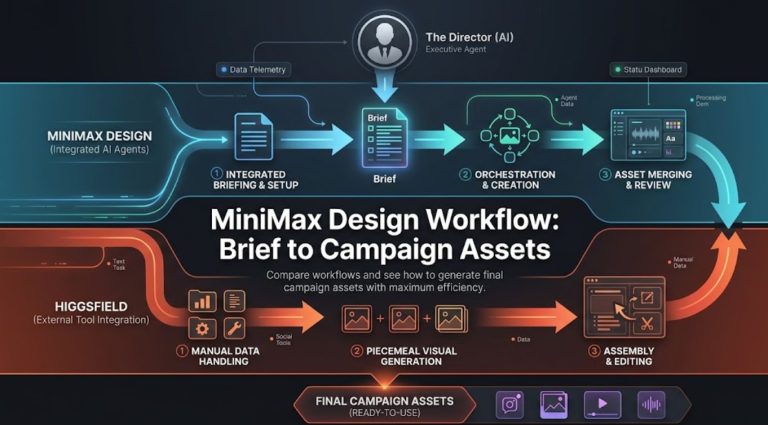
An AI Director workflow can use the model as one generation option while keeping the brief, shot review, and revision decisions organized. That does not make H3 Max’s underlying capabilities a feature of any third-party workflow platform.
FAQ
Is H3 Max available outside fal?
The public launch information confirms access through fal’s Playground, fal Agent, and API. It does not establish distribution through other providers. Treat outside-fal access as unconfirmed unless a current vendor announcement verifies it.
Does fal expose generation seeds for H3 Max jobs?
The current endpoint includes an optional seed input. When it is omitted, the service selects a random seed. A fixed seed can support repeatability checks, but it does not guarantee identical results after model or service changes.
Does a failed H3 Max generation consume credits?
The answer depends on the failure type. Infrastructure failures may be treated differently from invalid inputs that already used processing resources. Teams should inspect the request status and billing record instead of assuming every failed request is free.
What concurrency limit applies to H3 Max jobs?
The applicable limit depends on the account, purchase history, and possible endpoint-specific conditions. Teams should confirm the limit in the account used for production rather than relying on another user’s experience.
Can a completed H3 Max clip be extended without recreating it?
Do not assume so. A completed clip may require a separate continuation or editing workflow unless the current endpoint explicitly supports extension. Verify this before promising seamless longer footage to a client.
Conclusion
H3 Max is most relevant when faster generation increases the number of creative decisions a team can make around one brief. The strongest adoption case is rapid concept exploration, not a blanket promise of better final video. A sound H3 Max review should measure usable selections, rejection reasons, queue conditions, and edit readiness alongside raw generation time.






[…] H3 Max Review: Does Faster Improve Video Iteration? AI Video Workflow: From Brief to Final Cut AI Video Review Checklist Before Export JSON Prompt Generator for AI Video Workflows How Creators Use Seedance to Make AI Videos […]