Leo here. A creator team showed me a short fantasy clip last month. The dragon looked good, the lighting worked, and the camera move felt expensive. Then someone asked, “What happens if the viewer chooses to follow the dragon instead of the knight?”
The room went quiet.
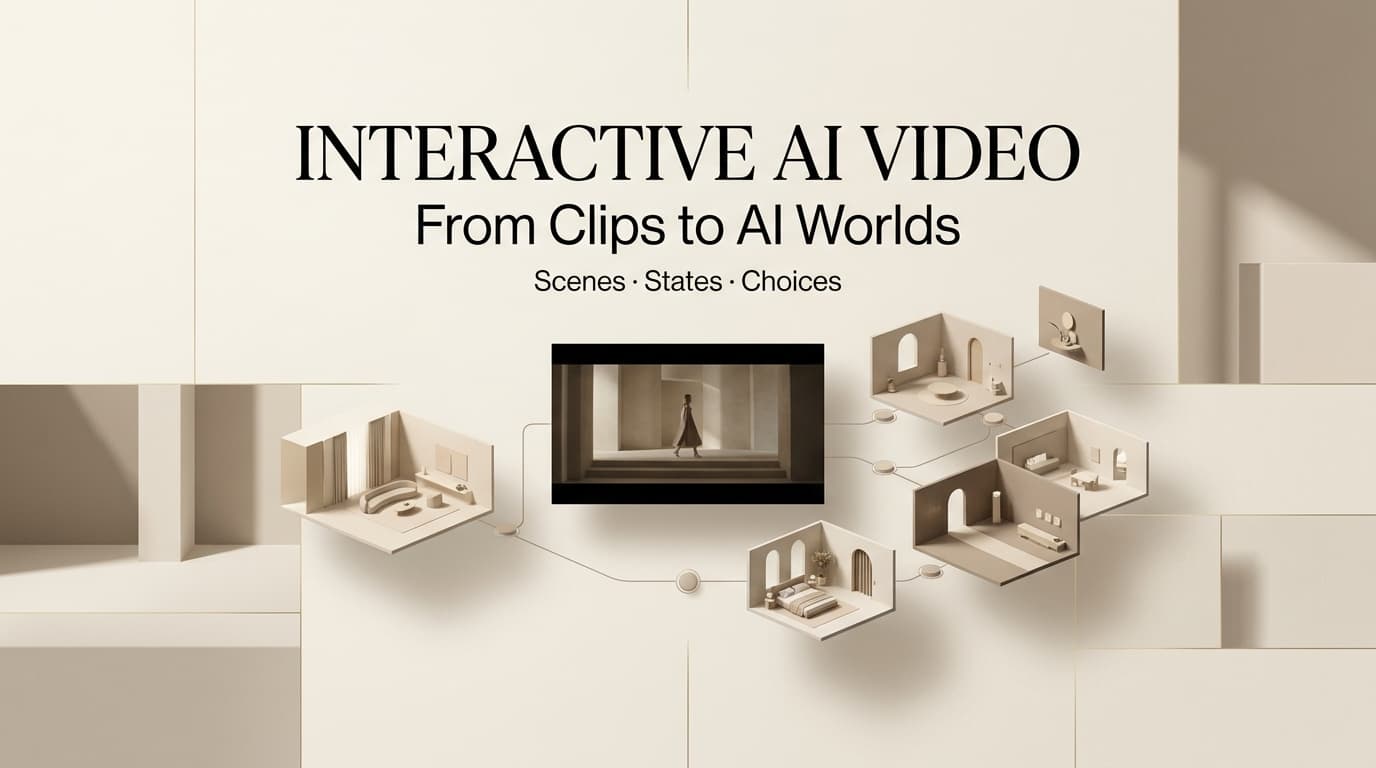
That is the shift behind interactive AI video. A normal clip answers one question: what happens next on the timeline? An interactive world has to answer a harder one: what happens next if the viewer changes the state?
This is not a claim that AI can already replace full games, film production, or professional interactive storytelling. It cannot. But the direction is clear. Creators are moving from fixed clips toward AI video worlds, where rules, characters, scenes, and audience input matter as much as the rendered shot.
What Interactive AI Video Changes
Interactive video is not just video with buttons. The bigger change is that the video stops being a locked file and starts behaving more like a live system.
Fixed timeline versus live state
Traditional video is timeline-based. The creator decides the order, exports the file, and the viewer watches. Even branching video still depends on prebuilt clips.
Interactive AI video points toward state-driven creation. The system tracks what has happened, what the viewer chose, what characters know, what goals remain active, and what world rules still apply. The next visual moment is generated or selected from that state.
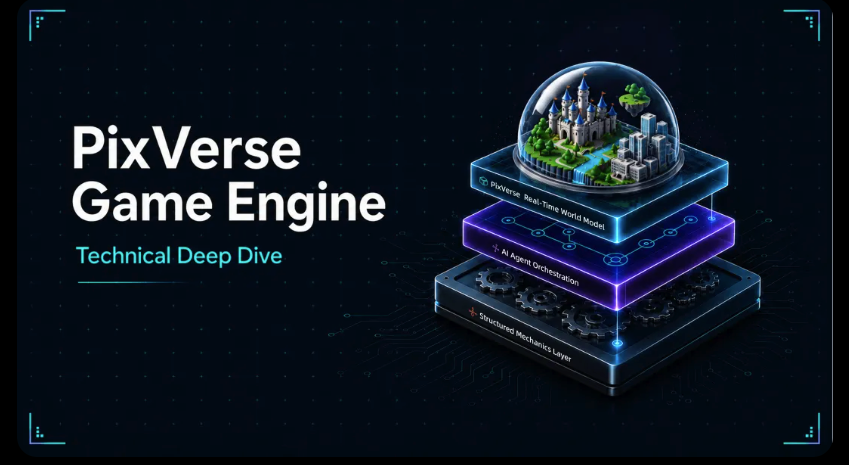
PixVerse’s Game Engine deep dive is a useful example of this direction. It frames interactive entertainment around real-time generative video, abstract game mechanics, and agent orchestration. The important creator lesson is not “everyone should build a game engine.” It is that story output needs structure before generation.
Viewer input
Viewer input changes the creative job. A fixed video asks creators to control pacing. An interactive video asks them to control possibility.
If a viewer can choose where to go, what to ask, or how to respond, the creator needs rules for acceptable paths. What can the viewer change? What must stay fixed? Which actions affect the story’s state? Which actions only change tone or camera direction?
This is where AI interactive storytelling becomes more like experience design than editing.
Persistent characters and scenes
Persistent characters are hard. A character needs memory, motivation, visual consistency, emotional continuity, and limits. A scene also needs persistence. If a room catches fire, the next moment should not forget the fire.
In early prototypes, these failures are common. A character changes outfit, a location resets, a prop disappears, or the world forgets a choice the viewer just made. The draft can still be exciting, but it is not production-ready until persistence is tested.
How Creators Should Plan Interactive Stories
The planning starts before any clip is generated. For linear video, a script and shot list may be enough. For interactive experiences, creators need rules, goals, character behavior, and choice points.
Rules and goals
A good interactive concept begins with the rules of the world. What is the viewer trying to do? What counts as progress? What can fail? What should never happen?
A generative video game prototype might have simple rules: find three objects, keep one character safe, solve a mystery, escape a room. A branded campaign experiment might use lighter rules: choose a product use case, explore a style, unlock a personalized scene.
Rules protect the experience from becoming random. Without them, real-time generation turns into beautiful noise.
Character behavior
Character behavior should be written like a production document, not just a personality prompt. What does the character want? What do they refuse to do? How do they react when the viewer asks something outside the story?
I once reviewed an interactive concept where the lead character was supposed to be cautious and suspicious. In testing, the character agreed to every viewer’s suggestion. The visuals looked fine, but the story broke because the behavior rules were too weak.
Choice points
Choice points should be meaningful but manageable. If every viewer input changes everything, the story becomes impossible to control. If choices change nothing, the interaction feels fake.
Useful choice points often affect route, tone, scene order, or what information the viewer receives. They do not need to explode into infinite branches. In early real-time AI entertainment, smaller choices are easier to test and safer to moderate.
Where It Fits Today
Interactive AI video is strongest as a prototype layer right now. It helps teams test experience ideas before treating them as products.
Prototype entertainment
Prototype entertainment is the obvious fit. Creators can explore interactive horror scenes, music-driven worlds, fantasy quests, or social story experiments. The goal is learning: does the idea feel alive, or does it feel like a chatbot wearing video?
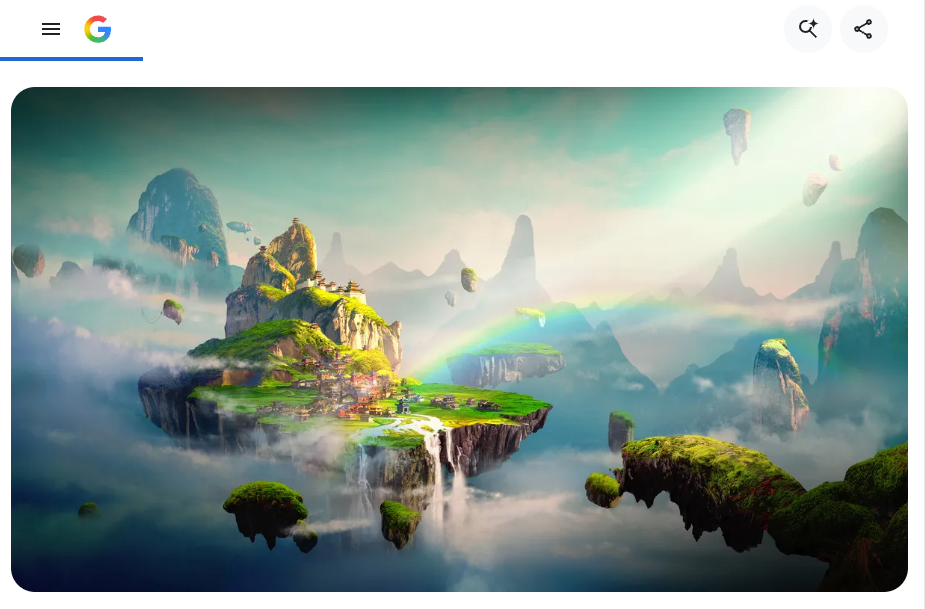
Google Cloud’s piece on “living games” captures the broader industry direction: games and entertainment moving toward worlds that adapt, grow, and respond. That is exciting, but it also raises the production bar. Adaptive worlds need design discipline.
Campaign experiments
Brands may test interactive demos, product worlds, or choose-your-own-style video experiences. This can work when the interaction supports the message. A skincare brand might let viewers explore routines. A travel brand might let users choose a destination mood. A SaaS brand might let users pick a workflow pain point.
The risk is gimmick. If interaction does not clarify the offer, a normal video may work better.
Storyworld testing
Storyworld testing may be the most useful creator use case. Before building a full series or campaign, teams can test characters, setting, mood, and viewer agency.
This is where planning matters most. The prototype should produce notes: which choices worked, which branches confused viewers, where characters broke, and what rules need rewriting.
Limits, Risks, and Production Gaps
Interactive AI video is promising, but it is not magic. The main gaps are consistency, moderation, cost, and control.
Consistency
Consistency is still fragile. The more open the viewer input, the harder it becomes to preserve character identity, setting, props, story logic, and visual continuity.
Teams should test continuity like a production requirement. Does the world remember prior events? Does the character stay in role? Does the visual style hold after several interactions?
Moderation
Moderation becomes harder when users can influence output. A fixed video can be reviewed before release. An interactive system needs guardrails during use.
The NIST AI Risk Management Framework is a practical reference here because it treats risk as an ongoing process. For interactive video, review does not end at export. It continues through testing, user paths, logs, and updates.
Cost and control
Real-time generation can be expensive and unpredictable. Latency, compute cost, output quality, and session length all affect production decisions. PixVerse itself frames its game engine as an early-stage research system and notes constraints such as latency, limited genre evaluation, and computational cost.
Creators should treat interactive projects as experiments before committing campaign or production budgets. Start with small scenes, limited rules, and clear success criteria.
For provenance and review history, the C2PA specification is a useful background. Even if teams do not use formal content credentials, they should track generated assets, interaction logs, approved paths, and failed branches.

FAQ
What records matter after audience interaction testing?
Save the test build, story rules, character rules, user-path logs, failed branches, moderator notes, and reviewer decisions. Also record which outputs were generated during testing and which ones are approved for future reference.
The goal is not to keep every file. The goal is to preserve what the team learned.
Who reviews unexpected user paths before another test?
The review owner should match the risk. Writers review story logic. Brand leads review tone. Safety or policy owners review harmful paths. Producers review scope and feasibility.
Unexpected paths should not go straight into another public test just because they looked interesting.
How should failed interaction branches be archived?
Archive failed branches with a short reason: broke character memory, ignored world rules, created unsafe output, confused users, or exceeded production scope. Keep the evidence needed for learning, but avoid storing unnecessary sensitive outputs.
A clean failure archive makes the next prototype smarter.
What should be handed off to writers after a prototype?
Writers need more than generated clips. Give them the rule document, character behavior notes, successful paths, failed paths, user confusion points, tone issues, and moments where the system produced surprising but useful ideas.
That handoff turns an experiment into a better script, not just a folder of strange outputs.
Conclusion
Interactive AI video changes the creator’s job. Instead of only planning clips, teams must plan rules, characters, states, choices, and review paths.
This is why the future is not simply “more video generation.” It is structured generation. The strongest creators will not just make prettier clips. They will design AI video worlds that know what can change, what must persist, and why the viewer’s choice matters.
Previous Posts: