I make AI videos for client work, and the question that actually keeps me up at night isn’t “which model looks best this week.” It’s whether the thing I’m about to hit publish on gets me sued, banned, or both. So the moment a client says “can you put a real person in this,” I stop and do my homework. If you’ve ever wondered whether is it illegal to make AI videos of people, here’s the honest answer up front: it depends, and the lines moved a lot in 2026.
Quick disclaimer, because I’d want one: I’m Leo, not a lawyer. I’m a creator who reads the rules so I don’t torch a client relationship or wake up to a takedown. None of this is legal advice. When real money or a real person’s face is on the line, talk to an actual attorney where you live.
Below: the short answer, the consent stuff that decides everything, the regional mess, public figures versus private people, what the platforms enforce on their own, and how to make AI videos of people without stepping on a landmine.
The Short Answer
Making AI videos of people is usually legal only when the person is fictional, unidentifiable, or you have clear permission. It becomes high-risk or illegal when the video uses a real person’s face or voice without consent, especially for sexual content, fraud, ads, political deception, or fake endorsement.
| Scenario | Risk level | What I would do |
| Fictional AI character | Low | Use normal AI disclosure if realistic |
| Real employee/customer in a client video | Medium-High | Get written AI likeness permission |
| Celebrity voice or face in an ad | High | Do not use without a license |
| Political deepfake designed to mislead | High | Avoid unless clearly labeled commentary/satire |
| Nonconsensual intimate content | Illegal/highest risk | Do not create or publish |
Legality depends on consent, likeness, purpose, and jurisdiction
Four levers decide whether you’re fine or in trouble: did the person consent, whose likeness is it, what’s the purpose, and which country’s law applies. Get all four pointing the right way and you’re usually safe. Get one badly wrong — especially consent — and you can cross from “creative project” into “criminal offence.”
The fastest ways to land on the illegal side: sexual or intimate content of someone without consent, using a real person’s face or voice to sell something without permission, fraud or scams, defamation, and political content built to deceive. If your idea touches any of those, stop.
Likeness and Consent Basics
Before the legal stuff gets messy, here are the terms I actually watch for:
- Likeness usually means the parts of a person that make them identifiable: face, voice, name, image, or other recognizable traits.
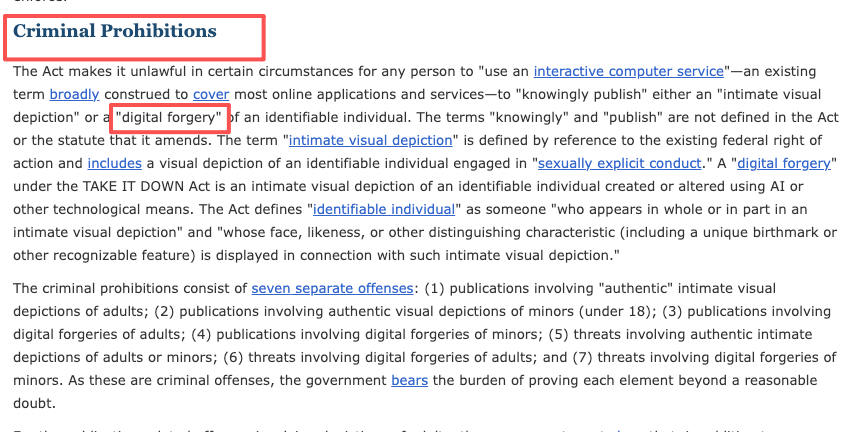
- Digital forgery is the kind of AI-made or AI-altered media covered by laws like the TAKE IT DOWN Act when it depicts a real person in intimate content.
- Right of publicity is the civil-law bucket that often covers using someone’s identity, face, or voice for commercial gain without permission.
- Voice clone matters because several laws and platform policies treat a synthetic voice as part of a person’s identity, not just an audio effect.
Consent is the whole game. In the US, the federal TAKE IT DOWN Act, signed in May 2025, makes it a crime to knowingly publish nonconsensual intimate images of a real person — and it specifically covers AI-made “digital forgeries,” not just real photos. The Congressional Research Service breakdown of the TAKE IT DOWN Act spells out how broadly “digital forgery” is written and why the consent standard matters. That law is narrow in scope (intimate content), but it’s the clearest signal yet that “I just generated it, I didn’t film anything” is no defense.
Private people, creators, employees, and customers
Here’s the part creators underrate. Private individuals — your neighbor, a customer, an employee, a random face — get the strongest protection, not the weakest. They didn’t sign up for public life, so courts and regulators treat unauthorized use of their likeness far more harshly.
If you want a real person in a commercial video, get a written release. Verbal “yeah sure” is worthless the day a deal goes sideways. And note: consenting to appear in something is not the same as consenting to have an AI replica generated for other uses. Treat those as two separate permissions. A usable AI likeness release should spell out: whose face or voice is being used, whether AI generation or voice cloning is allowed, where the video can appear, whether paid ads are included, how long the permission lasts, and whether the person can revoke consent later.
Deepfake Laws by Region
There’s no single global rule. The same 30-second clip can be perfectly legal in one country and a chargeable offence in another.
| Region | What changed | What it means for you |
| US | TAKE IT DOWN Act (federal) + many state-level deepfake, election, and likeness laws | Intimate/nonconsensual content is criminal; likeness rules vary by state |
| EU | AI Act Article 50 transparency rules | Deepfakes must be labeled as AI-generated from Aug 2026 |
| UK | Data (Use and Access) Act 2025, s.138 | Creating a nonconsensual intimate image is a crime, even unshared |
One caveat: this table is not a complete global legal map. It covers the US, EU, and UK because those are the regions most likely to affect English-language creators and client work. If your subject, client, platform, or audience is somewhere else, check local rules before publishing.
Why local rules and platform rules both matter
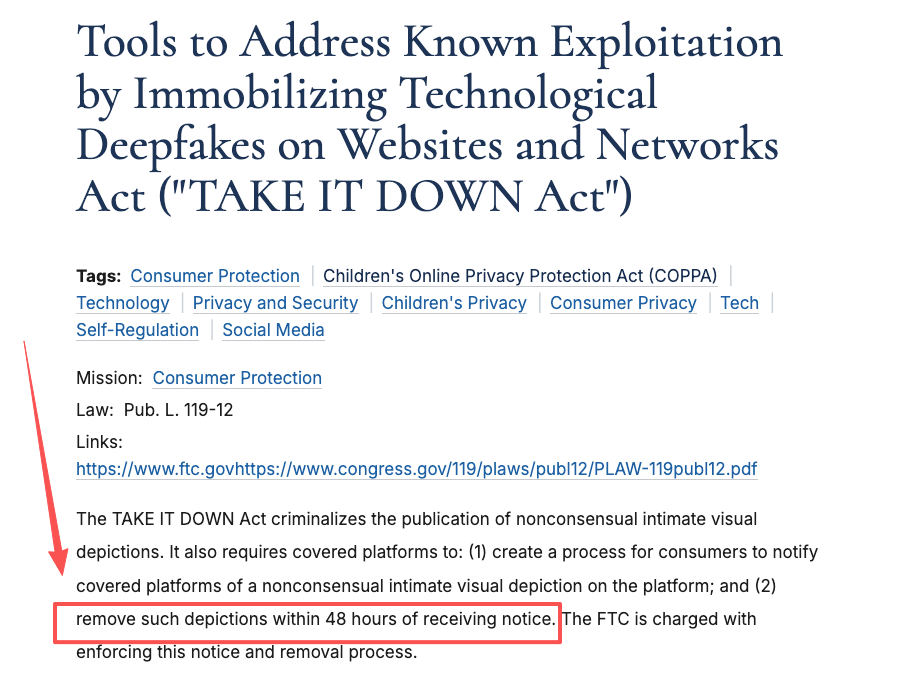
In the US, alongside the federal law, the FTC’s TAKE IT DOWN Act page confirms platforms must remove reported nonconsensual intimate content within 48 hours. State law adds another layer: Tennessee’s ELVIS Act and California’s AB 2602 and AB 1836 protect a person’s voice and likeness from unauthorized AI replicas, and the ELVIS Act can even reach the people who build the tools.
In the EU, the rules are about disclosure. Under Article 50 of the EU AI Act, anyone deploying AI to create a deepfake must disclose that the content is artificially generated, with obligations applying from August 2026. Clearly artistic or satirical work gets a lighter, less intrusive label — but it still needs one.
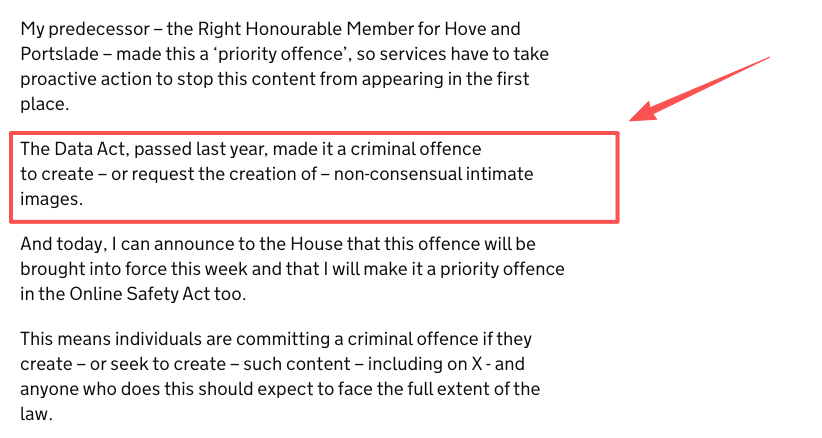
In the UK, things got strict fast. Following a high-profile AI tool scandal in early 2026, the government brought forward Section 138 of the Data (Use and Access) Act. As the UK government’s January 2026 statement to Parliament made clear, creating — or even requesting — a nonconsensual intimate image is now a criminal offence, regardless of whether it’s ever shared.
Public Figures vs Private People
People assume celebrities are fair game because they’re “public.” It’s more complicated than that.
News, parody, ads, and misleading uses
Public figures get less protection in some contexts and more in others. Genuine commentary, news, and obvious parody or satire about a public figure have real breathing room — that’s protected expression in a lot of jurisdictions. Where it collapses: using their face or voice in an ad or fake endorsement, or making them appear to say or do something to mislead viewers. Election deepfakes are their own regulated category in many places.
Private people, again, are the high-risk zone. There’s no “newsworthy” or “parody” cushion when you fabricate a regular person doing something they never did. If you’re tempted to make an AI video of someone who isn’t a public figure, that’s usually the moment to invent a character instead.
Platform Policies
Even when something is technically legal, the platform can still nuke it. And the platforms enforce faster than any court.
Synthetic media labels, impersonation rules, and ad review
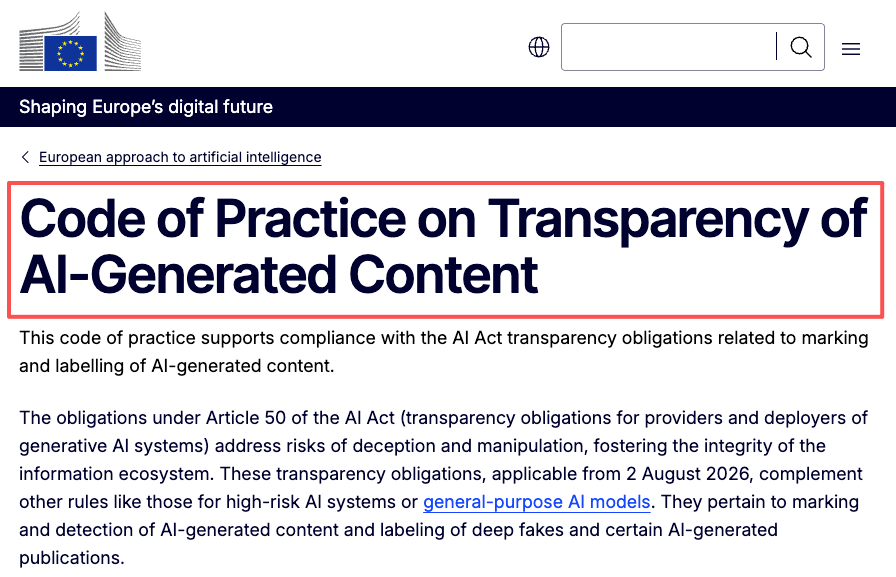
YouTube, Meta, and TikTok all run mandatory AI-disclosure systems now, increasingly tied to C2PA provenance metadata. The EU’s framework for this — the European Commission’s Code of Practice on AI-generated content — is shaping how labeling works across the board.
A few practical things I’ve run into:
- Labeling is mandatory for realistic synthetic depictions of people on TikTok and YouTube; unlabeled content can get auto-labeled, demoted, or pulled.
- Voice clones of real people generally need documented consent — TikTok asks advertisers to upload it.
- AI likenesses in ads are effectively off-limits across major platforms without proof of permission.
- Private individuals get the hardest line — TikTok bans synthetic media of private people outright.
So even a “legal” clip can fail platform review. You’re clearing two bars, not one.
Safer Practices for Creators
This is really the answer to “how to make AI videos of people” without the anxiety. My actual workflow rules:
- Default to fictional or composite faces. If the video doesn’t need a specific real person, don’t use one. Ninety percent of my client work runs fine on invented characters.
- Get written permission when a real person is required — naming the scope, the duration, and the exact context of use.
- Disclose that it’s AI. A clear, visible label, not something buried in a caption nobody reads.
- Never go near intimate, sexual, or degrading content of a real person. That’s not a grey area anymore; it’s criminal in the US and UK.
- Don’t imply endorsement a person never gave.
Honestly? The fictional-character route has saved me more headaches than any legal checklist. When in doubt, I make someone up.
Source and Update Note
I last checked the legal and platform sources linked in this article in June 2026. For laws, I prioritized official government pages, legislative summaries, and primary regulatory sources. For platform rules, I treat the platform’s own policy pages as the source of truth, because enforcement can change faster than court guidance.
This article covers the US, EU, and UK at a creator-safety level. It does not cover every state, country, election rule, privacy law, or employment-law issue.
FAQ
Do I need permission to make AI videos of someone? For anything commercial or public-facing involving a real, identifiable person, yes — and get it in writing. A usable release should name who’s depicted, the specific uses allowed, the duration, and whether AI generation or voice cloning is included. For deceased people, the right can pass to their estate in states like California, Tennessee, and New York, so “they’ve passed away” doesn’t clear you — you may need estate consent.
Can I use AI on public figures? Sometimes. Obvious parody, satire, and genuine commentary have protection in many places. What reliably gets you in trouble: fake endorsements, ads, voice clones, and election content designed to mislead. Several states now treat AI voice replicas of real people as a separate violation from any “is this content allowed” question, so a public figure being famous doesn’t make their cloned voice fair use.
What are the risks? Three separate buckets, and you can hit all three from one upload. Criminal: intimate nonconsensual content can mean prison time under US and UK law. Civil: right-of-publicity and likeness suits, where damages stack up per violation. Platform: demotion, channel strikes, or permanent bans. Asking “is it illegal to make an AI video of someone” only covers the first bucket — the civil and platform risks can bite even when no crime occurred. Worth tracking all three as ai deepfake video laws keep tightening through 2026.
The short version I give clients: making AI videos of people isn’t banned, but the question “is it illegal to make AI videos of people” has a different answer depending on consent, who they are, what you’re using it for, and where you are. Run those four checks before you generate, default to invented characters when you can, and label your work. Do that, and you get to keep making things without lying awake over a takedown notice.
Laws referenced here were current as of June 2026 and vary by jurisdiction. This is general information, not legal advice — confirm the rules that apply to you before publishing.
Previous posts: