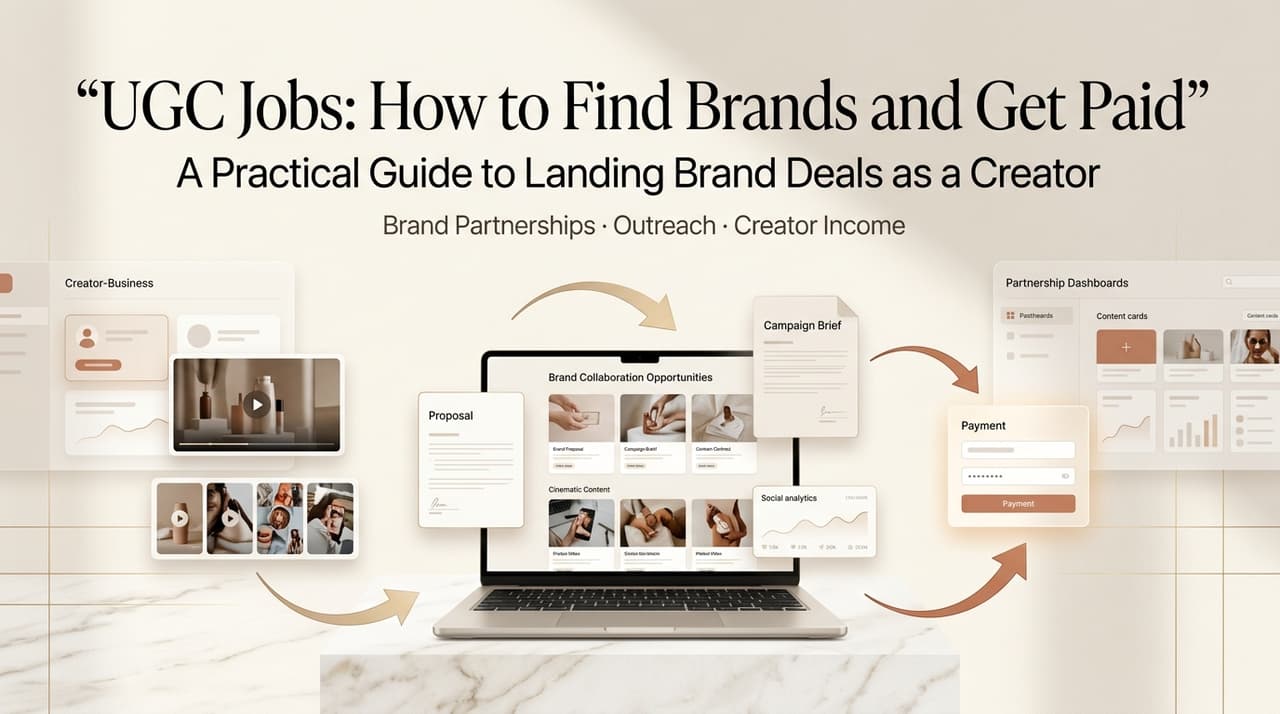
I’m Leo. A brand slid into my DMs last month asking for three 30-second UGC clips. No follower count check. No media kit request. Just: “can you make this?” — and a product link.I made the clips, got paid within 10 days, and they came back two weeks later asking for a retainer. Zero followers on the account they checked. Zero.
That’s how ugc jobs work now. Brands aren’t hiring influencers to broadcast to an audience. They’re hiring creators to make footage that looks like a real person shot it — because their paid media team is going to run it as an ad. Your reach is irrelevant. Your ability to make convincing, usable video is everything.
If you’ve been wondering how to break in, find consistent gigs, price your work, and actually get paid — this covers all of it.
What UGC Jobs Actually Are
UGC stands for user-generated content, but in a brand deal context it doesn’t mean posting on your own account. It means you — the creator — film, edit, and deliver raw or finished video assets that a brand licenses to use in their own ads, social channels, or product pages.
You’re a freelance creative producing on-brand footage for a licensing fee. The brand takes the asset and runs it wherever they want — you don’t post it yourself, and your follower count never comes up.
Common deliverables: unboxing videos, product demos, testimonial-style talking-head clips, before/after comparisons, hook-only clips for paid ads. Most run 15–60 seconds. Most brands want 3–5 variations per round.
Where to Find UGC Jobs
This is where most people waste time — either spamming cold emails to brands that ignore them, or sitting on platforms that never match them with anything real. The three channels that actually move are creator platforms, gig platforms, and direct outreach. UGC gigs come from all three, but the quality and speed vary a lot.
Creator Platforms
These exist specifically to connect brands with UGC creators. The pitch-to-payment cycle is faster here than anywhere else, and most handle contracts and licensing for you.
- Billo — product-focused UGC gigs, mostly e-commerce brands. Good volume for beginners.
- Insense — skews toward performance marketing briefs. Brands here usually know exactly what they want for Meta/TikTok ads. Briefs are more detailed, client expectations higher — but so is the pay ceiling.
Quick take on which to start with: Billo if you’re building your first samples and want lower-stakes briefs to practice on. Insense if you’ve already got 2–3 clips done and want to move into paid media territory faster.
- TikTok Creator Marketplace — free to join, and more brands are using it to source ugc work without negotiating off-platform. Worth having a profile even if you don’t post on TikTok regularly.
The catch: platform fees usually sit at 10–20%, and you’re competing against a lot of other creators at the lower price points. Still the fastest way to land your first few ugc creator jobs.
Job Boards and Gig Platforms
These are messier but have real volume. Brands post ugc side gigs here when they don’t want to pay platform fees or they’re sourcing on short timelines.
- Contra — commission-free for freelancers. UGC and video production briefs appear regularly, and the platform is cleaner than most.
- Fiverr — you build a service listing rather than applying to jobs. More inbound than outbound once you have reviews, but competitive at entry level.
- LinkedIn — search “ugc creator” in the jobs tab. LinkedIn’s job search now surfaces a decent amount of contract and freelance ugc work, especially from DTC brands with in-house marketing teams.
Quick tip: on gig platforms, your sample video is your resume. No sample = no gig. More on that in the AI section.
Cold Outreach to Brands
Slower, but the ugc brand deals you close this way tend to pay better because there’s no platform taking a cut.
Identify brands you already use or genuinely like — personal connection comes through on camera, and brands can tell. Find the marketing lead or social media manager on LinkedIn. Send a short DM or email: who you are, one line on why their product fits your content style, a link to 1–2 sample clips, and a simple ask (“open to a trial brief?”).
Don’t send a rate card in the first message. Get them to reply first.
How to Pitch Brands Outbound
Once you’ve picked your channel, the next move is the pitch — and most creators blow it by sending something that reads like a cover letter nobody asked for.
Your pitch needs to do three things in under 60 seconds of reading time:
- Show you know the product. One specific observation — “I noticed your Meta ads mostly use lifestyle footage but no close-up demos” — signals you’ve actually looked at their marketing.
- Show your work. Link directly to 1–2 sample clips, not to a general portfolio page. Make it zero-friction.
- Ask for something small. A trial brief, a single paid clip, a call — not a retainer on first contact.
Subject line if emailing: “UGC sample for [Brand] — [your name].” Short, scannable, not salesy.
Follow up once after 5–7 days if no reply. After that, move on. Non-response is data — either they’re not sourcing right now or your sample didn’t land. Both are fixable.
Pricing and Deliverables
The most common question I get: what should I charge?
Honest answer: it depends on deliverable count, usage rights, and whether the brand is running the content as paid ads. Here are the reference ranges that hold up in the market right now: For a single edited UGC clip in 2026, the standard starting range is $75–$300, depending on deliverable complexity and usage scope.
| Deliverable | Organic Use | Paid Media (per 30 days) |
| Single edited clip (15–30s) | $75–$150 | Add $75–$150 |
| Package of 3 clips | $250–$400 | Add $150–$300 |
| Package of 5 clips | $400–$600 | Add $200–$400 |
| Raw footage only (no edit) | $50–$100 | — |
These are the ranges I see most consistently cited in public creator communities and platform guides as of early 2026. Your actual number will shift based on usage scope, brand size, and what’s in your contract — which is exactly why reading the next section matters.If you want a broader benchmark, Influencer Marketing Hub’s UGC pricing guide covers reported market rates across categories — it’s a useful sanity check before you send a rate card.
Brands running ugc brand deals as paid ads should always be charged more — they’re deriving commercial value from your creative work beyond organic use. If the brief mentions Meta Ads, TikTok Ads, or YouTube pre-roll, that’s a paid media usage scenario. Price accordingly, and get usage scope in writing.
Usage Rights and Licensing
But the number in the invoice isn’t the whole deal — what you’re actually negotiating is the scope of the license. I didn’t fully understand this until a brand ran one of my organic-priced clips as a paid ad for four months. The clip was priced for one-time organic use. That wasn’t what happened.
When you deliver a UGC clip, you’re licensing it — not selling it outright — unless your contract says otherwise. The difference matters a lot for pricing.
Key terms to understand:
- Organic use only: brand posts it on their own social channels. Lower value.
- Paid media / whitelisting: brand runs your content as a paid ad. Higher value — typically adds 50–100% to the base rate per 30-day window.
- Exclusivity: brand wants to prevent you from making similar content for competitors. Charge a significant premium.
- Perpetual license vs. time-limited: a perpetual license to run your content as ads indefinitely is worth more than a 90-day window.
The FTC’s endorsement and testimonial guidelines are worth a read if you’re new to how disclosure rules apply to creator-made ad content — especially if your clips will run as paid ads.
Don’t just accept a brand’s default contract. Ask what the usage scope is before you price. A $150 clip for organic use is totally reasonable. A $150 clip that runs as a paid ad for 12 months is a bad deal.
How AI Helps You Create Better Samples
Here’s something I’ve been doing for the past few months that’s changed how I approach sample production — especially for product categories where I don’t have the actual item on hand.
Last month a wellness brand sent me a three-line brief: product name, hero claim, and “make it feel authentic.” No storyboard. No reference clips. Just that. Old workflow: I’d sit in front of a blank Google Doc for a while, draft something half-baked, probably restart twice, then film something that felt improvised.
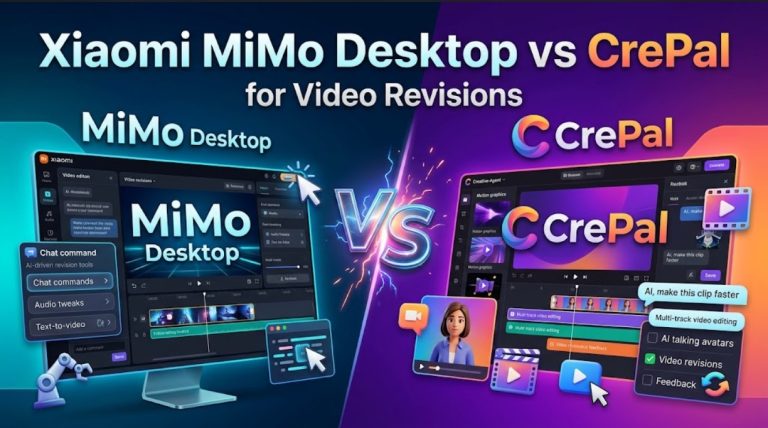
New workflow: I dropped the brief into CrePal, let it build out a shot structure, then filmed against those five prompts instead of winging it. Total time from brief to “okay I know what I’m shooting”: maybe 12 minutes. That’s the phase that used to cost me an hour and a half of low-grade anxiety.
The actual scripting and storyboard output isn’t magic — it gives you a workable structure, not a final cut. But that’s exactly what the blank-doc phase was blocking. Once the shot logic is there, filming gets faster because you’re not making decisions about sequence while the camera’s rolling.
Where AI won’t save you: on-camera presence, lighting, and edit pacing. Those are still yours to own. A mediocre delivery with an AI-structured script is still a mediocre clip. But if the part that was killing your momentum was “I don’t know how to start this brief,” that part is solved.
I’ve tested this across about 20 briefs now — supplement brands, tech accessories, skincare. The workflow holds up most consistently when the brief is tight (clear hero claim, one key demo action). Looser briefs need more human judgment at the scripting stage, so I’ll spend a bit more time editing the AI’s output before filming.
If you’re at the “I need samples but don’t know where to start” stage, it’s worth running one brief through an AI workflow before you reach for the camera.
FAQ
Where can beginners find UGC jobs?
Creator platforms like Billo and Insense are the fastest entry point for ugc creator jobs — structured briefs, templated contracts, no cold pitching needed. Gig platforms like Contra and Fiverr work once you have 2–3 sample clips. LinkedIn job search is underrated for finding short-term ugc work contracts from DTC brands.
Do UGC jobs require followers?
No — and this is genuinely different from influencer deals. Most ugc side gigs don’t care about your follower count at all. Brands sourcing UGC for paid ads want footage that looks authentic, not reach. What they’re evaluating is your sample: can you hold frame, deliver a clean hook, and make the product look real? A strong sample with zero followers will book more ugc work than a mediocre sample with 10k followers.
How much should a beginner UGC creator charge in 2026?
The publicly reported market starting range for a single edited clip is roughly $75–$150, with packages of 3 clips starting around $250–$400. These are reference benchmarks only — your actual rate should reflect usage rights, deliverable complexity, and whether the content is going into paid media. Final pricing is always subject to your specific brand contract, licensing scope, deliverable count, and regional market conditions.
What usage rights should UGC creators understand?
The key distinction is organic use versus paid media use. Organic means the brand posts it to their own channels. Paid media means it runs as an ad — worth more. A standard approach: charge a base rate for organic and add a paid media fee (often 50–100% of base rate per 30-day window) if the brand is running it as an ad. Get the scope in writing before you agree to a price. The FTC endorsement guidelines are worth a read if you’re new to how disclosure rules apply to creator-made ad content.
Conclusion
UGC jobs aren’t complicated — the hardest part is usually just getting that first paid clip under your belt. Find one platform (Billo or Insense for structured briefs, Contra for more creative latitude), build two or three samples that hook attention in the first three seconds, and start applying.
Price your ugc brand deals based on usage scope, not just deliverable count. Get license terms in writing. And if you’re not landing gigs yet, the answer is almost always the sample — not the pitch, not the platform.
Drop your pricing stories or platform wins in the comments. Always curious what’s actually converting in real pipelines right now.
Previous posts: