Leo here. A brand manager messaged me last month: “We had 40 applications for a UGC campaign. We hired three. The other 37 had perfectly fine portfolios — we just couldn’t figure out what they were actually good at.”
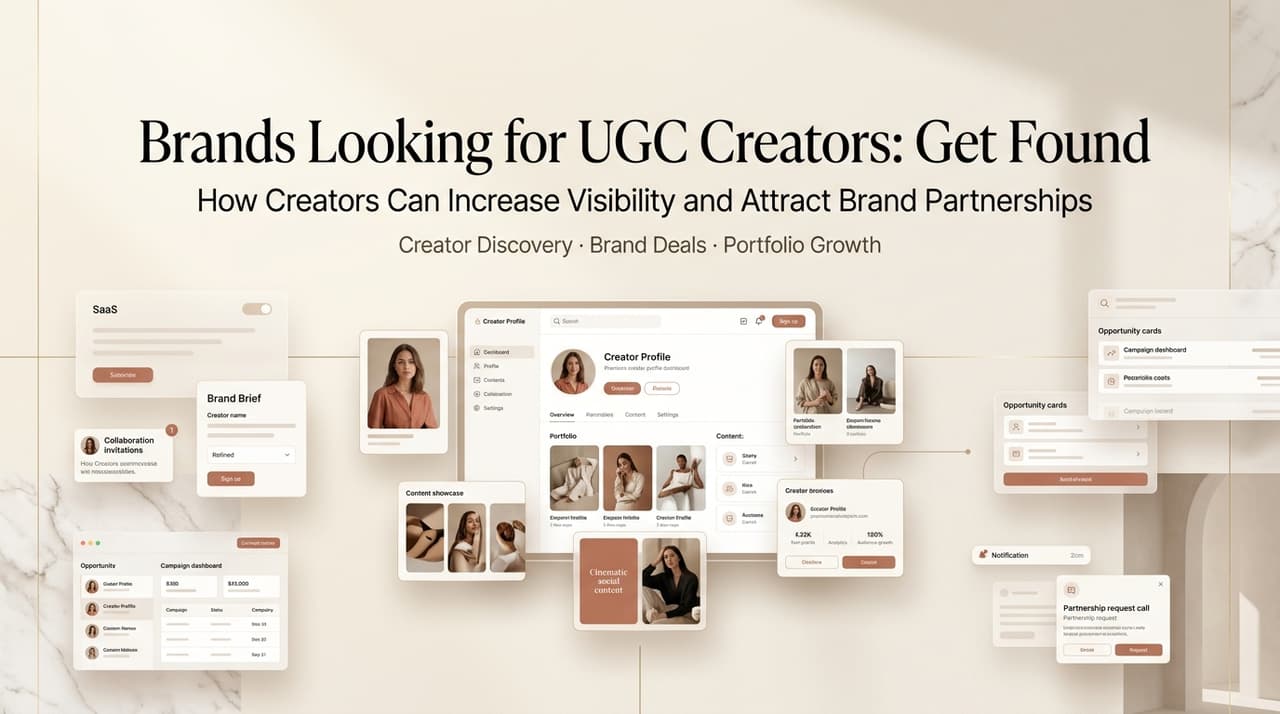
That stuck with me. Because most UGCcreators I talk to think the problem is exposure — they just need more brands looking for UGC creators to see their work. But the real block is usually one level earlier: even when a brand finds your profile, they can’t immediately answer “does this person fit our product?”
This post is about fixing that. How brands actually search and shortlist, what makes a profile pull you into the “yes” pile, and how smarter samples close the gap faster.
Why Brands Look for UGC Creators
Here’s the short version of why UGC brand deals exist at all: brands need content that looks like it was filmed by a real customer, not a production crew. The glossy ad aesthetic stopped converting the way it used to. Scroll-native, phone-shot, human-sounding content performs better on paid social — and producing it in-house at volume is expensive.
So brands started hiring independent creators to fill that gap. Not influencers with big audiences. Creators who can make the content — and who know how to frame a product in a way that feels real.
The demand signal is real: brands are allocating more of their paid social budget toward creator-made assets specifically because they outperform studio-produced creative on scroll-native placements. According to Nielsen’s research on consumer trust in advertising, peer recommendations consistently outperform branded content in trust scores — a gap UGC is designed to close at scale. That’s why ugc creator jobs are growing, not shrinking.
How Brands Shortlist Creators
I’ve sat in on briefing calls and reviewed creator submissions with brand teams at DTC companies running Meta and TikTok campaigns. The filtering happens fast — faster than you think. Most hiring decisions for UGC campaigns get made in under two minutes per profile, based on what brand managers I’ve worked with consistently describe as a gut-check for “fit.”
Here’s what they’re actually screening for:
Niche fit
“Skincare UGC creator” gets you a callback. “Content creator who does beauty, travel, food, fitness, lifestyle, and tech” does not.
When a brand is running a campaign for a face serum, they want someone who already talks about skincare. Not someone who could pivot to it. Positioning yourself tightly around one or two verticals isn’t limiting — it’s the thing that makes you immediately hireable for the right ugc opportunities.
If you’ve spent the last six months making food content, lead with that. The brands looking for that type of creator will find you. The ones who aren’t — you weren’t going to get that deal anyway.
Portfolio clarity
Brands aren’t watching your whole portfolio. They’re watching 15 seconds of one video to see if the vibe is right, then maybe one more. If your portfolio page loads slowly, mixes wildly different content types, or buries your best work, you lose them before they’ve formed an opinion.
One thing that actually works: title your portfolio pieces by use case, not by product. Instead of “Nike video” → “Unboxing hook for athletic footwear brand.” That title tells a brand manager exactly what they’re looking at.
Past sample quality
This is the main thing. Not your follower count (more on that in the FAQ). Not your engagement rate. Whether your samples look and feel like something they could drop into their ad account and test.
The checklist I’d use from the brand side:
- Does the hook land in the first 3 seconds?
- Does it feel like a real person talking, not a script being read?
- Is the lighting and audio usable — not perfect, but usable?
- Does the creator seem to actually like the product category?
If you can say yes to all four, you’re in the running.
Usage rights readiness
This one trips people up. Brands need usage rights to run your content as paid ads — usually across Meta’s ad placements and TikTok, sometimes YouTube or programmatic. If you’re vague about this, or if you’ve never thought about it, you signal inexperience.
Being clear upfront — “my standard rate includes 90-day paid usage rights across Meta and TikTok” — removes friction from the deal. Brands move faster when they don’t have to negotiate licensing from scratch.
How to Make Your Profile Easier to Find
Getting hired through ugc creator jobs boards or platforms is partly about standing out. But first, you have to be findable. That’s a different problem.
Platform keywords
Most UGC marketplaces have search filters that pull from your profile fields, bio copy, and category tags. The specific platforms worth prioritizing: Billo, Insense, and TikTok Creator Marketplace each have different search architectures, but all three surface creators based on bio copy and category selection.
TikTok’s own guidance for creators entering their ecosystem is documented in TikTok for Business Creator Resources — useful for understanding how the platform’s search and discovery is set up on the brand side.
If your bio says “content creator” and nothing else, you’re invisible to filtered searches. If it says “skincare & wellness UGC creator | hooks, unboxings, demos | Meta/TikTok ad assets” — that’s searchable. Each of those phrases is something a brand might type into a search bar.
Go through your profile on whatever platform you use. Read it like a brand manager running a search. Would your own profile surface?
Creator bio positioning
Your bio should answer two questions in the first two sentences: what kind of content do you make, and who is it for?
“I make scroll-stopping product videos for DTC skincare and supplement brands” is a positioning statement. “Passionate creator | storyteller | cat mom” is not. One of those gets you into the shortlist. The other gets you a follow.
Search-friendly portfolio titles
This overlaps with the sample quality point, but it’s worth saying separately: the text around your videos matters as much as the videos themselves.
Platform search algorithms and brand-side keyword filters often scan video titles, descriptions, and tags. “Demo video for natural deodorant brand” outperforms “vid 14” on every dimension — discoverability, context, and perceived professionalism.
How AI Helps You Create Stronger Samples
Here’s a practical problem a lot of creators run into: you need samples in categories you haven’t worked in yet. A brand wants skincare demos — you’ve been doing fitness. You need to bridge that gap with spec work.
The old approach was to buy a product you want to pitch, film it yourself, and hope the edit comes together. That still works, but it’s slow. What I’ve been doing with this: using CrePal for the scripting and storyboard phase before filming. Drop in a product brief, get a structured shot list, then film against that structure instead of winging it. The spec sample still needs your face and your delivery — but the “what do I even shoot?” phase compresses from an hour of staring at a blank doc to maybe 10 minutes.
It’s not about replacing authentic footage. It’s about making spec samples faster and at a higher production level than filming alone in your apartment at 11pm. The FTC’s disclosure guidelines still apply — if AI was involved in a sample, be transparent about that when relevant.
The creators who are getting hired for ugc brand deals consistently — they’re not waiting for brands to find them and evaluate what they already have. They’re actively building samples for the categories they want to work in, tightening their niche, and making it easy for a brand to say yes in two minutes.
FAQ
How do brands find UGC creators?
Mostly through dedicated creator platforms (Billo, Insense, Minea, TikTok Creator Marketplace), direct outreach via Instagram or TikTok search, or through agencies that maintain creator rosters. Some brands run open applications via their websites. The fastest route to consistent work is getting your profile optimized on 2–3 platforms rather than spreading thin across all of them.
What makes a UGC creator profile stand out?
Clear niche, a portfolio organized by use case rather than brand, and samples that demonstrate you understand hooks and pacing for paid social. Brands are scanning for fit in under two minutes — your profile should answer “does this person make the kind of content I need?” immediately.
Do brands care about follower count for UGC?
For UGC deals specifically — no, follower count is largely irrelevant. Brands are buying content deliverables, not your audience. What matters is whether your samples are usable as ad assets. That said, follower count does still matter for influencer deals, where part of the value is your reach and the trust your specific audience has in you. Know which type of deal you’re pitching for, and position accordingly.
Can AI-made samples help creators get discovered?
They can — but context matters. AI-generated b-roll or animated product shots can elevate spec work, especially if you’re building samples for a new niche. The key is that you still need to be the creative voice: the hook, the pacing, the on-camera presence. AI handles production gaps; it doesn’t replace the creator.
Wrapping Up
Most of the brands looking for UGC creators aren’t looking for the most talented creator they can find. They’re looking for the most obvious fit. Someone whose profile, samples, and niche all point at the same thing and make the decision easy.
If you haven’t looked at your own profile like a brand manager running a two-minute evaluation — do that today. That’s usually where the gap is.
Previous posts: