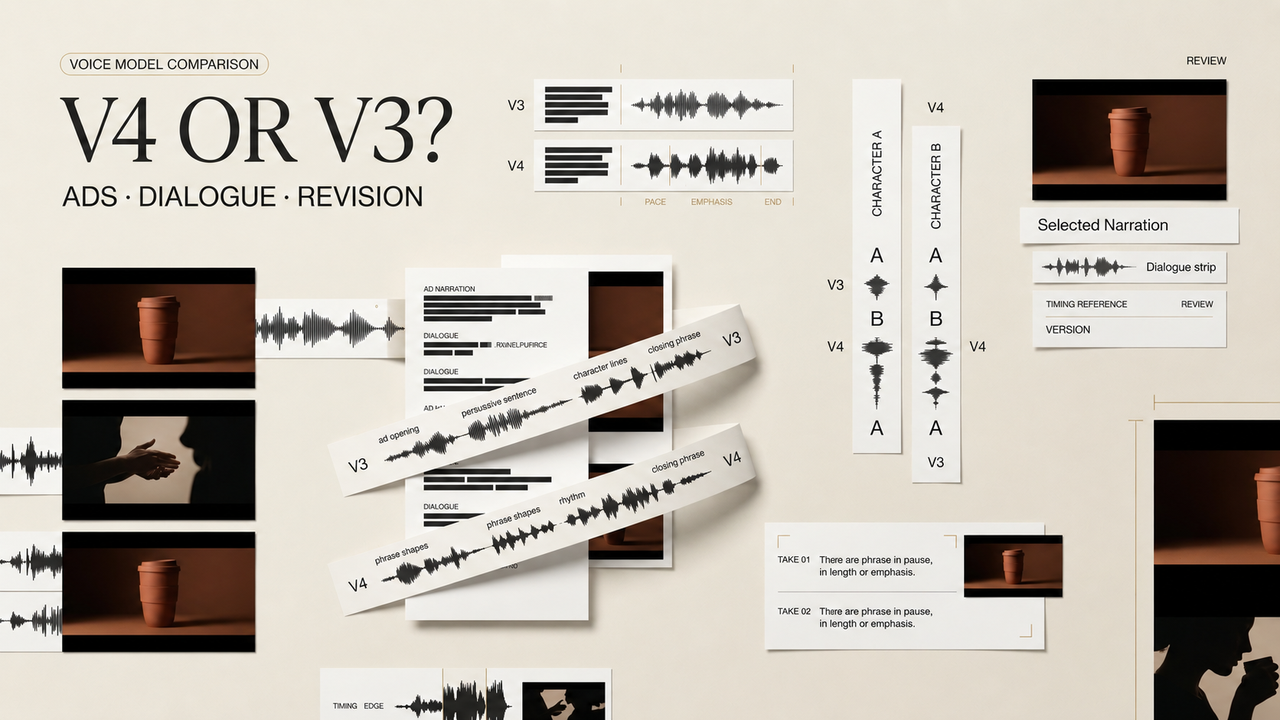
A 30-second bakery ad has two audio jobs: an inviting opening read and a quick exchange between customers. A polished model demo cannot tell the team whether either part fits its edit. The Eleven v4 vs v3 voiceover decision belongs inside that production loop.
This ElevenLabs model comparison uses official sources checked October 3, 2026, not a listening test. The bakery brief is illustrative.
Quick Verdict by Voiceover Task
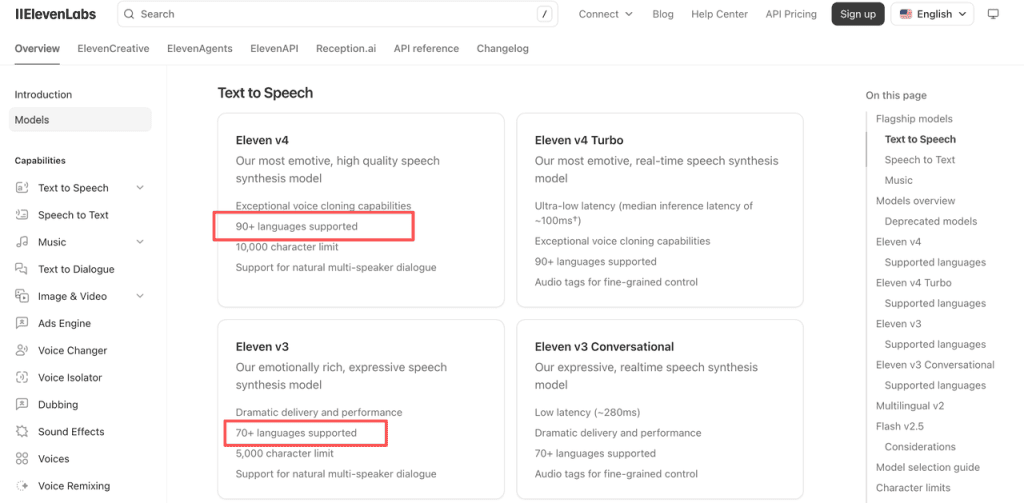
Audition v4 when delivery or speaker interaction drives the scene. ElevenLabs lists more than 90 supported languages for v4 and more than 70 for v3. Those ranges cannot tell you how either will say your bakery’s name. Nor does v4’s higher character ceiling matter much to a 30-second spot.
Keep v3 in the audition if it already carries an approved performance. Switching models changes the sound, even with identical copy. Compare both using the same voice, direction, and edit.
Compare Ad Read Control
Direct a Short Promotional Read
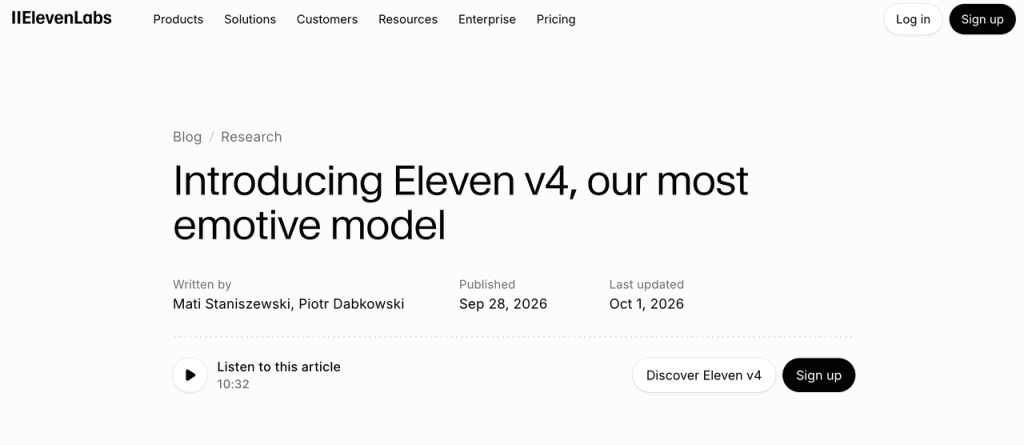
Write the opening time, one reason to visit, and a closing invitation. Keep the claim and the intended emphasis in the script, so each model receives the same direction. Both accept audio tags; the vendor claims v4 interprets direction and tags more reliably. That claim still needs testing with your chosen voice.
With the same licensed voice, compare how each reads “Saturday.” Information or manufactured excitement? Does the invitation leave space for the logo? An AI ad voiceover must fit the picture.
Review Brand Tone and Pacing
A bakery may want warmth without a theatrical sigh before every adjective. Listen over the actual edit, with music at its intended level. Check whether the first word lands on the shot and whether a late final syllable requires a new take. The loudest, most expressive version may be the least believable one.
The v4 control set lists Stability and Similarity, but no Style or Speed sliders. If your v3 process relies on those controls, audition v4 against the timing brief rather than assuming settings carry over. Write down the actual duration of the selected take, since the video edit cannot accommodate every pause.
Compare Character Dialogue
Stage a Two-Speaker Exchange
For character dialogue TTS, give each speaker a role: one asks whether the first batch is ready; the other answers from the counter. Keep words and pauses identical across tests. Give the editor a separate label for each character, even if the scene lasts only a few seconds.
Both models support Text to Dialogue, with a voice assigned to each turn. ElevenLabs promotes stronger multi-speaker dynamics in v4. Judge whether either take leaves room for the oven sound and next shot. A fluent exchange can still run too long for the footage.
Check Speaker Separation and Emotional Range
Play the exchange at normal volume, then without picture. Can a listener tell who speaks off-camera? Does the reply sound responsive or detached? Check interruptions and the shift from casual speech to the offer. If the voices seem to occupy different spaces, the mix may need work regardless of model choice.
Expressive voice models can overplay a joke. Either model might produce the better take. Save voice IDs and exact text with the selected audio so the editor knows what was approved.
Compare Revision and Production Handoff
Rework One Line Without Losing the Scene
Suppose legal review changes “fresh every morning” to “baked here each morning.” Replace that line and listen beside the approved dialogue. A new take may change its rhythm or emphasis. The editor needs to know whether to preserve the surrounding lines or rebuild the whole exchange.
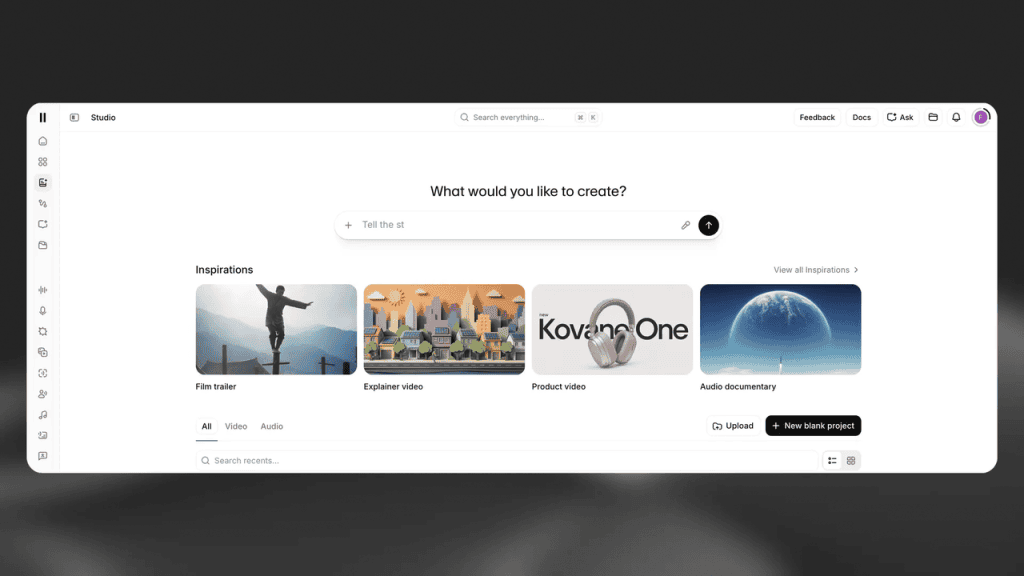
In ElevenCreative Studio, text or voice changes require regeneration; a model change does not alter existing audio. Keep the previous export and compare the new line in context.
Move Approved Audio Into the Video Edit
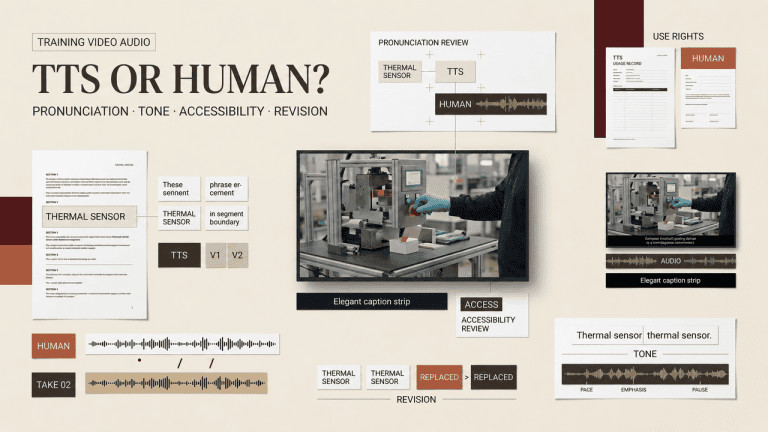
Hand the editor selected audio, transcript, speaker labels, pronunciation notes, and timecoded pauses. Preserve a version without music. Mark the approved take and any rejected pickups by version. Nobody should have to search a folder of near-identical downloads to find the line the client heard.
Studio can pair speech with video and render an export. For external finishing, check your plan’s format and quality, then review sync, captions, and loudness.
Choose the Better Fit for One Campaign
Audition the opening, exchange, and revised claim with identical voices and edit conditions. Compare brand tone, speaker clarity, timing, pronunciation, and repair work. A simple review sheet can record each take’s timestamp and the reason it failed. Track current credit terms and use through approval, not merely the first take.
Use v4 if its direction survives review with less repair. Keep v3 if a familiar character changes unacceptably in v4. Check voice-use and commercial terms: model access does not authorize imitation or unlicensed copy. This is not legal advice.
FAQ
Do v4 and v3 use the same voice library?
Both draw on ElevenLabs voices, but access and performance can differ by voice and plan. Confirm the selected voice on your account and audition it in both models.
Can pronunciation dictionaries be shared between the models?
Newer guidance lists both models, while older Studio help text gives narrower advice. Test the dictionary in your chosen surface, especially for brand names or non-English words.
Do existing v3 API requests require new fields for v4?
No drop-in guarantee. Update the model ID and validate existing settings, endpoint choice, and output. V4’s controls differ from v3’s; do not copy request fields blindly.
Are project files portable between product surfaces?
No universal transfer between Studio, the Text to Speech app, and API production is documented. Export approved audio; retain scripts, voice IDs, settings, and dictionary versions separately.
How do model access and usage limits differ by plan?
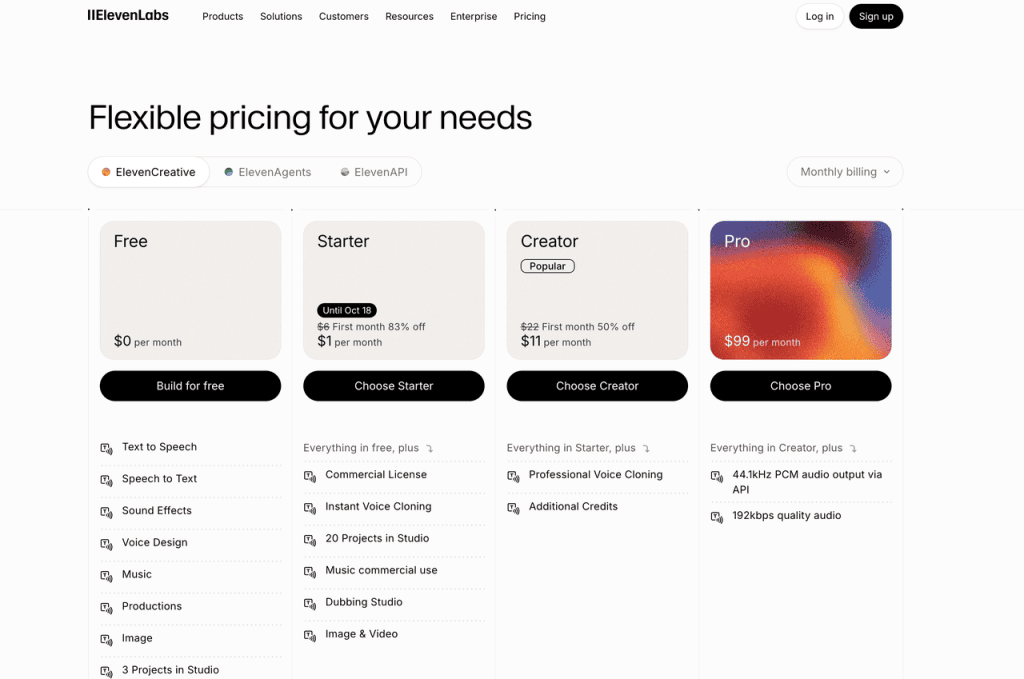
Both models remain listed, but plans differ in credits and export quality. The Free plan lacks the commercial license shown on Starter and higher tiers. Check current account terms; temporary promotions do not establish a permanent v4-versus-v3 rate.
Conclusion
The Eleven v4 vs Eleven v3 choice comes after hearing identical lines inside the ad. Audition v4 for direction and dialogue, v3 for continuity with an approved performance. Keep the take that survives the edit and the revised claim.